
The Art of Kansas City Web Design: How Creative Websites Win Trust and Customers

A website has only a short window to make a business feel credible, relevant, and worth exploring. Visitors notice the visual style first, but their decision depends on much more: whether the message is clear, the navigation makes sense, the services match what they need, and the next step feels easy.
That combination is the real art of web design. Creativity gives a website personality. Strategy gives every page a purpose. User experience removes friction. Search-focused structure helps the right people discover it. When those elements work together, a website becomes more than an online brochure—it becomes part of how the business earns attention and generates opportunities.
OHS Publishing approaches Kansas City web design around one central idea: your website should do more than look good. It should help your business get chosen. This guide explains what that requires and why the most effective websites balance original design with clarity, trust, visibility, and conversion.
Creative Web Design Is Not Decoration
Creative design is sometimes treated as the visual layer added after the important decisions are made. In reality, good design helps communicate those decisions. Color can establish mood and hierarchy. Typography can make a brand feel bold, refined, friendly, technical, or established. Spacing can make complicated information easier to understand. Photography and graphics can show what the business actually delivers.
Creativity becomes useful when it helps a visitor understand and remember the company. It becomes distracting when animation, unusual navigation, oversized headlines, or visual effects make the content harder to use.
A strong website does not need to look like every competitor, but it still needs to behave in ways visitors understand. People should recognize the navigation, find the services, locate contact information, and know which action to take. Originality should strengthen the customer journey—not force visitors to learn how the website works.
Begin With the Business, Not a Template
Many websites feel interchangeable because the design process begins with a prebuilt layout instead of the business. The same hero, three icon boxes, stock photograph, generic service grid, and vague call to action can be used for almost any company. The result may look polished, but it rarely communicates why that particular business deserves attention.
A better process begins with questions. Who are the most valuable customers? Which services need to grow? What does a visitor need to believe before contacting the business? Which proof points matter? What geographic area does the company serve? What objections slow down a decision? What action should each page encourage?
Those answers shape the structure before colors and graphics are finalized. A contractor may need prominent service-area details, emergency call paths, licensing, reviews, and project proof. A healthcare practice may need provider information, treatment paths, insurance guidance, and reassuring language. A restaurant may need menus, hours, location details, images, and reservation options.
Custom design does not mean adding complexity for its own sake. It means organizing the site around the real business instead of forcing the business into a generic mold.
A Clear Message Is Part of the Design
Visitors should not have to interpret a clever slogan before they understand what a company does. The first visible section should establish the service or product, the audience or market, the value, and the most useful next step.
Vague headlines such as “Solutions for Tomorrow” may sound polished but provide little practical information. A specific headline can identify the service and the outcome while supporting the visual identity around it. Supporting text can then clarify location, specialty, approach, or audience.
Copy and layout should be planned together. Short paragraphs, descriptive headings, proof close to claims, useful lists, and visible calls to action make long pages easier to scan. The words determine what visitors understand; the design determines how easily they understand it.
User-Friendly Websites Reduce Decision Friction
A user-friendly website anticipates what visitors need and makes it easier to reach. It does not assume that everyone lands on the homepage or follows the same path. Someone may enter through a service page, blog article, location page, advertisement, social post, or Google Business Profile.
Each important page should work as a useful entry point. It should provide context, explain the offer, establish trust, and guide the visitor forward without requiring a return to the homepage.
- Simple navigation: Use clear labels and a manageable structure instead of making visitors decode internal company language.
- Readable content: Break information into helpful sections with strong contrast, comfortable text sizes, and meaningful headings.
- Consistent actions: Keep primary quote, call, appointment, or purchase paths recognizable across the site.
- Fast access to answers: Place pricing guidance, service details, locations, policies, and FAQs where customers naturally need them.
- Accessible choices: Consider keyboard use, alternative text, contrast, form labels, and other fundamentals that help more people use the website.
- Useful error handling: Forms and checkout steps should explain problems clearly instead of leaving visitors unsure what happened.
Good user experience is often invisible. Visitors may not compliment the navigation or page hierarchy, but they feel the difference when everything is easy to find and the site never gets in their way.
Mobile Design Is the Website, Not a Smaller Version
Responsive design is not simply shrinking a desktop layout until it fits on a phone. Mobile users interact differently. They scroll with one hand, tap instead of hover, read in shorter bursts, and may be trying to call, navigate, book, or compare businesses quickly.
Mobile design should prioritize the most important content and actions. Menus need comfortable tap targets. Buttons should not sit too close together. Forms should avoid unnecessary fields. Images and videos should load efficiently. Important information should not depend on a hover effect that phones cannot reproduce.
Desktop still matters, especially for detailed research and business-to-business decisions. A thoughtful website adapts the same brand and content system to both experiences instead of treating one as an afterthought.
Visual Identity Should Feel Like the Business
A website is one of the most complete expressions of a brand. It brings together the logo, colors, typography, photography, voice, offers, proof, and customer experience. When those parts feel disconnected, the business can look less established than it really is.
Visual direction should reflect the company’s market position. A premium professional firm may need restraint, editorial spacing, and confident typography. A family-focused service may benefit from warmer imagery and approachable language. A creative business may have room for more expressive layouts, but clarity still comes first.
Authentic photography and project imagery usually communicate more than generic stock pictures. Real team members, locations, products, work, and customer outcomes give visitors evidence. When custom graphics are needed, they should clarify an idea, reinforce the brand, or guide attention—not exist only to fill space.
Businesses evaluating a redesign can review the OHS Publishing web design portfolio to see how different industries require different visual and content decisions.
Every Page Needs a Clear Job
A website becomes easier to design and optimize when every page has a defined purpose. The homepage provides orientation and directs visitors toward important paths. Service pages explain individual offers. Location pages establish local relevance. About and team pages build trust. Case studies provide proof. Articles answer deeper questions. Contact and quote pages make the next step clear.
Trying to make one page rank for every service and answer every question usually creates a shallow website. A better structure gives important topics enough room and connects them with internal links. Visitors can move from a broad overview to the details that match their needs, while search engines receive clearer signals about how the content relates.
For businesses with specialized functionality, integrations, membership systems, custom forms, directories, or other advanced requirements, design may also require dedicated web development. The visual experience and technical system should be planned together so one does not limit the other.
Trust Signals Turn Design Into Confidence
A beautiful page can attract attention, but proof gives visitors a reason to believe the message. Trust signals should appear near the claims they support rather than being hidden on one testimonial page.
- Reviews and testimonials that describe specific experiences or outcomes.
- Portfolio examples and case studies showing the quality and type of work delivered.
- Years of experience, credentials, partnerships, or licenses when relevant to the decision.
- Real team and company information so visitors know who stands behind the business.
- Clear processes and expectations that reduce uncertainty about what happens next.
- Accurate contact and location details consistent with other online business profiles.
- Policies, guarantees, or service standards explained honestly without exaggerated promises.
Trust is built through consistency. If the website says one thing while the Google profile, social accounts, or directory listings show something different, potential customers may hesitate. A strong design system supports the same identity everywhere the business appears.
Calls to Action Should Match Visitor Readiness
Not every visitor is ready to make the same commitment. Someone on a pricing or emergency-service page may be ready to call. Someone reading an educational article may want to compare services, view work, or request an audit first.
A website should still have one recognizable primary action, but supporting actions can meet visitors at different stages. “Request a Quote,” “Call Now,” “Schedule a Consultation,” “View Our Work,” and “Explore the Service” each serve different intentions.
Button wording should describe what happens after the click. Placement should feel natural after the website has provided enough information to support the decision. Repeating the same call to action throughout a long page is useful; inserting a button after every paragraph is not.
Web Design and SEO Should Be Planned Together
Search visibility depends partly on decisions made during design: page structure, headings, internal links, mobile usability, content depth, technical performance, metadata, and how clearly each URL addresses a topic. Adding SEO after launch can improve a site, but planning the foundation early prevents avoidable rebuilding.
Effective Kansas City SEO begins with the services a business wants to grow and the places it serves. Those priorities can influence navigation, service pages, location content, FAQs, and future articles. The goal is not to repeat keywords unnaturally. It is to make the website more helpful and more understandable around the searches that matter.
Design also affects conversion after the search click. Ranking a weak page may bring traffic without creating calls. A strong page matches the searcher’s need, presents a credible answer, and provides a clear next step. Visibility and user experience have to support each other.
WordPress Creates a Flexible Foundation
WordPress works well for many local businesses because it can support custom designs, detailed service content, location pages, blogging, landing pages, forms, integrations, and ongoing expansion. The platform itself does not guarantee a good website; the planning, design, development, content, and maintenance determine the result.
Professional WordPress web design should avoid the generic feel that comes from using the same demo layout for every company. The website can still use a dependable content-management system while presenting a distinct visual identity and business-specific customer journey.
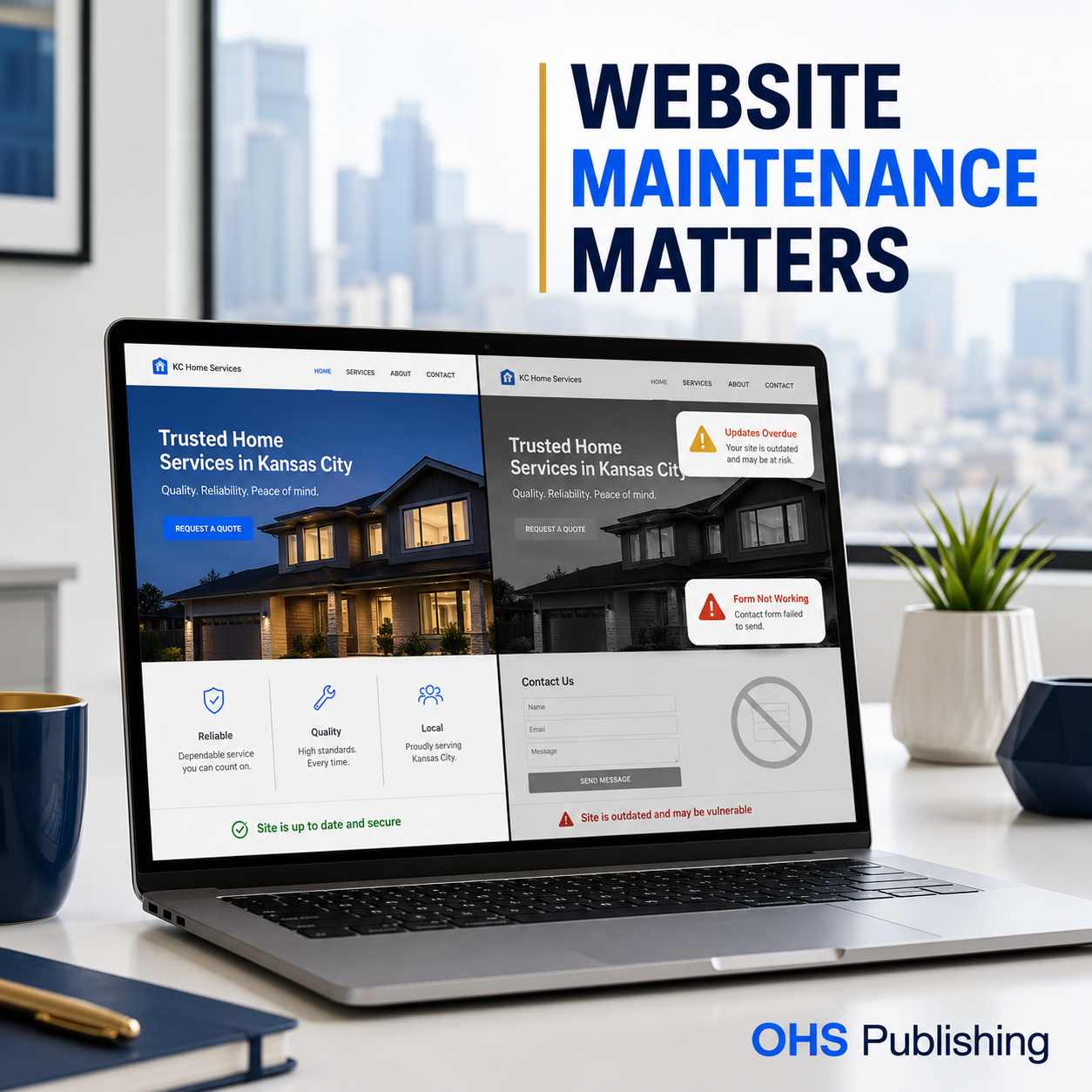
After launch, the site needs ongoing care. Software updates, security attention, backups, uptime, content accuracy, and technical support protect the foundation as the business evolves. A website maintenance plan helps prevent the finished project from becoming neglected after the initial excitement of launch.
How to Evaluate a Kansas City Web Design Company
The right designer should understand both the appearance of the website and the business work it needs to perform. Before choosing a partner, look beyond a single homepage mockup or a list of technologies.
- Does the company ask about customers, services, locations, competition, goals, and conversion priorities?
- Can it show real work across relevant industries or explain the strategy behind past projects?
- Will the design be shaped around the business, or is the process built around filling a standard template?
- Are content structure, mobile usability, SEO fundamentals, forms, analytics, and launch planning addressed?
- Who owns the website, domain, content, accounts, and administrative access after launch?
- What support, maintenance, hosting guidance, and future expansion options are available?
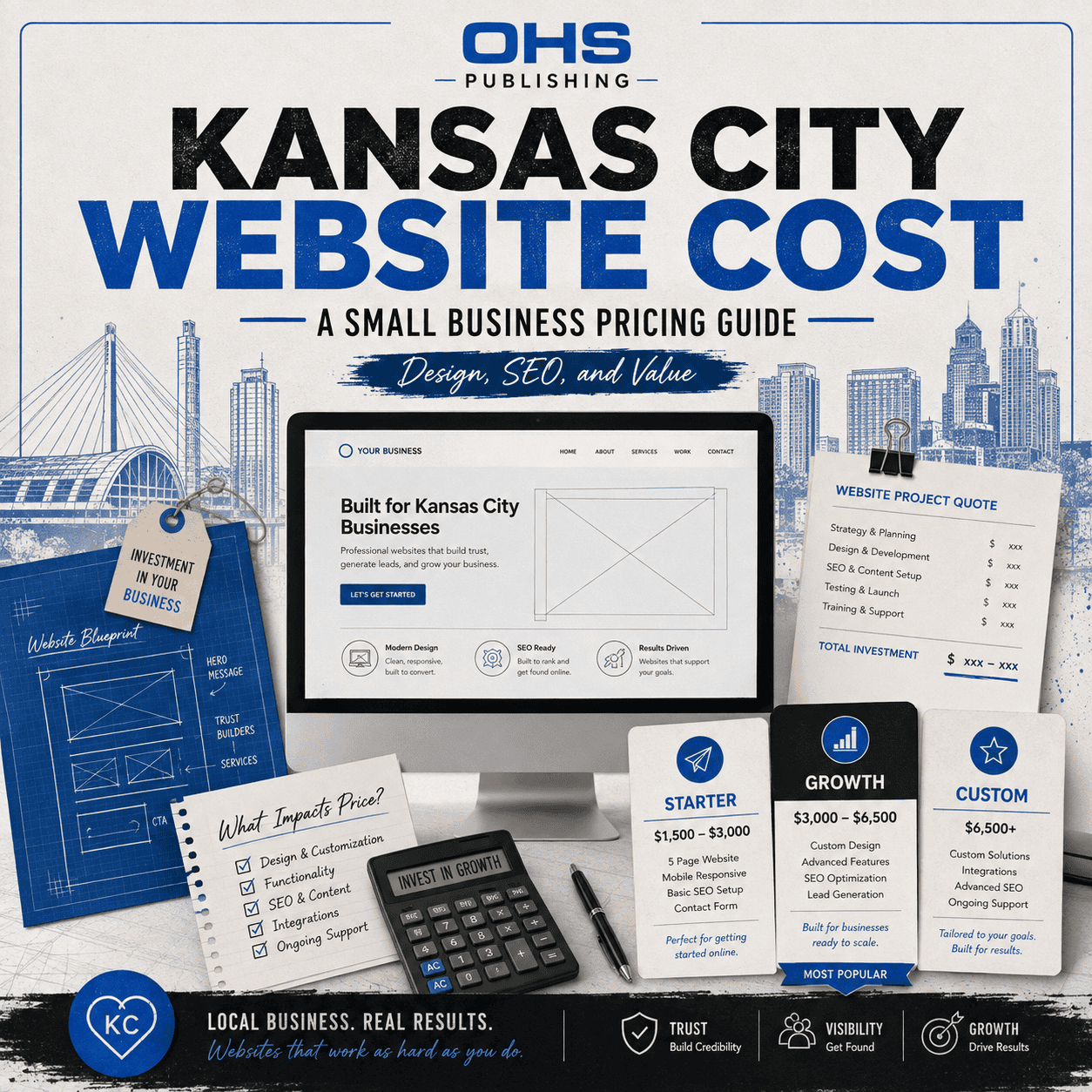
- Are the scope, timeline, responsibilities, and ongoing costs explained clearly?
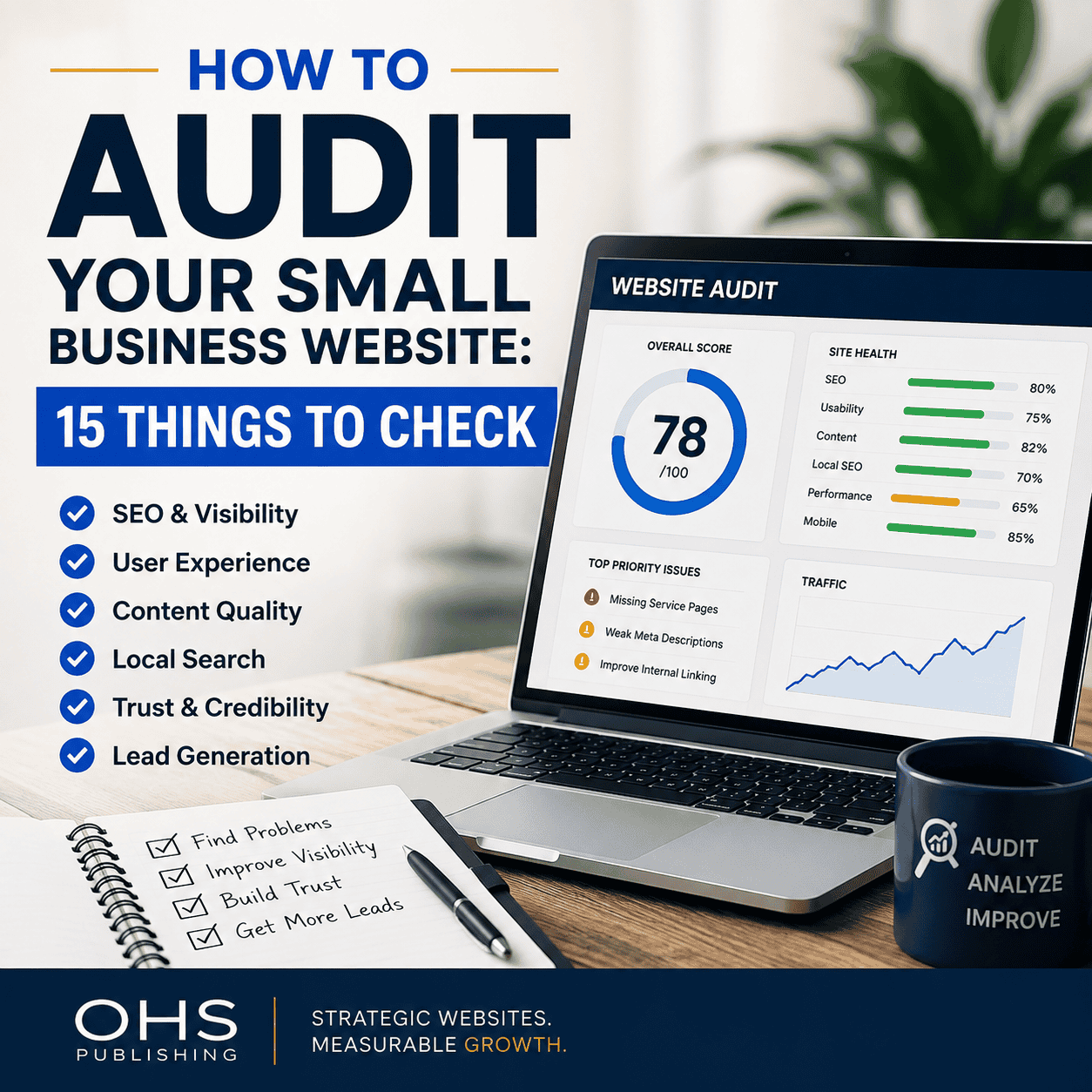
A productive relationship should make the project easier to understand. If your current site is difficult to evaluate, begin with the OHS Publishing free Website and SEO Audit for a prioritized look at design, content, local visibility, trust signals, internal links, and lead-generation opportunities.
Frequently Asked Questions About Creative Web Design
What makes a website design creative?
Creative web design gives a business a distinct visual and content experience without making the website harder to use. It can involve original layouts, typography, imagery, graphics, interaction, and storytelling, but every creative choice should support the brand, clarify information, or guide the visitor toward a useful next step.
What should a Kansas City business website include?
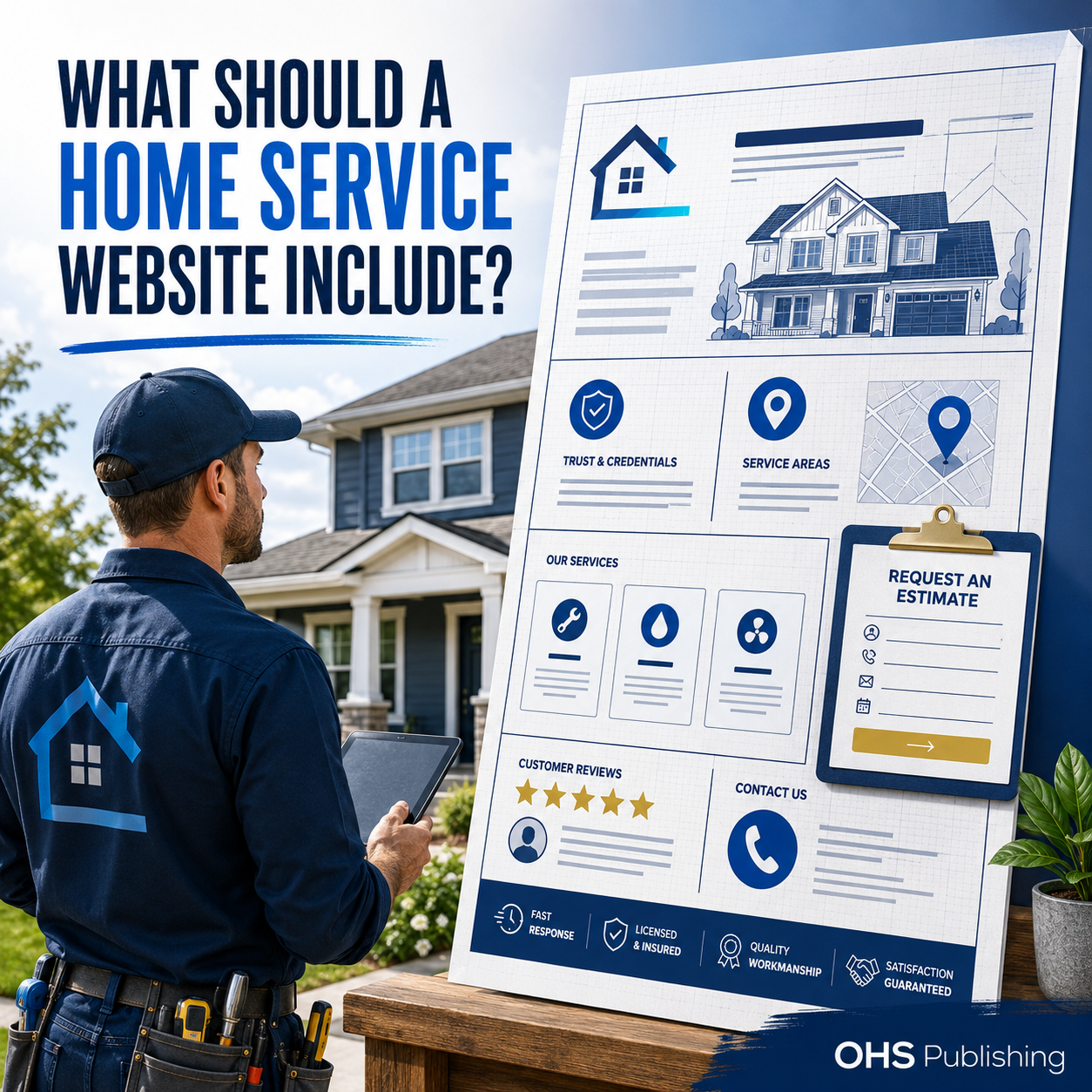
The right structure depends on the business, but most sites need a clear homepage, detailed service or product pages, trust-building company information, proof such as reviews or projects, accurate contact and location details, mobile-friendly calls to action, and content organized around the customers and markets the business wants to reach.
Is custom web design better than using a template?
Custom design is valuable when the website needs to reflect a specific brand, customer journey, service structure, or business goal. Templates can provide a starting framework, but a site feels generic when the business is forced into the template instead of shaping the design around its real content, audience, and conversion needs.
Can a creative website also be optimized for SEO?
Yes. Creative presentation and SEO can work together when the site maintains clear page topics, useful content, descriptive headings, internal links, mobile usability, technical performance, and crawlable text. Visual effects should enhance the experience without hiding important information or slowing the website unnecessarily.
How do I know whether my website needs a redesign?
A redesign may be appropriate when the website no longer reflects the business, performs poorly on phones, is difficult to update, lacks important service content, has confusing navigation, looks less credible than competitors, or fails to produce useful inquiries. The redesign should begin with clear business goals rather than appearance alone.
Build a Website That Looks Distinct and Works Harder
The most effective websites do not choose between creativity and performance. They use creative direction to express the brand, clear structure to help visitors understand it, proof to build confidence, SEO to improve discovery, and strong calls to action to create opportunities.
OHS Publishing creates custom websites for Kansas City-area businesses that want to look more established, explain their value clearly, and build a stronger foundation for visibility and leads. Explore our Kansas City website design services, or request a web design quote to start planning a site built around your business.