
Planning a Kansas City WordPress Website: A Practical Guide for Business Owners
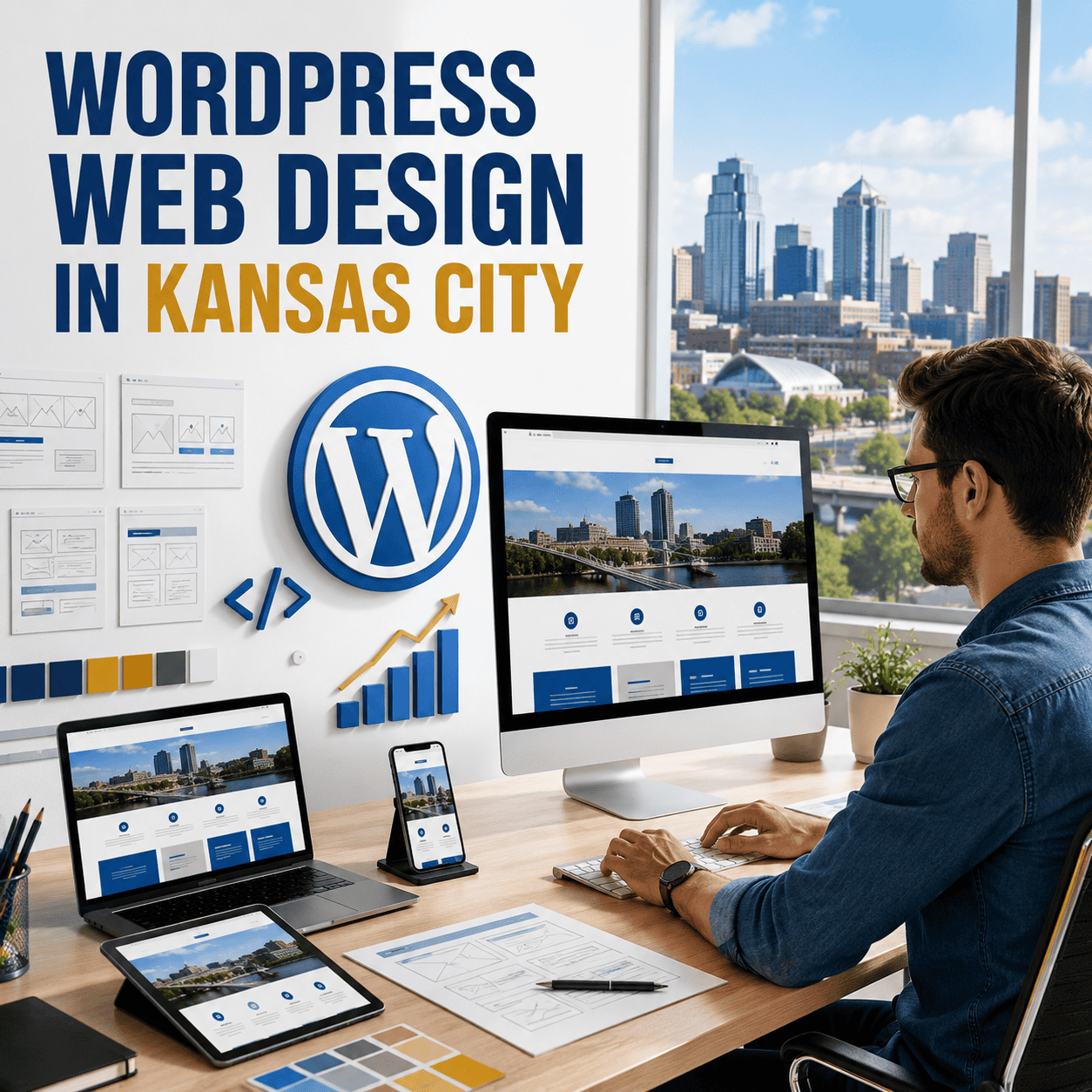
A high-performing website does not begin with a theme, color palette, or list of plugins. It begins with a clear understanding of the business, the customer, and the job the website needs to do.
For one Kansas City business, success may mean more estimate requests. For another, it may mean scheduling appointments, selling products, presenting a professional portfolio, attracting job applicants, or helping customers find the right location. Those goals should shape the site before design and development begin.
WordPress is often a strong platform for this work because it supports custom design, content growth, local SEO, integrations, and long-term expansion. It is not automatically fast, secure, or search-optimized. Those results depend on how the website is planned, built, hosted, and maintained.
This guide walks Kansas City business owners through the decisions behind an effective WordPress project—from defining goals and organizing pages to planning SEO, forms, e-commerce, maintenance, and launch. Businesses ready to discuss a specific project can also explore OHS Publishing’s custom WordPress web design services.
Start With the Website’s Business Purpose
A website project can quickly become a collection of requests: add a slideshow, include social feeds, show recent posts, create animations, and install a chatbot. Some of those features may be useful, but they should follow the primary objective.
Begin by deciding what the website must accomplish. Common goals include:
- Generate qualified calls or quote requests
- Explain complex services clearly
- Improve visibility for relevant local searches
- Sell products or accept payments online
- Schedule consultations or appointments
- Show completed projects or case studies
- Build trust before a customer contacts the business
- Support advertising and campaign landing pages
- Give customers access to forms, resources, or account features
Most business websites support several goals, but one or two should take priority. A primary objective makes it easier to determine what belongs on the homepage, which calls to action should be emphasized, and how success will be measured.
Understand the Customer Journey Before Building Pages
Visitors do not always enter through the homepage. Someone searching for a specific service may arrive on a service page. A local searcher may reach a city page. A social-media visitor may open a blog article. A paid-ad visitor should land on a page created for that campaign.
Each entry point needs enough context to answer the visitor’s immediate questions:
- Am I in the right place?
- Does this business provide what I need?
- Does it serve my area?
- Why should I trust it?
- What happens if I contact the company?
- What should I do next?
Planning around those questions produces a more useful website than planning around a generic page checklist. It also creates stronger connections between content and calls to action.
Plan a Site Structure That Can Grow
A small company may need only a focused set of pages. A business with several services, industries, or locations may require a deeper structure. The goal is not to create more pages than competitors. It is to give important topics enough room to be useful.
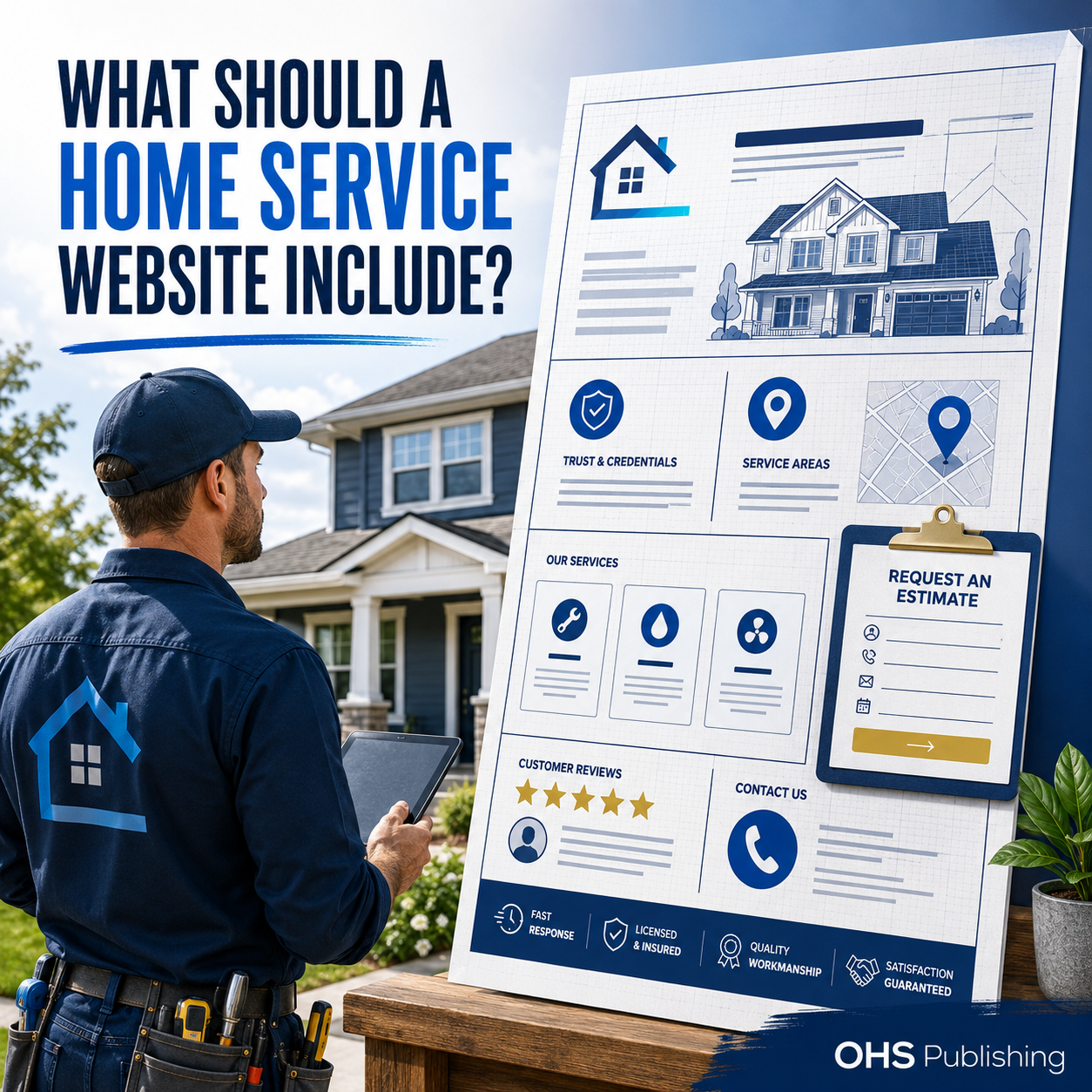
A typical structure may include:
- Homepage
- Individual primary service pages
- About or company page
- Portfolio, results, or case-study pages
- Industries served
- Locations or service areas
- Blog or resource center
- Frequently asked questions
- Contact and quote pages
- Privacy, terms, and other required policies
Every page should have a clear purpose and a natural place in the hierarchy. Internal links should help visitors move from broad information to more specific services, locations, examples, and contact options.
OHS Publishing uses this principle across its industry-specific web design pages and Kansas City service-area pages. These pages support the main service content rather than competing with it.
Create Content Before It Becomes a Launch Delay
Content is one of the most common reasons website projects slow down. The design may be ready, but service descriptions, team biographies, photographs, pricing details, testimonials, and policies are still missing.
Before development moves too far, gather:
- Current logo and brand assets
- Accurate service descriptions
- Service-area information
- Phone numbers, email addresses, hours, and locations
- Team or provider information
- Project photographs and portfolio details
- Approved reviews or testimonials
- Frequently asked questions
- Form requirements and notification recipients
- Policies, disclaimers, or compliance language
Website copy should focus on the customer without erasing the company’s personality. It should explain what the business does, what customers can expect, and what makes the approach different. Generic claims such as “best service,” “innovative solutions,” and “we exceed expectations” need specific support.
OHS Publishing can help organize and write website content when the client does not already have finished copy. The goal is human, direct language that works with the design and supports search visibility.
Choose Custom Design Over Decorative Clutter
Custom design should make the business easier to understand and remember. It does not require constant animation, oversized text, or unusual navigation.
An effective visual system uses typography, color, imagery, spacing, buttons, labels, and reusable page sections consistently. Different page types can have distinct layouts while still feeling like the same website.
Good design decisions support:
- A clear visual hierarchy
- Comfortable reading on long pages
- Easy-to-find navigation
- Visible but balanced calls to action
- Trust signals placed near important decisions
- Consistent branding across devices
- Space for future services and content
A website should not look as though the company name was inserted into a generic template. OHS Publishing’s web design portfolio shows how different industries and brands can receive distinct designs while following the same usability principles.
Make Mobile Design Part of the First Plan
Mobile design is not a final step where the desktop page is squeezed onto a smaller screen. Content order, navigation, buttons, forms, tables, images, and spacing may all need different treatment.
Important mobile considerations include:
- Phone numbers that can be tapped
- Buttons large enough to use comfortably
- Forms that do not require unnecessary typing
- Headlines that wrap cleanly
- Images that retain their important subject
- Menus that make primary services easy to find
- Content that remains readable without zooming
- Pages that load efficiently on mobile connections
The main customer journey should be tested on several screen sizes throughout development. A desktop-only review can miss the experience many customers will actually receive.
Build SEO Into the Structure Without Overpromising Results
WordPress provides useful SEO controls, but the platform does not guarantee search rankings. A strong foundation requires technical setup, relevant content, logical structure, mobile usability, and ongoing improvement.
SEO planning should consider:
- Which services need dedicated pages
- How customers describe and search for those services
- Which cities and counties the business genuinely serves
- How page titles and headings communicate relevance
- How internal links connect related topics
- Which existing URLs and content should be preserved
- How redirects will be handled during a redesign
- Whether schema is appropriate for the page
- What content should be created after launch
Local pages should contain helpful, location-specific information rather than the same paragraph with a city name changed. Service pages should answer real buying questions rather than repeat keyword variations.
A new website provides the foundation. Continuing competition may require content development, monitoring, optimization, and authority-building through OHS Publishing’s Kansas City SEO services.
Plan the Conversion Path and Forms Carefully
A website can receive traffic and still produce few leads if the next step is unclear. Calls to action should match the visitor’s intent and the company’s sales process.
A contractor may prioritize estimate requests and phone calls. A healthcare practice may use appointment or information forms. A consultant may offer an initial conversation. An e-commerce business needs a clear path from product discovery to checkout.
Forms should request the information required to begin—not every detail the company may eventually want. Longer forms can be appropriate for complex quotes, but unnecessary fields create friction.
Every important form should be tested for:
- Successful submission
- Clear confirmation or thank-you message
- Notification delivery to the correct inbox
- Working reply-to information
- Spam protection that does not block legitimate users
- CRM, calendar, payment, or automation connections
- Conversion tracking when appropriate
Landing pages used for advertising need extra attention. OHS Publishing’s pay-per-click advertising services connect the campaign message with a focused destination page and meaningful conversion tracking.
Decide Whether the Project Needs WooCommerce
WooCommerce can turn WordPress into a flexible online store, but e-commerce planning involves much more than adding products.
Before development begins, determine:
- How products and variations will be organized
- How inventory will be managed
- Which payment methods are needed
- How shipping, pickup, or local delivery will work
- Which taxes need to be calculated
- How discounts, gift cards, or subscriptions will operate
- What customers receive after ordering
- How returns, privacy, and store policies will be presented
- Which analytics and order reports are required
WooCommerce is a good fit when the business needs the flexibility and is prepared to maintain the store. A specialized hosted commerce platform may be more suitable for some businesses. Platform choice should follow operating needs rather than habit.
Select Plugins Based on Need, Not Popularity
Plugins can add valuable features, but a long plugin list is not a sign of a better website. Every plugin introduces code, settings, updates, compatibility requirements, and potential security or performance concerns.
Before adding one, ask:
- Does the website already provide this function?
- Is the plugin actively maintained?
- Is it compatible with the current WordPress and PHP versions?
- Does the developer have a reliable support history?
- Does it load unnecessary scripts across the website?
- Does it duplicate another plugin?
- Will a premium license be required each year?
- What happens to the content if the plugin is removed?
A leaner, intentional setup is usually easier to maintain than a site assembled from overlapping plugins. Custom development may be appropriate when an important function cannot be implemented reliably through an existing tool. OHS Publishing provides broader web development services for projects requiring custom features or integrations.
Choose Hosting for Reliability, Not Just Price
Hosting affects speed, uptime, backups, security controls, support, and the development workflow. The least expensive plan may be sufficient for a small low-traffic site, but it can become costly if slow performance or weak support interrupts leads and business operations.
Evaluate hosting based on:
- WordPress experience and support quality
- Backup frequency and retention
- Restore options
- Security and malware response
- Server resources and scalability
- Staging environments
- SSL management
- PHP and database support
- Access and ownership
The domain, hosting, analytics, forms, and other important accounts should remain clearly documented. The business should know who owns each account and how authorized access is managed.
Security Requires More Than Installing One Plugin
WordPress security is a continuing process. A security plugin can help, but it does not replace updates, backups, access controls, reliable hosting, and responsible administration.
A basic security plan should address:
- Strong, unique passwords
- Multi-factor authentication where available
- Limited administrator access
- Regular core, theme, and plugin updates
- Removal of unused software and accounts
- Reliable backups stored separately from the live site
- Security and malware monitoring
- A clear recovery process
If a website is already infected or redirecting visitors, installing updates alone may not solve the problem. The site needs investigation and, when necessary, professional WordPress malware removal.
What to Expect During a WordPress Design Project
The exact process varies, but a well-managed project generally moves through several clear stages.
1. Discovery
The business goals, audience, services, competitors, required features, service area, content needs, and current challenges are reviewed.
2. Scope and Site Planning
The project becomes a defined set of pages, features, content responsibilities, integrations, and launch requirements.
3. Content and Design
Messaging and visual direction are developed around the customer journey. Page layouts are designed to support the content rather than forcing it into generic sections.
4. Development
The approved direction is built in WordPress. Forms, analytics, e-commerce, scheduling, or other required systems are connected.
5. Testing and Refinement
Navigation, forms, responsive layouts, links, images, integrations, and key customer journeys are reviewed before launch.
6. Launch
The website is moved into production with attention to indexing settings, redirects, analytics, backups, and domain or hosting details.
7. Maintenance and Growth
Software updates, security, backups, content changes, SEO, and new marketing needs continue after launch.
Common WordPress Planning Mistakes
Many website problems can be traced to decisions made before launch. Common mistakes include:
- Choosing a design before defining the customer and goal
- Building every service into one overloaded page
- Waiting until the end to prepare content
- Ignoring existing URLs during a redesign
- Adding too many plugins
- Using animation that slows or distracts from the page
- Treating mobile design as an afterthought
- Launching without testing form delivery
- Assuming WordPress automatically handles SEO and security
- Failing to plan for maintenance after launch
A strong project does not eliminate every future challenge, but it reduces avoidable rework and creates a clearer path for growth.
What Should Happen After Launch?
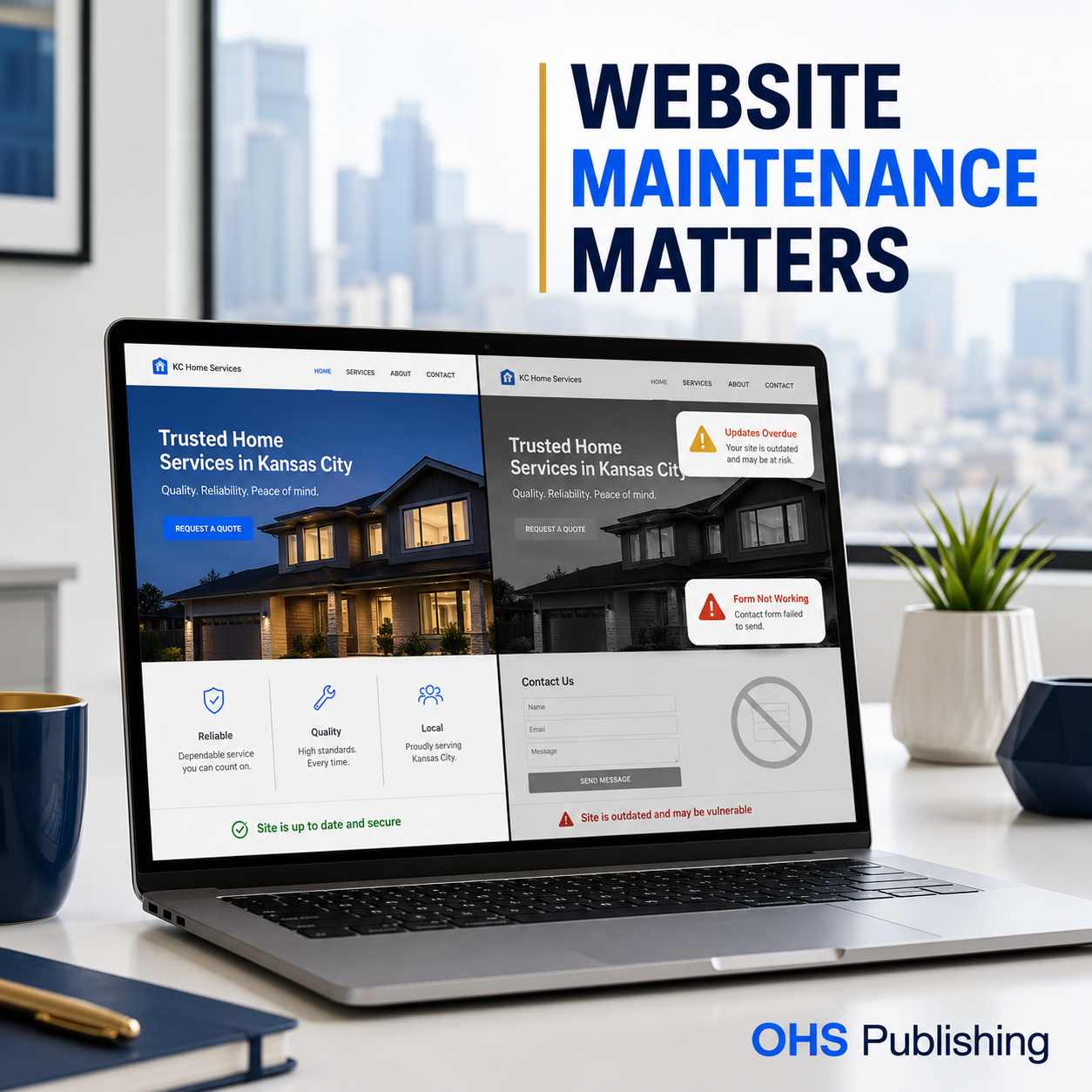
A business website is active software, not a finished brochure. WordPress core, themes, plugins, hosting systems, forms, and third-party integrations continue to change.
Ongoing website care should include updates, backups, security monitoring, form testing, compatibility checks, performance review, and help when something stops working. Content should also remain current as services, staff, hours, locations, and offers change.
OHS Publishing’s WordPress website maintenance plan provides continuing updates, security, malware monitoring, and support so the client is not left alone with the website after launch.
Build a Website Around the Business You Want to Grow
WordPress provides flexibility, but the value comes from using that flexibility with a clear plan. A high-performing website connects business goals, customer needs, content, design, development, SEO, and conversion strategy.
Your website should do more than look good. It should help your business get chosen.
OHS Publishing brings more than 20 years of web experience to projects for Kansas City businesses. If you are planning a new site or deciding whether an existing website should be rebuilt, the first step is a practical conversation about what the site needs to accomplish.
Frequently Asked Questions About Kansas City WordPress Websites
Is WordPress a good choice for a Kansas City small business?
WordPress is often a strong choice for businesses that want custom design, control over content and SEO, flexible integrations, and room to grow. Another platform may be better when a project has specialized requirements or the business prefers a tightly managed hosted system.
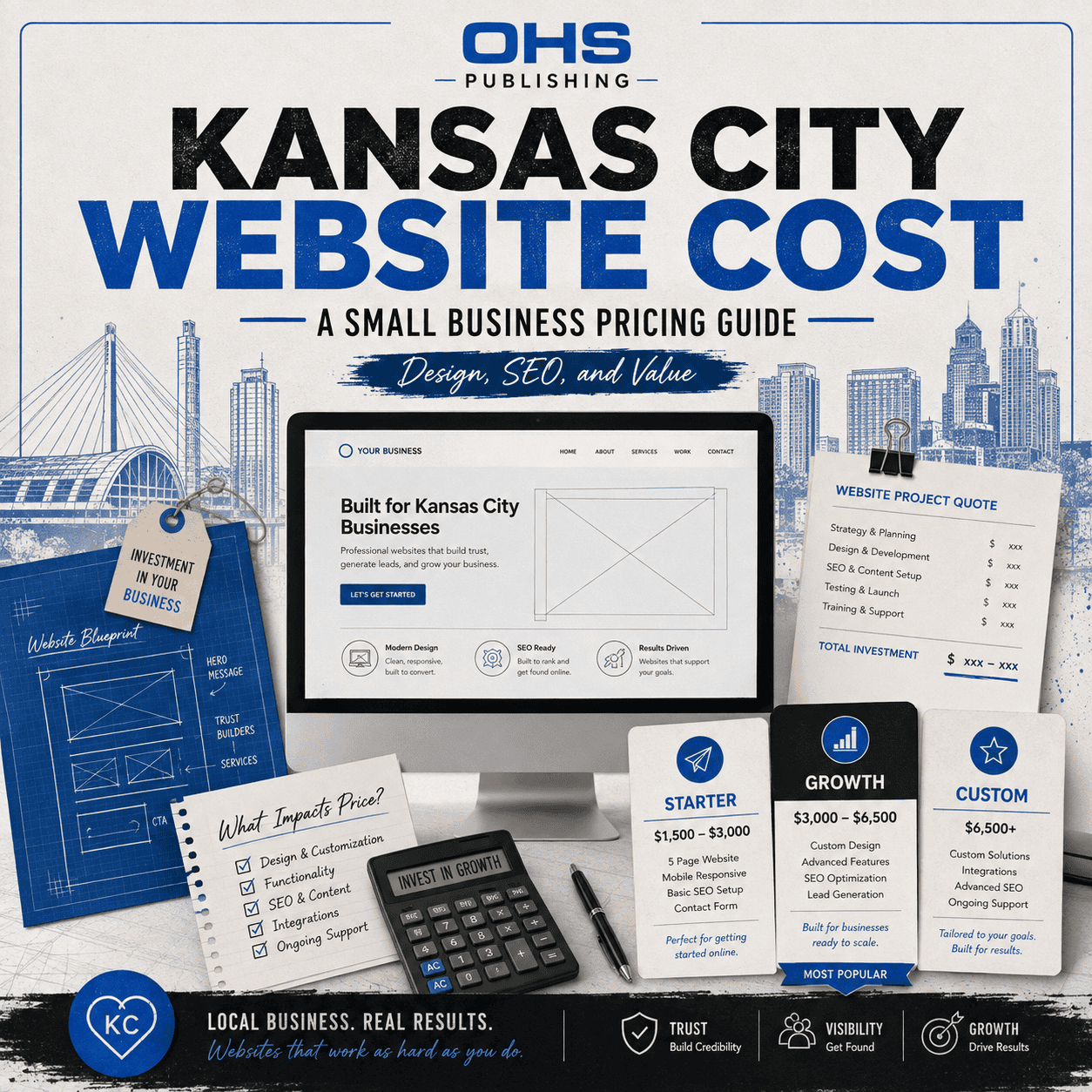
How much does a custom WordPress website cost?
Cost depends on the number and complexity of pages, content needs, custom functionality, e-commerce, integrations, migration work, and the condition of any existing site. An accurate proposal requires a defined project scope.
How long does a WordPress website project take?
Timing varies with the size of the website, content readiness, required features, review process, and response time for feedback. A focused informational site can move faster than an e-commerce site or a large service-and-location build.
Will a new WordPress website improve SEO?
A properly planned website can improve technical setup, page structure, content, internal linking, mobile usability, and performance. WordPress does not guarantee rankings, and redesigns need careful migration planning to preserve valuable URLs and existing visibility.
Can I update the website myself after launch?
WordPress allows authorized users to update many types of content. The exact editing experience depends on how the site is built. Software, security, backups, complex layout changes, and custom integrations may still require professional support.
Does a WordPress website require ongoing maintenance?
Yes. WordPress core, themes, plugins, forms, hosting software, and integrations change over time. Regular updates, backups, security monitoring, compatibility checks, and form testing help keep the website reliable.