Why Location Pages Matter for Kansas City Web Design and SEO
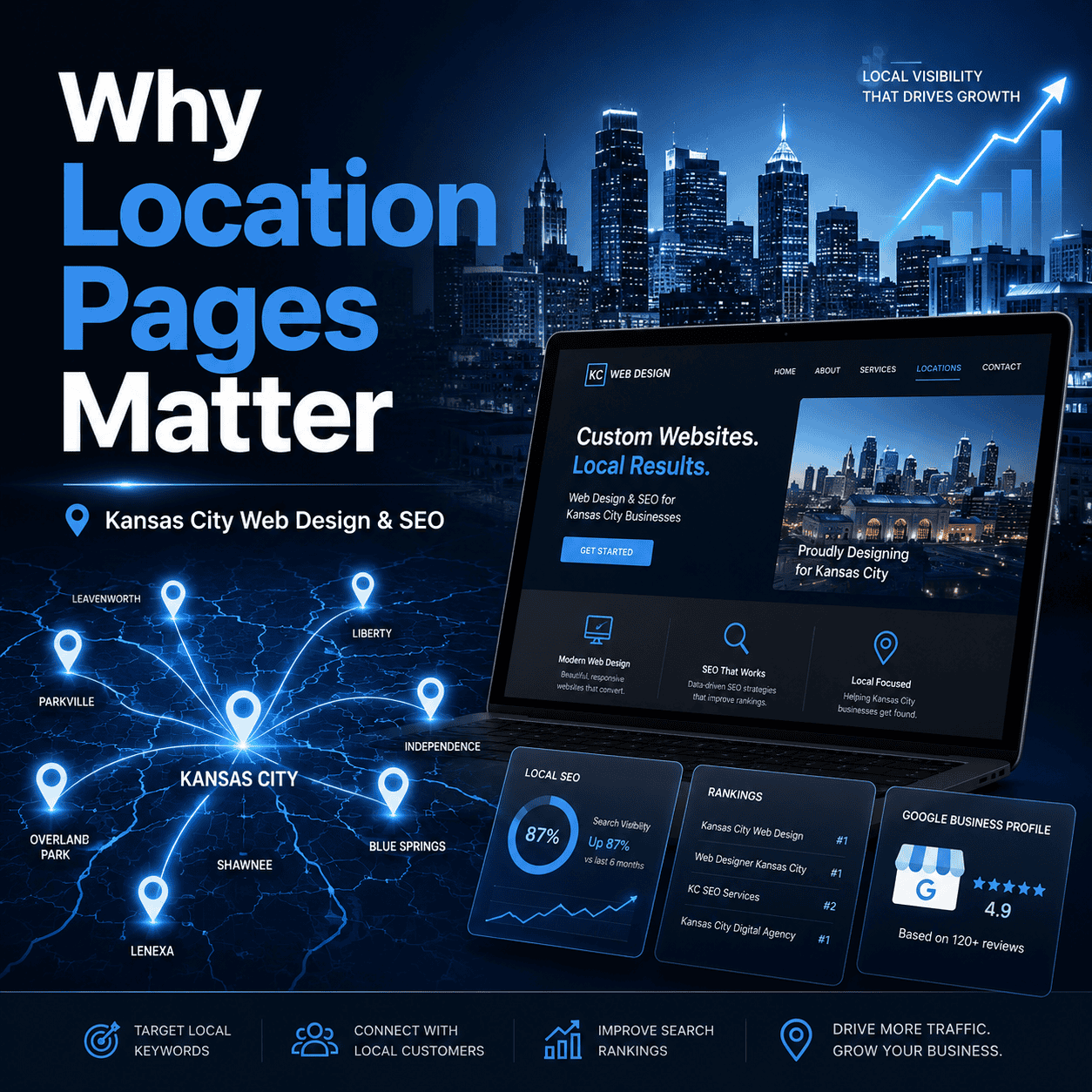
Businesses across the Kansas City area need more than a good-looking website. They need a strong local SEO structure that helps customers find them by city, county, service area, and search intent. A well-built locations hub can connect your website, improve internal linking, support local rankings, and turn more nearby visitors into real leads.
A strong Kansas City SEO strategy starts with location clarity
When someone searches for a business online, they are usually not thinking in broad marketing terms. They are thinking about what they need, where they need it, and who seems trustworthy enough to contact. A homeowner in Liberty may search differently than a business owner in Overland Park. A contractor serving Platte County may need a different website strategy than a professional office focused on Johnson County. That is why location structure matters so much.
A website can have strong design, great service pages, and a polished homepage, but if it does not clearly communicate where the business works, search engines and customers may both struggle to understand its local relevance. Location pages help solve that problem. They create dedicated paths for specific cities, counties, and nearby markets while supporting the larger website as a whole.
The OHS Publishing locations page is built as a central hub for Kansas City-area web design and SEO services. Instead of leaving city pages disconnected, buried, or difficult to find, a locations hub gives visitors and search engines a clean way to move from the main website to the local markets that matter most.
This kind of structure is especially helpful for service-based businesses. Whether your company serves Clay County, Platte County, Johnson County, Kansas City Northland, or surrounding communities, your website should make your service area obvious. The clearer your structure is, the easier it becomes to build local relevance, support stronger rankings, and guide visitors toward the next step.
Why location pages are important for Kansas City businesses
Location pages help your website explain where you work, who you serve, and why your business is relevant to customers in a specific area.
They Support Local Search Intent
Many people search by service plus city, such as “web design Kansas City,” “SEO Overland Park,” or “website designer near me.” Location pages help your website match those local searches more clearly.
They Organize Your Service Area
If your business serves multiple communities, city and county pages help organize your reach in a way that feels helpful instead of scattered.
They Improve Internal Linking
A connected locations hub gives important pages a stronger path from your homepage, service pages, and supporting blog content.
They Help Visitors Feel Understood
A local customer is more likely to trust a business that clearly understands their area, market, competition, and service needs.
Local SEO is not just about ranking — it is about being relevant
One of the biggest mistakes businesses make with SEO is assuming that ranking for one broad keyword is enough. A company may want to rank for “Kansas City web design,” and that can be a valuable search term. But customers often search in more specific ways. They may search for a website designer in Gladstone, an SEO company in Liberty, a web design agency in Overland Park, or local marketing help in Platte City.
Those searches matter because they usually show stronger intent. Someone searching by city is often looking for a provider who understands that area and feels accessible. A local searcher may compare several businesses quickly, scan the website, look for service details, and decide whether to call, request a quote, or move on.
A strong location strategy helps your site answer those searches. It gives each market its own page, message, and internal link path. It also creates a stronger foundation for your main services, including Kansas City web design , Kansas City SEO services , content strategy, local landing pages, and conversion-focused website structure.
The goal is not to create thin pages with only a city name swapped out. That usually creates a weak user experience and does not do much to build trust. A better approach is to create pages that explain the local market, connect to relevant services, speak to real customer needs, and guide visitors toward action.
In other words, local SEO works best when the page feels useful to a person, not just readable to a search engine. The strongest location pages combine search targeting, local relevance, professional web design, clear calls to action, and a helpful explanation of what the business offers.
Strong local SEO pages often include:
- City and county-focused headings
- Clear explanation of services
- Internal links to related service pages
- Nearby market links for service-area growth
- Trust-building copy and calls to action
- Helpful FAQs that answer buyer questions
- Clean mobile-friendly design
Why a central locations page helps your whole website perform better
A locations hub is more than a list of cities. It is a strategic page that connects your service area, supports SEO, and helps visitors quickly find the market that applies to them.
It Reduces Isolated Pages
Location pages should not sit alone with no clear connection to the rest of the site. A hub gives them a parent destination that keeps them easier to find and easier to crawl.
It Improves User Flow
Visitors can scan the hub, choose their city or county, and land on the most relevant page without having to dig through menus or guess where to go.
It Strengthens Topical Relevance
When your county pages, city pages, service pages, and blogs all connect naturally, your website sends clearer signals about what you do and where you do it.
It Supports Lead Generation
A good hub does not only help rankings. It also helps real visitors understand that your business works in their area and gives them a clear reason to reach out.
Building visibility across Clay County, Platte County, and Johnson County
Different parts of the Kansas City metro have different competition, customer behavior, and service-area opportunities. A strong local SEO strategy should reflect that.
Clay County Web Design & SEO
Clay County businesses often serve a mix of suburban, Northland, and community-based markets. A strong county page can support visibility across cities like Gladstone, Liberty, Smithville, Kearney, North Kansas City, and Excelsior Springs.
Johnson County Web Design & SEO
Johnson County is one of the most competitive business markets in the metro. Companies in Overland Park, Leawood, Olathe, Lenexa, and Shawnee often need polished design, stronger trust signals, and smart local SEO.
Platte County Web Design & SEO
Platte County businesses benefit from location pages that connect smaller communities with broader Kansas City search demand. Cities like Platte City, Parkville, Riverside, Weatherby Lake, and Weston can each support valuable local visibility.
City pages help businesses connect with customers searching nearby
City pages are useful because they allow your website to speak directly to local customers in the markets where you want more visibility.
Gladstone Web Design & SEO
A Gladstone-focused page helps businesses connect with customers searching for local web design, SEO, and online marketing support in the Northland.
Liberty Web Design & SEO
Liberty businesses can benefit from stronger local messaging, clearer service pages, and website structure built around both visibility and conversion.
Overland Park Web Design & SEO
Overland Park is a high-competition market where professional design, strong SEO structure, and clear brand presentation can make a major difference.
Platte City Web Design & SEO
Platte City businesses can use local SEO pages to build more relevance, explain services clearly, and support better lead generation from nearby searches.
What makes a local landing page useful for rankings and conversions?
A location page should not feel like a doorway page or a thin placeholder. It should feel like a helpful, well-structured page created for people in a specific market. That means the page needs more than a city name in the title. It needs useful content, clear service descriptions, internal links, and a layout that gives visitors confidence.
The best local pages answer the questions customers already have. Do you serve this area? What services do you offer? Do you understand the needs of businesses in this market? What makes your company different? How can someone contact you? If the page answers those questions clearly, it becomes more useful for both visitors and search engines.
For a web design and SEO company, a location page should also explain how better design and better visibility work together. A website may attract traffic, but if the page looks outdated or confusing, visitors may not convert. A beautiful website may create a stronger impression, but if it is not structured for search, fewer people may find it. The strongest results come when design, SEO, content, and conversion strategy all support each other.
That is why OHS Publishing builds local pages around more than keywords. The goal is to create a digital structure that helps businesses look credible, show up more often, and turn visitors into calls, quote requests, and real opportunities.
Strong location page elements
- A clear local headline
- Specific service-area messaging
- Helpful explanation of the business offering
- Links to core service pages
- Nearby city and county links
- FAQs written for local buyers
- Calls to action near key decision points
- Mobile-friendly section spacing
Web design and SEO work better when they are planned together
Many businesses treat web design and SEO as separate projects. In reality, they should support each other from the beginning.
Design Builds Trust
A clean, modern website helps your company look more established. Strong visuals, better spacing, readable content, and clear navigation all make the business easier to trust.
SEO Builds Visibility
SEO helps your business appear when customers search for your services. Location pages, service pages, blogs, and internal links all support that visibility.
Content Builds Relevance
Helpful content explains what you do, who you serve, and why someone should choose your business. It also gives search engines more context about your expertise.
Conversion Flow Builds Leads
Calls to action, quote buttons, phone links, forms, and strong page flow help turn website visitors into real business opportunities.
Location pages become stronger when supported by service pages and blogs
A locations hub is powerful, but it should not stand alone. It works best when connected to service pages, blog articles, industry pages, and other content that supports the same SEO goals. This creates a stronger web of relevance across the site.
For example, a business may have a main web design page, a Kansas City SEO page, a content writing page, and several city-specific pages. When those pages link naturally to each other, they help visitors continue learning while also giving search engines clearer paths through the site.
Blog content can support this strategy by answering common questions, explaining local SEO concepts, and linking back to the pages that matter most. A blog about location pages can link to the main locations hub. A blog about small business SEO can link to the Kansas City SEO page. A blog about website redesign can link to the web design page. Over time, this creates a more complete SEO ecosystem.
OHS Publishing also offers blog and article writing services for businesses that need stronger content to support rankings, internal linking, customer education, and long-term visibility.
Content that supports local SEO
- City and county landing pages
- Core service pages
- Industry-specific service pages
- Helpful blog articles
- FAQs and customer education content
- Internal link hubs
- Conversion-focused calls to action
Mistakes that weaken location pages and local SEO performance
Location pages can help your website, but only when they are built with enough quality, structure, and purpose.
Thin City Pages
A page with only a city name and a few generic paragraphs usually does not provide enough value. Each location page should explain the market, services, and next steps clearly.
No Internal Links
If location pages are not linked from a hub, service page, menu, or relevant blog, they may become harder for search engines and users to discover.
Weak Calls to Action
Ranking a page is only part of the goal. Visitors also need clear ways to call, request a quote, ask a question, or move forward.
Poor Mobile Experience
Many local searches happen on phones. If the page is hard to read, slow to load, or difficult to use on mobile, leads can disappear quickly.
The strongest local SEO strategy connects services, industries, and locations
Local SEO becomes even stronger when a website connects three important ideas: what the business does, who it serves, and where it serves them. A generic website may only explain the service. A stronger website also explains the industry, the location, and the customer need behind the search.
For example, a roofing company in Gladstone needs a different message than a therapist office in Overland Park, a restaurant in Parkville, or an auto repair shop in North Kansas City. The website structure should reflect those differences. Industry pages help explain the type of business. Location pages help explain the service area. Service pages explain the work being offered.
When these pages are connected properly, the site becomes more useful. Visitors can find content that feels relevant to them, and search engines have more context about how the business fits into the local market.
This is why OHS Publishing builds web design and SEO strategies around more than one page. A homepage can introduce the brand. Service pages can explain the work. Industry pages can speak to specific business types. Location pages can support local visibility. Blog content can answer questions and create additional internal linking opportunities.
That complete structure helps a business look more established online while giving every important page a clearer purpose.
How OHS Publishing helps Kansas City-area businesses build stronger local visibility
OHS Publishing works with businesses that want a more professional website, stronger search visibility, and better lead generation from the traffic they already earn.
Website Review
We look at your current website, page structure, service messaging, mobile experience, and conversion flow to identify what may be holding it back.
Local SEO Planning
We review the cities, counties, and service areas you want to target so your website can be structured around the markets that matter most.
Content and Page Strategy
We help organize service pages, location pages, blogs, and calls to action so the site becomes easier to navigate and more useful for SEO.
Lead-Focused Design
We build page layouts that look professional, explain your services clearly, and guide visitors toward contacting your business.
Does your business need location pages?
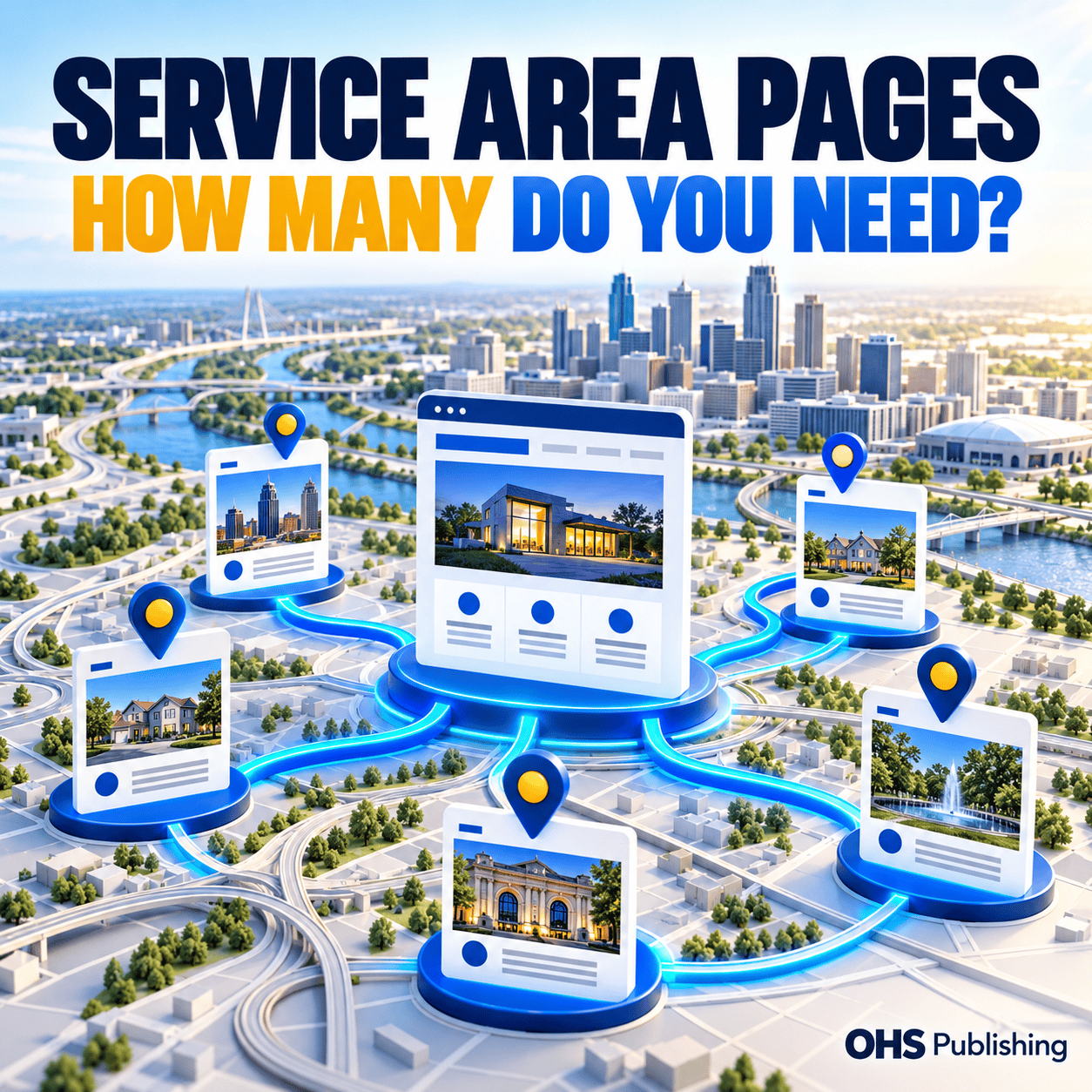
Not every website needs dozens of location pages. The right structure depends on your business model, service area, competition, and growth goals. But for many Kansas City-area businesses, location pages can become one of the most useful parts of the website.
Location pages make sense when your business serves more than one city, wants to rank in nearby communities, competes with local providers, or receives leads from different parts of the metro. They can also help when your homepage is trying to do too much. Instead of forcing one page to target every city and service area, a connected location strategy gives each market its own space.
A business serving Clay County, Platte County, and Johnson County may need a hub that organizes all three. A company focused only on Overland Park and Leawood may need fewer pages but deeper content. A contractor serving the entire Northland may need city pages for Gladstone, Liberty, Kearney, Smithville, and North Kansas City. The strategy should match the way customers search and the way the business actually operates.
The important part is quality. A smaller number of strong, useful location pages is usually better than a large group of weak pages with repetitive content. Each page should feel like it belongs on the site and genuinely helps a visitor understand the business.
Location pages may help if you:
- Serve multiple cities or counties
- Want better local search visibility
- Need clearer service-area messaging
- Compete with nearby local businesses
- Have important pages that feel buried
- Want more calls, quote requests, or form leads
- Need stronger internal linking across your site
A better local website structure can support growth for years
Local SEO is not a one-time checklist. It is an ongoing structure that should grow with your business. As your company expands into new markets, adds services, publishes new content, or improves its brand, your website should be able to support that growth.
A well-planned locations hub gives your website room to expand without becoming messy. New city pages can be added under the hub. New blog posts can link back to the most relevant markets. Service pages can support both broad Kansas City keywords and more specific local searches. Over time, this creates a website that is easier to manage, easier to improve, and easier for visitors to use.
That is the real value of strategic web design and SEO. It is not only about building a page that looks good today. It is about creating a structure that can keep supporting visibility, trust, and lead generation as the business grows.
If your current website has location pages that are disconnected, thin, outdated, or hard to find, now is a good time to improve them. If your website does not have local pages yet, a locations hub may be the right starting point. And if your site has a strong design but weak search structure, connecting your services and service areas may help unlock more value from the website you already have.
Build a better Kansas City location strategy with OHS Publishing
If your website needs stronger local pages, better internal linking, clearer service-area messaging, or a more professional design built around lead generation, OHS Publishing can help you create a smarter web design and SEO strategy for the Kansas City market.
Frequently asked questions
What is a location page?
A location page is a website page focused on a specific city, county, or service area. It helps explain where your business works, what services you offer in that area, and why local customers should contact you.
Why does a business need a locations hub?
A locations hub organizes your city and county pages in one central place. This can improve internal linking, make pages easier to find, and help visitors choose the market most relevant to them.
Do location pages help SEO?
Yes, location pages can support SEO when they are useful, well-written, properly linked, and focused on real service areas. They help search engines understand where your business operates and what local searches your pages may be relevant for.
How many location pages should my business have?
The right number depends on your service area and goals. A business that serves several cities may need multiple location pages, while a smaller local business may only need one or two strong pages.
What should a good location page include?
A good location page should include a clear local headline, service information, helpful content, internal links, calls to action, trust signals, and FAQs that answer common customer questions.
Can OHS Publishing build location pages for my business?
Yes. OHS Publishing can help plan, write, design, and structure location pages for businesses that want stronger local visibility across Kansas City and surrounding communities.