How to Audit Your Small Business Website: 15 Things to Check
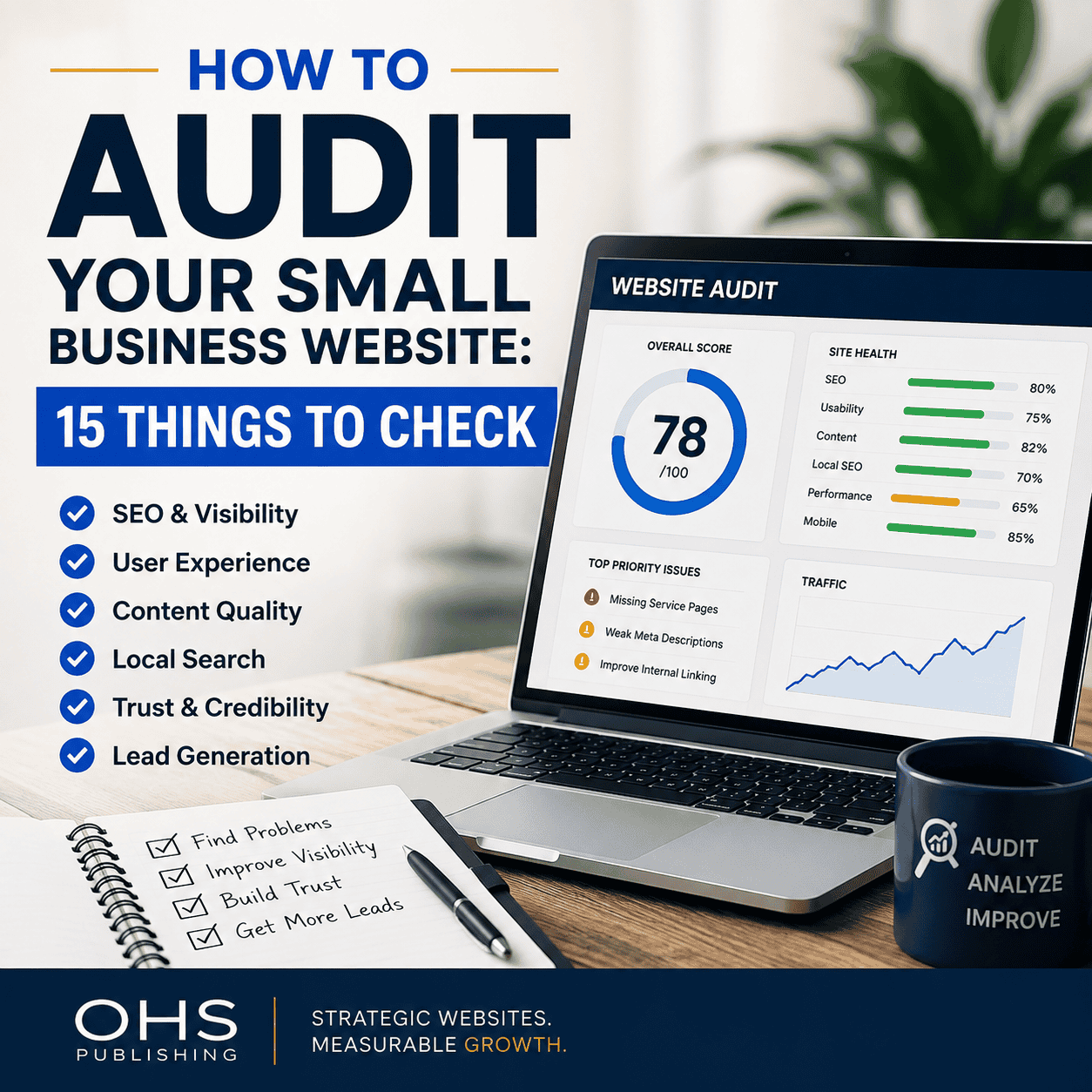
A small business website can look professional and still struggle to generate calls, quote requests, bookings, or search visibility. The problem is that many website issues are not immediately obvious. A homepage may look clean but fail to explain the business clearly. Service pages may be too thin. Local targeting may be weak. Calls to action may be buried. Reviews and trust signals may be missing.
That is why a website audit is useful. Instead of judging a website only by how modern it looks, an audit looks at the things that actually affect visibility, credibility, usability, and lead generation.
At OHS Publishing, we look at websites as part of a larger marketing system. Good design matters, but so do SEO, local search, content, internal linking, trust, and conversion paths. Here are 15 things to check when auditing your own small business website.
1. Can Visitors Immediately Tell What Your Business Does?
Start with the most basic question. If someone lands on your homepage for the first time, can they understand what your company does within a few seconds?
Your logo and business name usually are not enough. The headline, supporting text, and first visible section should explain your main service or product in plain language. For a local business, the service area may also need to be clear.
Avoid vague messaging like “Solutions Designed for You” or “Excellence You Can Trust.” Those phrases may sound polished, but they do not tell the visitor what you actually do.
2. Is There a Clear Next Step?
Once visitors understand your business, what do you want them to do next?
Depending on the business, that may be calling, requesting a quote, scheduling an appointment, booking a consultation, placing an order, or visiting a location.
Your primary call to action should be easy to find and repeated naturally throughout longer pages. If a visitor is ready to contact your business, they should not have to hunt for the next step.
3. Does Every Important Service Have Its Own Page?
One of the most common website problems is trying to place every service on one general Services page.
If an HVAC company offers AC repair, furnace repair, system replacement, maintenance, indoor air quality, and emergency service, those are all different customer needs and different searches.
Dedicated service pages allow you to explain the service in more detail, answer customer questions, add trust signals, build stronger SEO relevance, and create a clear path to request service.
This is one reason website structure and SEO strategy should be planned together instead of treated as separate projects.
4. Does Your Website Clearly Explain Where You Work?
Local businesses need to make geography obvious.
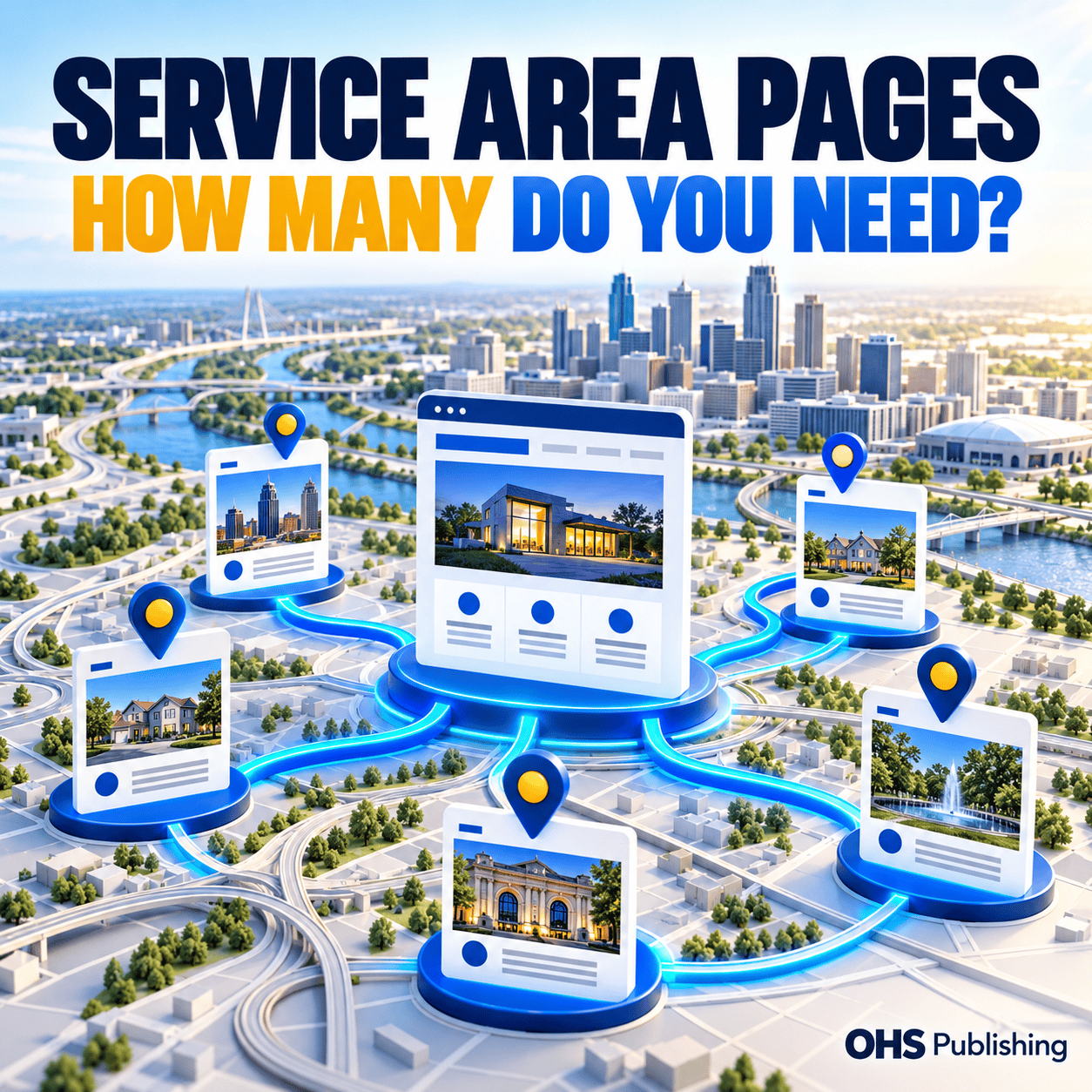
If your company serves Kansas City and surrounding communities, visitors should not have to search through the footer to determine whether you work in their area. Search engines also need enough geographic context to connect your services with the markets you serve.
That may involve service-area information, local references, location pages, city pages, and internal links between services and locations.
The goal is useful local content, not dozens of duplicate pages with only the city name changed.
5. Does Each Page Have One Clear Topic?
Pages become harder for both people and search engines to understand when they try to cover too many unrelated topics.
Review your important pages and ask what each one is actually about. The title, H1, headings, body copy, internal links, and calls to action should generally support that primary topic.
This does not mean repeating the same keyword throughout the page. It means creating a page that clearly answers a specific customer need or search intent.
6. Are Your Titles and Headings Descriptive?
Page titles and headings help visitors understand the page quickly and give search engines important context.
Compare a heading like “Our Solutions” with “Commercial Roofing Services in Kansas City.” The second tells the visitor much more about what they are about to read.
Review your H1 and major H2 headings. They should be descriptive, natural, and aligned with the purpose of the page.
7. Does Your Content Answer Real Customer Questions?
Good content should do more than fill space.
Think about the questions people normally ask before becoming a customer. What does the service include? How does the process work? How long does it take? What areas do you serve? What problems can you solve? Why should someone choose your company?
These questions can be answered through service-page sections, FAQs, blog content, and supporting resources.
Useful content helps visitors make decisions while also giving search engines more context about your expertise.
8. Does the Website Provide Enough Proof to Trust You?
A visitor may understand what you do and still hesitate because they are not sure whether they can trust your company.
Review your website for real proof, including:
- Customer reviews and testimonials
- Project photos or portfolio examples
- Case studies
- Licenses and certifications
- Team or owner information
- Years of experience
- Professional associations
- Guarantees when appropriate
Specific proof is usually stronger than generic statements such as “We provide excellent service” or “Customer satisfaction is our priority.”
If you have strong work to show, make it visible. A portfolio, customer reviews, and project examples can help establish credibility faster.
9. Is Your Contact Information Easy to Find?
This sounds simple, but it is worth testing on both desktop and mobile.
A local service business should make its phone number, quote form, contact page, booking option, or request-service button easy to reach.
Someone who is ready to hire you should not need to visit several pages before they can figure out how to get in touch.
10. Are Your Forms Asking for Too Much Information?
Every form field creates friction.
Sometimes detailed forms are necessary, but a basic quote request usually does not need twenty questions before the customer has even spoken with your business.
Review your forms from the visitor's perspective. Ask for enough information to understand the request and follow up, but avoid unnecessary barriers during the first contact.
11. Are Your Pages Internally Linked?
Internal linking is one of the easiest website improvements to overlook.
A blog article about furnace problems should be able to link to a furnace repair page. A service page can link to related services. A location page can link to the services offered in that market.
Good internal linking helps visitors continue through the website and helps search engines understand the relationships between your pages.
It also prevents important pages from becoming orphaned with no meaningful internal link pointing toward them.
12. Does the Website Work Well on a Phone?
Do not test mobile usability only by shrinking your desktop browser.
Open the website on an actual phone. Use the navigation. Tap the buttons. Complete the form. Read a service page. Try to call the company.
Look for problems such as:
- Oversized headings
- Tiny text
- Horizontal scrolling
- Overlapping sections
- Buttons that are difficult to tap
- Badly cropped images
- Forms that are frustrating to use
For many small businesses, mobile visitors make up a large share of potential customers. A strong desktop site is not enough if the phone experience is frustrating.
13. Are Important Pages Too Thin?
Thin content is not simply about word count. The better question is whether the page provides enough useful information to accomplish its purpose.
A major service page containing only a heading, stock image, two sentences, and a phone number may not give customers enough confidence to contact the business. It may also give search engines very little context about the service.
Strengthen important pages with useful service details, processes, FAQs, service-area information, proof, related services, and calls to action.
14. Are You Missing Pages Customers Are Searching For?
Sometimes the biggest SEO opportunity is not improving an existing page. It is creating a page that should already exist.
Review your primary services, customer types, service areas, and frequently asked questions. Compare those topics with the actual structure of the website.
If an important revenue-generating service is mentioned only in a paragraph on the homepage, it may deserve its own page.
The same can be true for meaningful geographic markets. Businesses that serve multiple areas may benefit from well-written location pages when those pages provide genuine value rather than duplicate content.
OHS Publishing uses this type of structure throughout our Kansas City service-area pages and industry-specific website content.
15. Are You Separating What You Can See From What Needs Testing?
This final step is important because website audits can easily make claims that cannot actually be verified from the public website.
You can identify a confusing navigation system, missing service page, weak call to action, or thin content simply by reviewing the site.
But other questions require additional tools and account data.
- Exact keyword rankings
- Organic traffic
- Google Search Console indexing data
- Core Web Vitals
- Exact PageSpeed scores
- Conversion rates
- Backlink data
- Advertising performance
Those areas should be checked with tools such as Google Search Console, Google Analytics, PageSpeed Insights, SEO crawling software, or advertising platform data.
A good website audit should clearly separate what was observed from what should be investigated further.
How to Prioritize What You Find
After working through these 15 checks, you may have a long list of improvements. That does not mean every issue deserves the same amount of attention.
Start with problems that directly affect a visitor's ability to understand the business, find the right service, trust the company, and contact you.
High-priority issues often include:
- No clear homepage message
- No obvious call to action
- Missing high-value service pages
- Weak or missing local targeting
- Poor mobile usability
- Important contact information that is difficult to find
- Little or no customer proof
- Major pages with extremely thin content
Medium-priority work might include stronger FAQs, better internal linking, additional customer proof, and supporting content.
Minor design changes and visual polish can come after the larger usability, SEO, and conversion problems are addressed.
Get a Free Website & SEO Audit
You can work through this checklist manually, but if you want a faster starting point, OHS Publishing created a free Website & SEO Audit that can review your public website and help identify the areas most worth your attention.
The audit looks at website usability, business clarity, service pages, SEO, local search, content, internal linking, trust signals, and lead-generation opportunities.
It then provides a prioritized review so you can see what your website is already doing well, what may be holding it back, and what you may want to improve first.
The audit does not pretend to have access to private Google Analytics, Search Console, ranking, or conversion data. It focuses on what can reasonably be reviewed from the public-facing website and points out areas that should be tested separately when necessary.
You can start your free website and SEO audit here.
What If the Audit Finds Bigger Problems?
Finding issues does not automatically mean you need to rebuild the entire website.
Sometimes a website already has a strong foundation and simply needs better service pages, stronger local targeting, clearer calls to action, or improved content.
Other websites have larger structural problems and may benefit from a redesign.
If your site is outdated, difficult to navigate, hard to update, poorly structured for SEO, or not representing your business well, a WordPress website redesign may provide a better long-term foundation.
The important thing is to base that decision on the problems you actually find rather than assuming a new design automatically solves everything.
Your Website Should Help People Find You—and Choose You
A small business website does not need to chase every new design trend. It needs to do a few important things extremely well.
It should tell people what you do. It should make your services easy to find. It should support local and organic search visibility. It should provide enough proof to build trust. And it should give interested visitors a simple path to contact your business.
A website audit gives you a way to separate meaningful problems from cosmetic ones.
You may discover that your website is already stronger than you thought and needs only a few targeted improvements. Or you may uncover missing pages, weak content, poor local targeting, or conversion problems that deserve more attention.
Either way, you leave with a better understanding of what your website is actually doing for your business.
OHS Publishing provides WordPress web design, SEO services, local SEO, website content, paid advertising, and ongoing website support for small businesses.
If your audit identifies improvements you would rather have handled professionally, request a quote from OHS Publishing and we can help determine the right next step.