How Many Service Area Pages Does a Local Business Need?
A local business can serve 20 cities and still need only a handful of service area pages. Another business may need a separate page for nearly every market it enters. The right number is not based on how many city names can fit in the footer. It depends on where the business truly works, what customers in each area need, and whether each page can offer something useful beyond a swapped location name.
This is where many local SEO plans go wrong. Some businesses build one general service area page that is too broad to answer a local search. Others publish dozens of nearly identical city pages and hope volume will create rankings. Both approaches can waste time and make the website harder to trust.
The practical goal is to build the smallest useful set of pages that covers the markets worth pursuing. Each page should help a real customer understand whether you serve the area, what you offer there, and what the next step looks like.
The Short Answer: Build One Page per Meaningful Market
There is no universal number of service area pages that every business should have. A focused local company may start with three to five priority cities. An established contractor serving a large metro may reasonably support eight to fifteen. A company with multiple staffed locations may need more.
Those ranges are planning guides, not ranking formulas. The more useful question is: Can this location support a page that is genuinely distinct, accurate, and valuable to someone searching from that area?
If the answer is no, adding the page simply increases the amount of thin content the business must maintain. If the answer is yes, the location may deserve its own page even if it is close to another market.
Website Service Area Pages and Google Business Profile Service Areas Are Different
A website service area page is a landing page about serving a particular city, county, or part of a metro. It can explain local services, customer needs, travel or scheduling details, examples of work, and the path to request an estimate.
A Google Business Profile service area is a setting inside the business listing. Google allows service-area and hybrid businesses to define the places they serve, and its current guidance says a profile can include up to 20 service areas. Google also recommends being specific and accurate, with the overall area generally staying within about two hours of driving time from the business base. See Google’s official guidance for managing service areas.
That does not mean a website automatically needs 20 city pages. It also does not mean adding a city to the Business Profile will make the business rank prominently there. Website content and Business Profile settings support different parts of local visibility.
When a City Deserves Its Own Page
A city or community is a strong candidate when several of the following conditions are true.
You actively serve the area
The business should be willing and able to take work there. A page should not target a distant market merely because the search volume looks attractive. If travel time, scheduling, licensing, staffing, or service limitations make the location impractical, the page creates the wrong expectation.
The market matters to the business plan
Prioritize places where the right customers live or operate, not every nearby municipality. A roofing company may care most about neighborhoods with the housing stock and project types it handles. A therapist may prioritize communities within a realistic appointment radius. A commercial service company may focus on business districts rather than residential suburbs.
Customers in the area search differently or need different information
Some locations create distinct questions. One city may require permit-related information, another may have older homes, and another may contain many new developments. A useful location page reflects those differences without making claims the business cannot support.
You can provide local proof or useful specificity
A location page becomes stronger when it can include relevant projects, neighborhoods, service details, travel expectations, photos, frequently asked questions, or testimonials that are genuinely connected to that market. Do not invent local experience. If the business is new to an area, say what it can serve and build proof over time.
The page has a clear place in the website structure
Every location page should be reachable through sensible navigation and internal links. OHS Publishing uses a locations hub for Kansas City-area web design and SEO to help visitors move from the broader service region into relevant city pages. This is clearer than leaving location pages isolated in the sitemap.
How Many Pages Should You Start With?
Most small businesses should start with a focused first group instead of trying to cover the entire metro at once.
New or small service business: three to five priority areas
Choose the business’s home market and the nearby communities most likely to produce profitable work. This gives the company enough coverage to learn what performs without creating a large maintenance burden.
For example, a new cleaning company based in one Kansas City suburb might begin with its primary city and three nearby markets. It can expand after the first pages are complete, indexed, internally linked, and generating useful data.
Established metro-area business: five to ten strong markets
A company with an existing customer base, documented work, and broader capacity can usually support more. The key is to publish complete pages in stages. Five well-built pages are a better foundation than 25 pages containing the same paragraph with a different city name.
A staged rollout also makes it easier to see whether markets such as Overland Park and Olathe need different messaging, examples, or calls to action. Even neighboring cities can represent different audiences and competitive conditions.
Multi-location or highly developed operation: expand only with support
A business with separate offices, teams, schedules, inventories, or service capabilities may need a larger location structure. Each page should accurately describe the location it represents. Do not imply that a virtual office, mailbox, or unstaffed address is a full business location.
Expansion also requires upkeep. Phone numbers change, service boundaries shift, staff move, photos age, and offers end. A large location section needs an owner and a review schedule.
What Makes a Service Area Page Worth Publishing?
A useful service area page is not a city name added to a generic template. It answers local buying questions while remaining consistent with the rest of the website.
A strong page will usually include:
- A clear statement that the business serves the location
- The specific services available in that market
- Local context that affects the service or customer decision
- Relevant project examples, photos, reviews, or experience when available
- A realistic description of scheduling, travel, estimates, or coverage
- Links to important service pages and nearby location pages
- A direct call, booking, or quote action
The page should also work well on a phone. Local searches often happen when someone wants an answer quickly. The service, coverage, proof, phone number, and next step should not be buried beneath a long introduction.
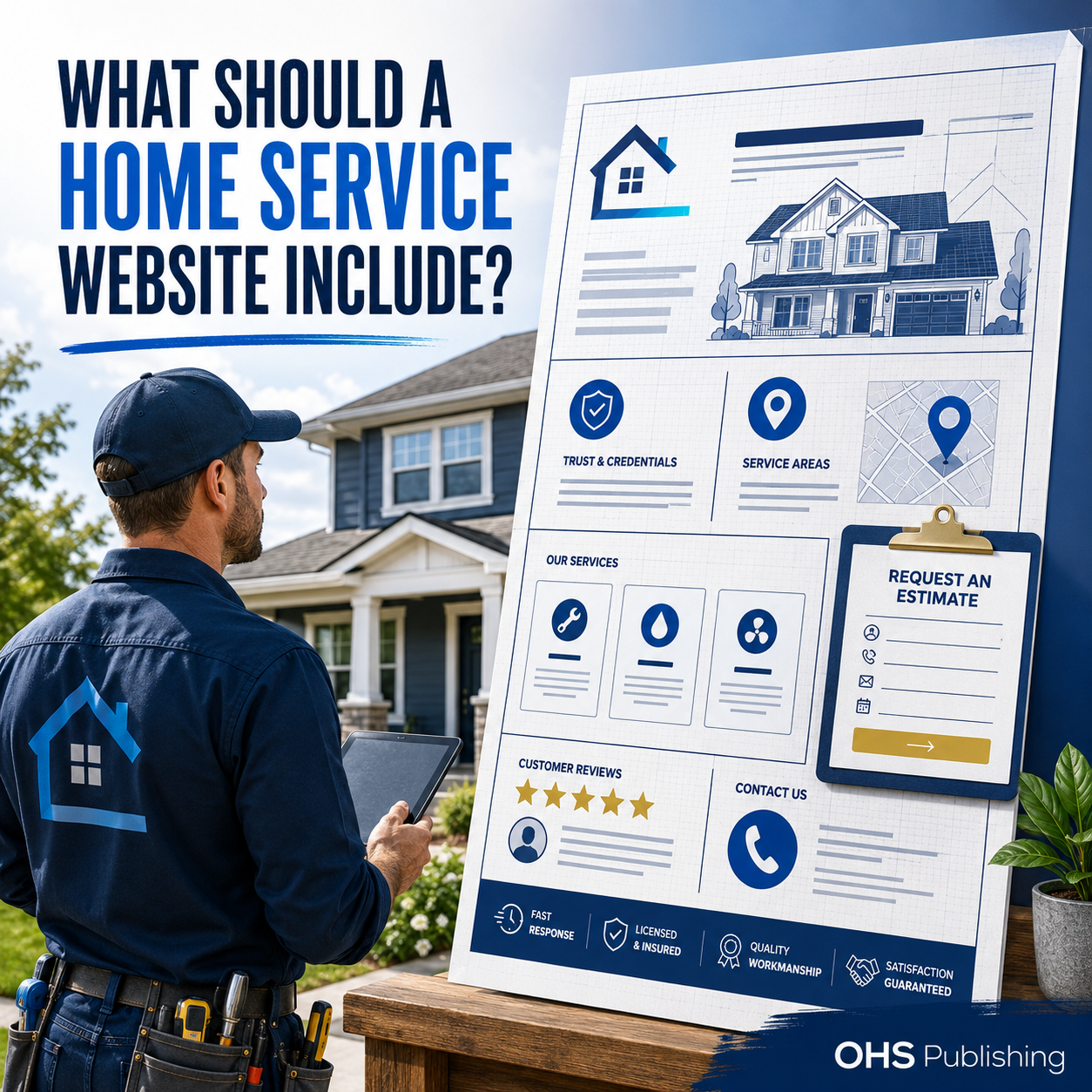
If the rest of the site is missing core information, fix that foundation first. The OHS guide to what a home service website should include covers the essential pages and conversion elements that location content should support.
Avoid the “Same Page, Different City” Trap
The fastest way to create location pages is also usually the weakest: duplicate one page, replace the city name, and publish it repeatedly. That produces pages with little independent value and gives visitors no reason to prefer one page over another.
Google’s spam policies describe doorway abuse as pages created to rank for similar queries that funnel users toward the same destination without providing enough additional value. Review the official doorway abuse guidance before scaling a large location-page program.
Templates are not the problem by themselves. A consistent layout can improve usability. The problem is publishing a large group of pages where nearly everything—claims, examples, questions, and copy—is interchangeable.
To make pages meaningfully different, vary the substance rather than shuffling words. Use real market-specific details, distinct service priorities, relevant project examples, local images when available, and questions customers from that area actually ask.
Use a Hub-and-Spoke Structure
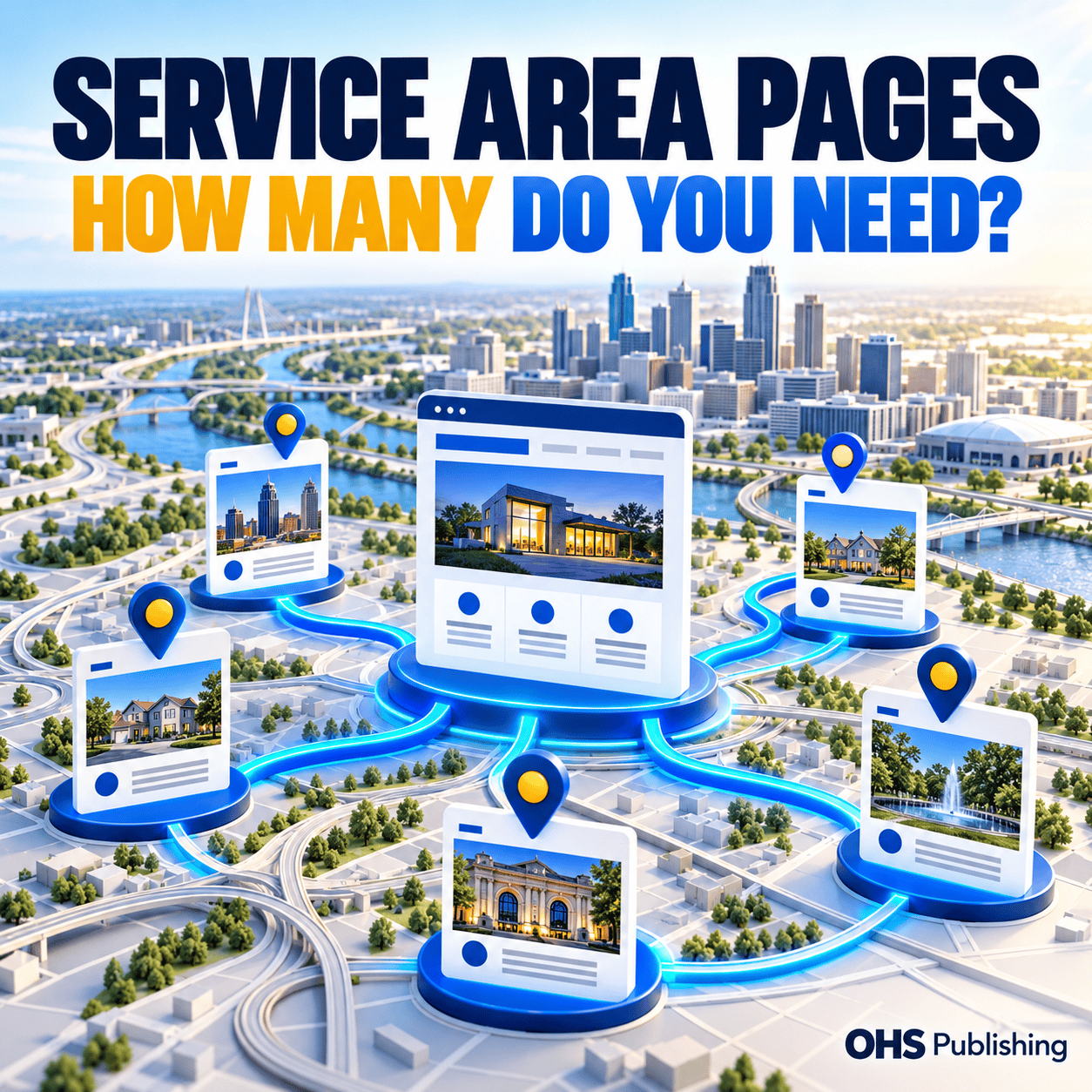
A clean location structure usually begins with one regional hub. The hub explains the overall service territory and links to the most important city or county pages. Each city page then links to relevant service pages and, when useful, to nearby markets.
For a Kansas City-area business, the structure might look like this:
- Regional hub: Kansas City metro service area
- County or regional layer: Johnson County, Clay County, or the Northland when that grouping helps users
- Priority city pages: the communities that support distinct, useful content
- Core service pages: detailed pages explaining what the company provides
This structure keeps the site understandable. It also helps prevent dozens of disconnected pages from competing with one another. OHS Publishing’s Kansas City SEO services focus on this kind of practical content organization, internal linking, and local relevance.
How to Choose Which Locations Come First
Create a simple priority list before writing. Score each possible market based on business value rather than proximity alone.
- Current demand: Are customers already calling from this area?
- Profitability: Does the market fit the services and project sizes the business wants?
- Operational fit: Can the team serve it reliably?
- Proof: Does the business have relevant work, knowledge, or customer feedback?
- Search opportunity: Are people looking for the service with location-specific intent?
- Competitive gap: Can the page be more useful and credible than what currently ranks?
Start with the markets that score well across several categories. A city with search demand but poor travel economics may not be worth the effort. A smaller nearby community with repeat customers and strong referrals may deserve attention sooner.
One Page Can Cover More Than One Small Community
Not every town needs a separate URL. When several small communities share the same service conditions, customer questions, and operational coverage, one regional page may serve them better.
The page can clearly name the communities in the copy and explain the broader coverage area. If one of those towns later produces enough demand, proof, and unique information, it can graduate into its own page.
This approach keeps the initial website lean and avoids publishing pages that have nothing distinctive to say. It also gives the business room to expand based on evidence rather than guesswork.
Measure Performance Before Expanding
Service area pages should be reviewed like business assets, not simply counted as SEO output. Watch what happens after the pages are indexed and have had time to collect meaningful data.
Useful signals include:
- Search impressions and clicks for location-specific queries
- Phone calls, quote requests, bookings, or form submissions from the target area
- Whether visitors continue to service pages or leave immediately
- Which cities produce qualified work rather than only traffic
- Pages that receive no impressions, links, engagement, or conversions
Do not expand just because one page ranks. Expand when the existing structure is accurate, helpful, and tied to business capacity. Before adding another group, use a broader small-business website audit to confirm that technical issues, unclear service pages, weak calls to action, or mobile problems are not limiting the pages already published.
Frequently Asked Questions
Should every city in my service area have its own page?
No. Create a separate page when the city is a meaningful market and you can provide useful, location-specific information. Smaller nearby communities can often be grouped on a regional page until they justify deeper coverage.
Can one service area page target multiple cities?
Yes. One regional page can cover several communities when the services, customer needs, and operating conditions are similar. Name the areas clearly, explain the actual coverage, and avoid forcing every city into a separate thin page.
Do service area pages improve Google Maps rankings?
They can support local relevance and give customers a useful destination, but a page does not guarantee stronger Google Maps placement. Google says local results are mainly based on relevance, distance, and prominence, while complete and accurate Business Profile information also matters.
How often should service area pages be updated?
Review them whenever services, coverage, staff, contact details, hours, project examples, or customer questions change. A scheduled annual review is a practical minimum for stable pages, while rapidly changing businesses should check them more often.
Build the Pages Your Best Markets Actually Need
The right service area plan is rarely “one page for every place within driving distance.” It is a focused set of pages built around real markets, useful information, and the company’s ability to deliver.
Start with the locations that matter most. Give each page a clear reason to exist. Connect the pages to the broader service structure, measure what produces qualified opportunities, and expand only when the next market can support a strong page.
OHS Publishing can help organize service, county, and city content into a local SEO structure that is easier for customers to use and practical for the business to maintain.