What Should a Home Service Website Include? A Practical Page-by-Page Guide
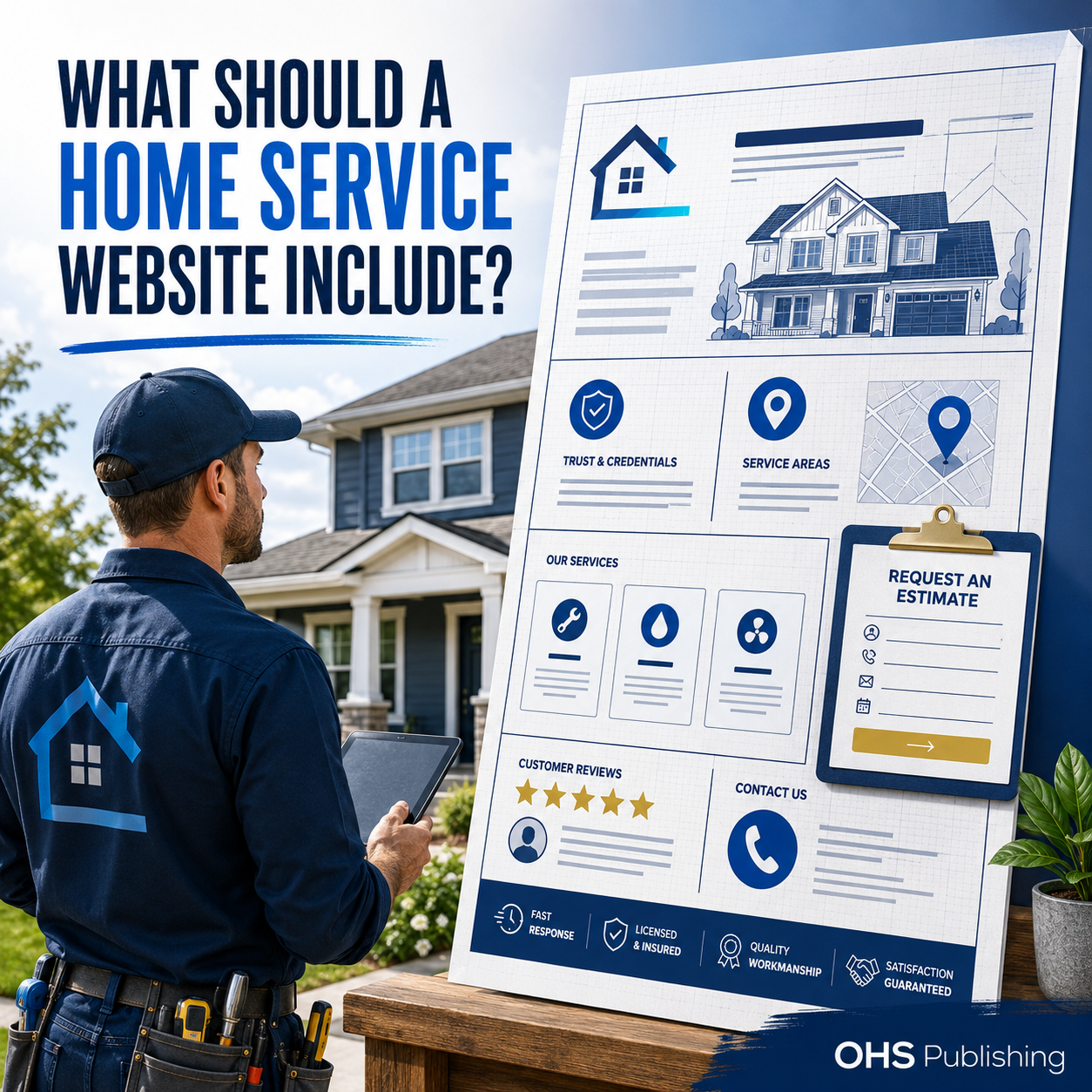
A home service website does not need to be complicated. It does need to make a homeowner feel confident enough to call, text, or request an estimate. If visitors cannot quickly tell what you do, where you work, why they should trust you, and how to reach you, the site is likely losing leads to a competitor with a clearer path.
That matters whether you run a roofing company, plumbing business, HVAC company, remodeling firm, cleaning service, or another local trade. Most people are not visiting your site to admire the design. They are trying to solve a problem. Your website should answer their questions and make the next step easy before they leave.
This guide breaks down the pages and information a strong home service website should include, plus the common gaps that make a capable company look harder to trust or harder to contact online.
Start with the job your website needs to do
For a local contractor or service business, a website usually has four jobs: help the right people find you, make your services easy to understand, show enough proof to earn trust, and turn interest into a call or estimate request.
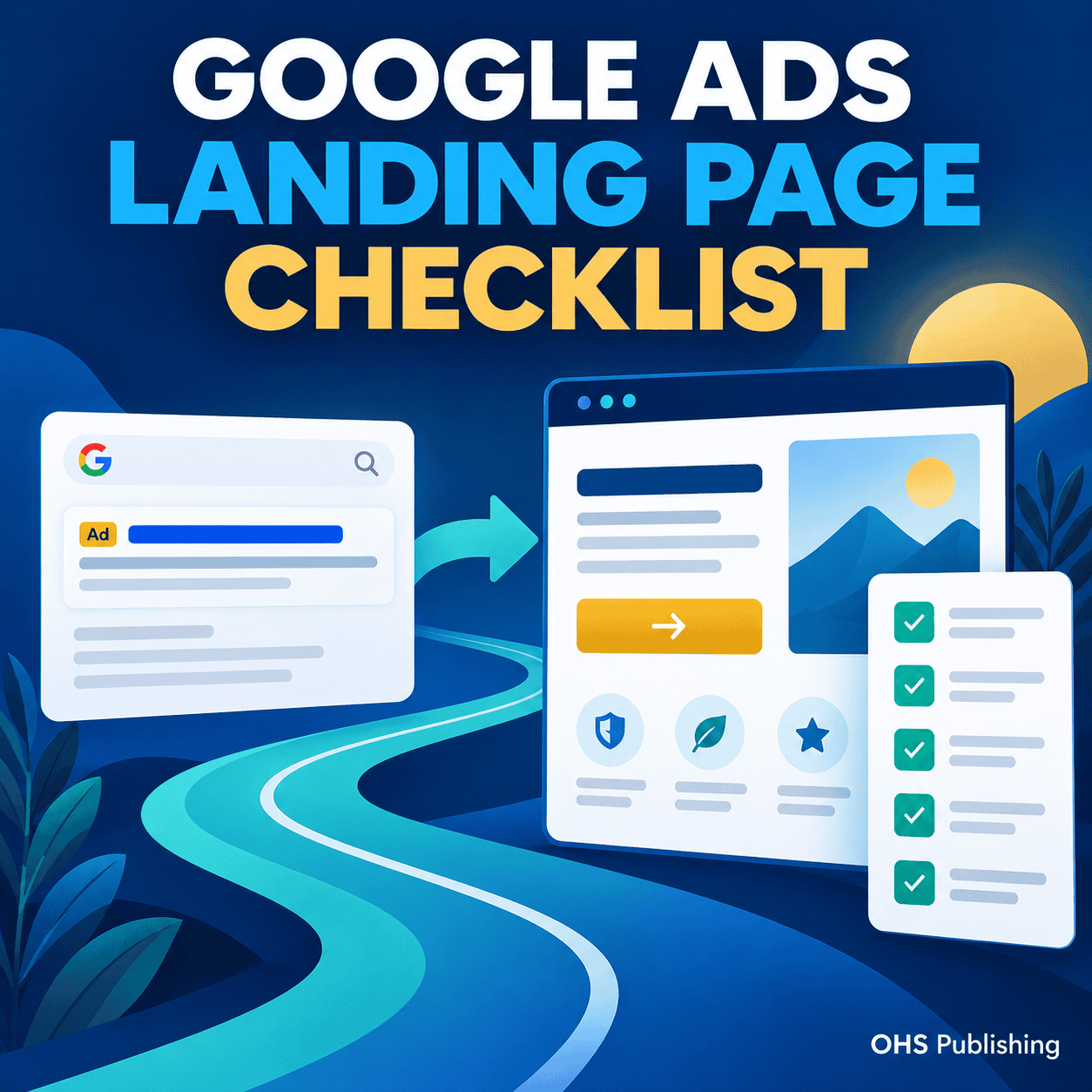
Those goals affect every page. A beautiful homepage without clear services may confuse a homeowner. A well-written service page without an obvious call button may create friction. A Google Ads campaign can bring visitors in, but the landing page still has to do the work of earning the lead.
A good starting point is to think of your site as the place that connects referrals, local searches, your Google Business Profile, social media, and paid traffic. That is why conversion-focused Kansas City web design is about more than choosing colors or picking a layout. It is about building a clear decision path for the person on the other side of the screen.
The essential pages for a home service website
A small company does not need dozens of pages on day one. It does need the right core pages, each with a clear purpose. The best structure depends on your services, service area, and how customers search, but the foundation below works for most home service businesses.
1. A homepage that immediately explains the business
Your homepage should make the basics obvious within a few seconds: what service you provide, the primary area you serve, and the action you want a visitor to take. “Quality service you can trust” may sound fine, but it does not tell a homeowner whether you repair furnaces, install fences, clean drains, or remodel kitchens.
Lead with a straightforward statement such as “Residential and commercial plumbing in Olathe” or “Roof repair and replacement for homeowners across Clay County.” Then support it with a phone number, a request-estimate button, and a short reason to choose your company. Keep the message specific enough that the right visitor knows they are in the right place.
A useful homepage also gives visitors a fast route to your major services, proof, service areas, recent work, and contact options. It should guide the next click instead of trying to explain every detail at once.
2. Dedicated service pages for the work customers seek
Service pages are where a homeowner should be able to learn whether you handle their exact need. If you offer roof repair, roof replacement, inspections, gutters, and storm damage help, those should not be buried inside one vague paragraph. The same is true for plumbing, electrical, HVAC, landscaping, cleaning, and remodeling services.
Each page should explain the service in plain language, who it is for, signs someone may need it, what to expect, and how to contact you. It should include its own call to action. That makes the page more useful for visitors and gives search engines a clearer page to associate with the service.
For example, an effective roofing website strategy needs to make room for high-intent needs such as inspections, repair, replacement, and storm damage. A plumbing website structure should make it simple for a visitor with a leak, clog, or water-heater issue to find the relevant service quickly. The principle is the same: organize the site around real customer needs, not just the way your business describes itself internally.
3. A service-area page that makes your market clear
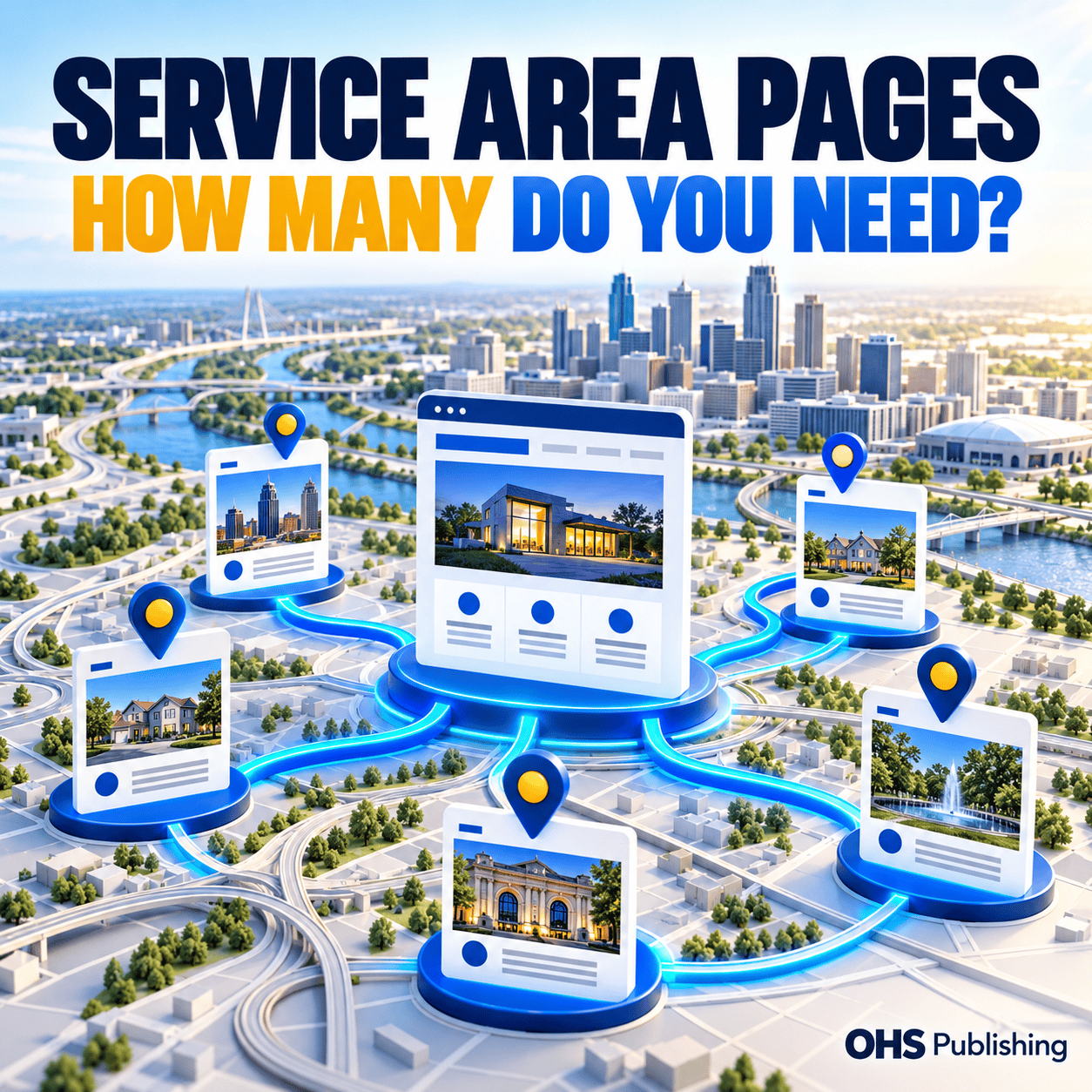
Home service companies often serve multiple cities, neighborhoods, or counties. Say so clearly. List your primary market and the surrounding communities you genuinely serve. This helps visitors know whether you can help them and gives the website stronger local context.
A service-area page should be useful, not a copy-and-paste list of city names. Explain the territory, highlight any differences in availability or service types, and link visitors to relevant service pages. If a city is important enough to deserve its own page, give it original information that helps someone in that area make a decision.
Location signals work best as part of a broader structure that connects services, cities, and helpful content. OHS Publishing’s industry-specific website and SEO approach is built around that idea: a visitor should be able to move naturally from their industry to the services and markets that matter to them.
4. An About page that makes the company feel real
Homeowners are inviting someone into their home, often for a problem that is stressful, expensive, or urgent. A strong About page reduces uncertainty. Use it to introduce the company, explain your experience and approach, show the team when appropriate, and communicate the standards you take seriously.
Be specific. Mention the kind of work you focus on, the areas you serve, and what customers can expect when they contact you. If you are licensed, insured, locally owned, family-run, or have a particular specialty, state it accurately. Avoid making the page a long biography that never answers why a customer should choose you.
5. Proof pages: reviews, projects, and before-and-after work
Claims are easy to write. Proof is what helps a homeowner believe them. Depending on your business, that might mean a portfolio, project gallery, case studies, before-and-after photos, customer reviews, or short project explanations. The goal is not to overwhelm people with every job you have ever completed. It is to show enough real work that visitors can picture the quality and type of service you provide.
Photos should be your own work whenever possible. Add a simple caption that explains the project, the service performed, and the city or type of property when it is appropriate to share. A customer reading about siding, a fence project, or a kitchen renovation should be able to see a relevant example without hunting through a generic image gallery.
6. A contact and estimate-request page that removes friction
Every important page should lead to contact, but the contact page deserves special attention. Put the phone number, email address, service area, office details if relevant, and a concise form in one easy-to-find place. On mobile, calling and texting options are often especially important.
Ask only for information you need to start the conversation: name, contact details, address or city, service needed, and a brief description. A long form can discourage someone who is already comparing options. If scheduling is available, explain what happens next so the visitor is not left guessing.
Trust elements that belong throughout the site
Trust should not live on one isolated page. A homeowner often decides whether to stay or leave before reaching your About page. Place accurate trust signals near the points where people make decisions: the homepage, service pages, estimate form, and project pages.
- Clear company information: business name, phone number, service area, and a professional email address displayed consistently.
- Accurate credentials: licensing, insurance, certifications, affiliations, or warranties only when they are current and verifiable.
- Real customer feedback: a small selection of genuine reviews, with enough context to be meaningful.
- Original project evidence: photos, project descriptions, or case studies that show the work your business actually performs.
- Clear expectations: what happens after a call or estimate request, how quickly you typically respond when known, and whether you handle emergency work.
Do not add badges or broad promises just to fill space. An uncluttered page with real, specific proof is stronger than a page crowded with generic icons and claims.
Make every page easy to use on a phone
Many home service searches happen when someone is away from a desk: standing in a driveway after storm damage, looking at a leaking sink, or comparing companies between appointments. If the mobile version is slow, hard to read, or difficult to contact from, the website is creating a barrier at the moment the customer is ready to act.
Test the site on an actual phone. Can you see the main service and service area without scrolling forever? Can you tap the phone number? Does the estimate button stay easy to find? Are forms usable without zooming in? Do images support the page instead of pushing the important information too far down?
When you audit a small business website, those basic usability checks are often more valuable than a long list of cosmetic tweaks. A site may look acceptable on a large monitor and still frustrate the people most likely to call from a phone.
Build for local visibility without creating thin city pages
Local SEO is not accomplished by dropping city names into every heading. Search engines and customers both need a website that clearly connects your services, business information, coverage area, and useful content. Start with solid service pages, consistent contact details, and a realistic service-area strategy.
Then create local pages only where you can give visitors something specific and helpful. A page for a key market might explain the services you offer there, local project experience, common customer needs, nearby coverage, and an easy way to request service. That is far more useful than cloning one paragraph across twenty towns.
For businesses competing across the metro, Kansas City SEO services can bring the technical, on-page, content, and local strategy pieces together. The website itself remains the foundation: it needs to give that visibility a credible destination.
Do not send paid traffic to a weak page
Paid ads can be helpful when you need faster exposure for a service or season, but an ad should not be a shortcut around an unclear website. If someone searches for “emergency plumber” and clicks an ad, the landing page should immediately address that need. Sending them to a broad homepage that makes them search again wastes attention and budget.
Match the ad message to the page headline, service, location, and next action. Keep the form short. Make the phone number prominent. Include the proof that helps a visitor feel comfortable contacting you. This is how pay-per-click campaigns and web design support each other: the campaign reaches people with intent, and the page gives them a simple reason to choose you.
A practical website checklist before you invest in more traffic
Before putting more money into ads, social promotion, or lead platforms, review whether your website has the basics in place. Fixing a few core issues can make every marketing channel more useful.
- Your homepage says what you do, where you work, and how to contact you.
- Each important service has a clear, useful page and its own call to action.
- Your service area is explained accurately and consistently.
- The site shows real proof, not just broad claims.
- Phone, form, and contact options work correctly on mobile.
- Every page gives the visitor a reasonable next step.
- Forms, links, and call buttons are tested regularly.
Those are not flashy improvements, but they are the pieces that turn a site from an online brochure into a practical sales tool. If your current site has the services but not the structure, start there.
Frequently asked questions
How many pages should a home service website have?
There is no single right number. A smaller company may begin with a homepage, core service pages, an About page, a service-area page, proof or project content, and a contact page. The goal is to give each important service and customer question a clear place on the site instead of adding pages just to make the website feel larger.
Should every city I serve have its own website page?
No. Create city pages when you can make them genuinely useful and distinct, such as for key markets with tailored service information, local project examples, or meaningful coverage details. A long list of nearly identical pages does not improve the visitor experience and can make the site harder to manage.
What should be on a home service estimate form?
Ask for the information needed to respond: name, phone or email, city or address, service needed, and a short project description. If photos, preferred appointment times, or emergency details are important for your process, include them without turning the form into a long questionnaire.
Can a website help a home service business get more leads without running ads?
Yes. A clear, useful website can help referrals, Google Business Profile visitors, organic search traffic, social media visitors, and repeat customers understand your services and contact you. Ads may increase traffic faster, but the website still needs to make a strong case for the visitor to take action.
Build a website that makes the next step obvious
A good home service website does not try to impress everyone. It helps the right homeowner quickly understand the work you do, feel comfortable choosing you, and take the next step without friction. When your service pages, proof, local information, and contact path work together, the site becomes more useful for customers and for every marketing effort attached to it.
If your current site feels outdated, unclear, or disconnected from the leads you want, OHS Publishing can help you plan a stronger structure around the services and markets that matter to your business.