
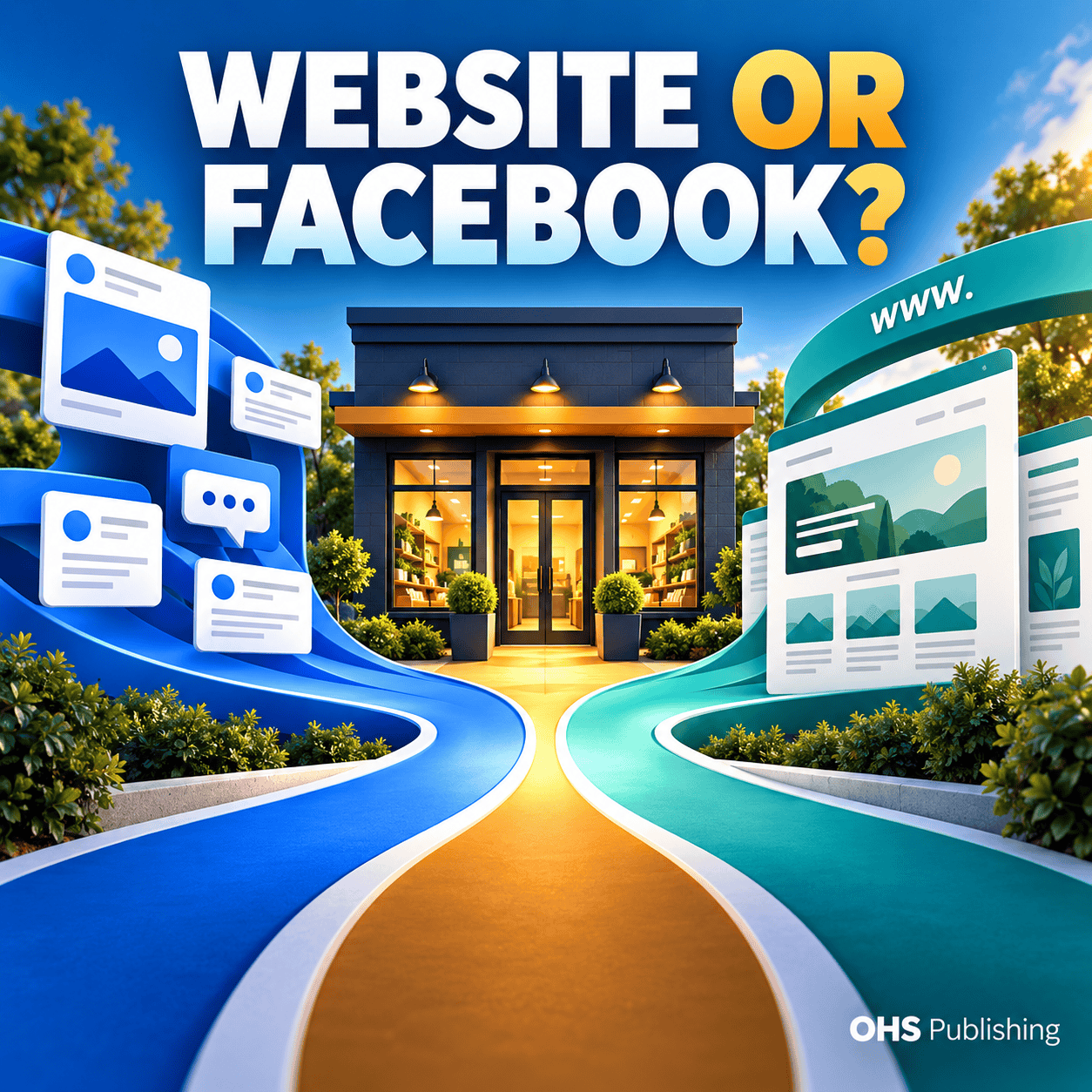
Website or Facebook Page: Which Does Your Business Need?
Starting a Facebook page is fast. You can add a business name, upload a few photos, list a phone number, and begin posting before a website project would even leave the planning stage. For a new business watching every expense, that can make a Facebook page feel like enough.
It is useful, but it does a different job from a website. Facebook helps a business publish updates, reach people socially, answer messages, and show signs of current activity. A website gives customers an organized place to understand the business, compare services, find answers, and take the next step.
Most businesses do not need to choose one forever. They need to understand which channel should hold which information and how the two can support each other without creating twice as much work.
The Short Answer: Use Facebook and a Website for Different Jobs
A Facebook page is rented space inside another company's platform. The available layout, features, visibility, and account rules are controlled by that platform. A website uses your domain and gives you much more control over how information is organized and how visitors move toward an inquiry, booking, purchase, or phone call.
That does not make Facebook unimportant. It makes it one part of the customer journey.
A potential customer might notice a post shared by a friend, visit the Facebook page to see recent activity, click through to the website for complete service information, and then submit a quote request. Another person may find the website in search first, check Facebook to see whether the company appears active, and return to the website to make contact.
The strongest setup gives people both paths while keeping the website as the organized source of truth.
What a Facebook Business Page Does Well
Facebook is built around timely communication. It works well for updates that would not deserve a permanent website page but still help customers see what the business is doing.
Current activity and community connection
Project photos, seasonal reminders, staff introductions, event announcements, schedule changes, new inventory, and quick tips can show that the business is active. Comments and messages also give customers a familiar way to ask simple questions.
For a local business, this activity can reinforce community involvement. A landscaper can share a completed cleanup. A photographer can post selected images from a recent session with permission. A restaurant can announce a weekend special. A consultant can turn one useful idea into a short post.
Social proof and familiarity
People often look at social profiles before contacting a company. Consistent branding, recent posts, genuine engagement, and accurate business details can make the company feel more familiar. The page does not have to post constantly, but it should not contradict the website or look abandoned.
Advertising and remarketing
Facebook advertising can introduce an offer to selected audiences and bring them to a landing page, lead form, Messenger conversation, or business profile. The right destination depends on the campaign. A simple promotion may work with an on-platform form, while a considered service often benefits from a useful website page that explains the offer before asking for an inquiry.
OHS Publishing's social media marketing service focuses on keeping the brand, message, and broader website strategy connected rather than treating posts as an isolated task.
What a Business Website Does Better
A website is designed to organize information instead of placing every update into a chronological feed. That difference becomes important as soon as a customer wants to compare services, understand a process, or decide whether the business is the right fit.
It explains the full business clearly
A website can give each important service a permanent destination. Visitors can move from the homepage to a service page, review examples, read common questions, learn about the company, and contact the business without sorting through months of posts.
Consider a handyman who offers drywall repair, fixture installation, deck repair, and rental-property maintenance. On Facebook, those services may appear across separate posts. On a website, each can have a clear explanation, related photos, service-area details, and an inquiry path.
It gives the business more control
The business can control the navigation, page order, calls to action, forms, visual presentation, and content depth. It can create pages for specific services, audiences, or campaigns without forcing every visitor through the same social profile.
Control also matters when the business changes. New services can receive dedicated pages. Old offers can be removed. High-priority content can remain easy to find instead of disappearing beneath newer posts.
It creates a stronger search foundation
Search engines need clear pages that explain what the business provides and where it operates. A website can support that with descriptive titles, useful headings, service pages, location information, internal links, and content created around real customer questions.
A Facebook page may appear for a branded search, but it does not replace a website structure built around the services customers are searching for. Businesses that want to improve local and organic visibility need pages search engines can understand and customers can use. The OHS Kansas City SEO service explains how service pages, technical checks, local relevance, and Google Business Profile support work together.
It creates clearer conversion paths
A website can guide different visitors toward different actions. Emergency customers may need a prominent phone number. A remodeling prospect may need a detailed project form. A therapist may need information about services and scheduling. A retailer may need product categories and checkout.
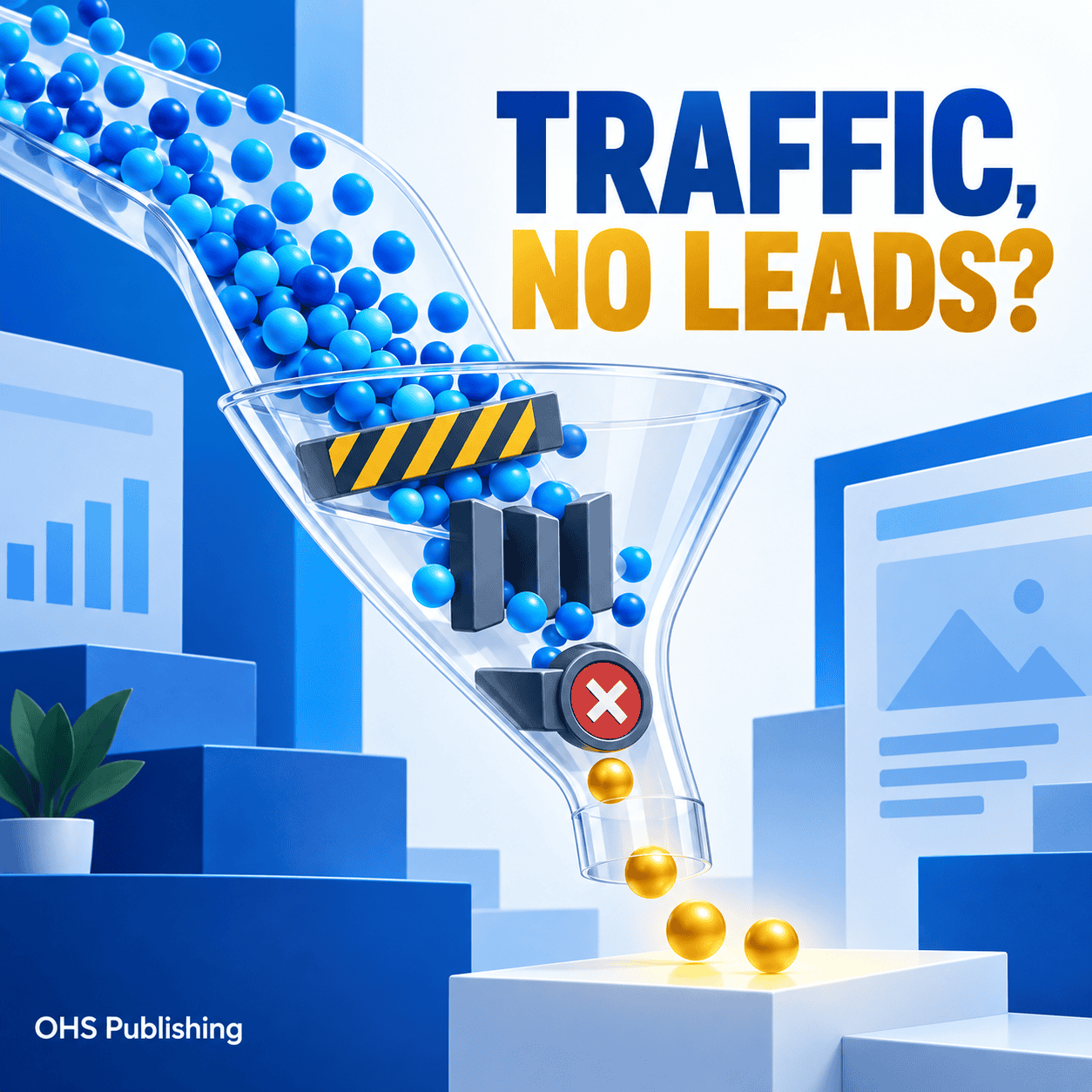
Those paths can be planned, tested, and improved. If visitors arrive but do not contact the business, the company can review the message, page layout, offer, form, traffic source, and calls to action. The OHS article about website traffic that is not producing leads provides a practical framework for that review.
The Risks of Relying Only on Facebook
Many businesses begin on Facebook because that is where their early customers already spend time. The risk is not in starting there. The risk is allowing a temporary setup to become the entire online foundation.
Important information becomes hard to find
A post explaining a core service may be visible this week and buried next month. Pinned content can help, but a social feed is still organized around updates rather than a customer's research process.
Visitors may encounter platform friction
Some visitors do not use Facebook regularly, may not be signed in, or may prefer not to navigate a social profile while researching a purchase. A public website gives them a direct destination that does not depend on their relationship with one social network.
The presentation is limited
Every Facebook business page follows the platform's general structure. Branding can be added through the profile image, cover image, posts, and details, but the business cannot fully design the customer journey. Competitor suggestions, notifications, and other platform elements can also compete for attention.
Platform changes are outside the business's control
Features, distribution, page settings, advertising rules, and account access processes can change. An incorrect suspension, lost administrator access, or policy issue can interrupt the page. A business should keep its social accounts secure, but it should also avoid placing every customer connection inside one platform it does not own.
Campaign measurement can be incomplete
Facebook provides useful platform data, but the business also needs to understand what happens after someone leaves social media. A properly configured website can measure landing-page visits, form completions, calls, bookings, or purchases across multiple traffic sources. That creates a broader view than likes, comments, and clicks alone.
How the Website and Facebook Page Should Work Together
Think of Facebook as a conversation and distribution channel. Think of the website as the organized destination.
The website should hold the information that needs to remain accurate and easy to find:
- Primary services or products
- Service areas, location details, and hours
- Company background and trust information
- Process, policies, and frequently asked questions
- Portfolio, gallery, case study, or project information
- Quote, booking, purchase, or contact paths
Facebook can then distribute smaller pieces of that information. A post can introduce one service and link to its full page. A project photo can lead to the portfolio. A seasonal reminder can link to a booking or quote page. An article can become several useful posts over time.
This approach also reduces repetition. The social post does not have to explain everything. Its job is to earn attention and give the interested person a sensible next step.
Three Realistic Ways the Channels Can Support Each Other
A house-cleaning company
The website explains recurring cleaning, deep cleaning, move-in or move-out services, service areas, what customers should expect, and how to request an estimate. Facebook shows recent work, cleaning tips, seasonal reminders, and occasional availability. Each service-related post links to the most relevant website page instead of sending everyone to the homepage.
A photographer
The website organizes portrait, wedding, event, and commercial work into useful galleries and explains the inquiry process. Facebook shares selected sessions, behind-the-scenes moments, date availability, and new portfolio additions. Interested prospects can move from a social image to a complete gallery and inquiry form.
A consultant
The website explains the problems the consultant solves, who the service is designed for, how an engagement works, and what the next conversation involves. Facebook distributes short insights, article excerpts, event notices, and business updates. The social presence builds familiarity; the website provides the depth needed for a serious decision.
What a Small Business Website Needs to Support Social Media
The website does not have to be large. It needs to answer the questions social visitors are likely to have after a post earns their attention.
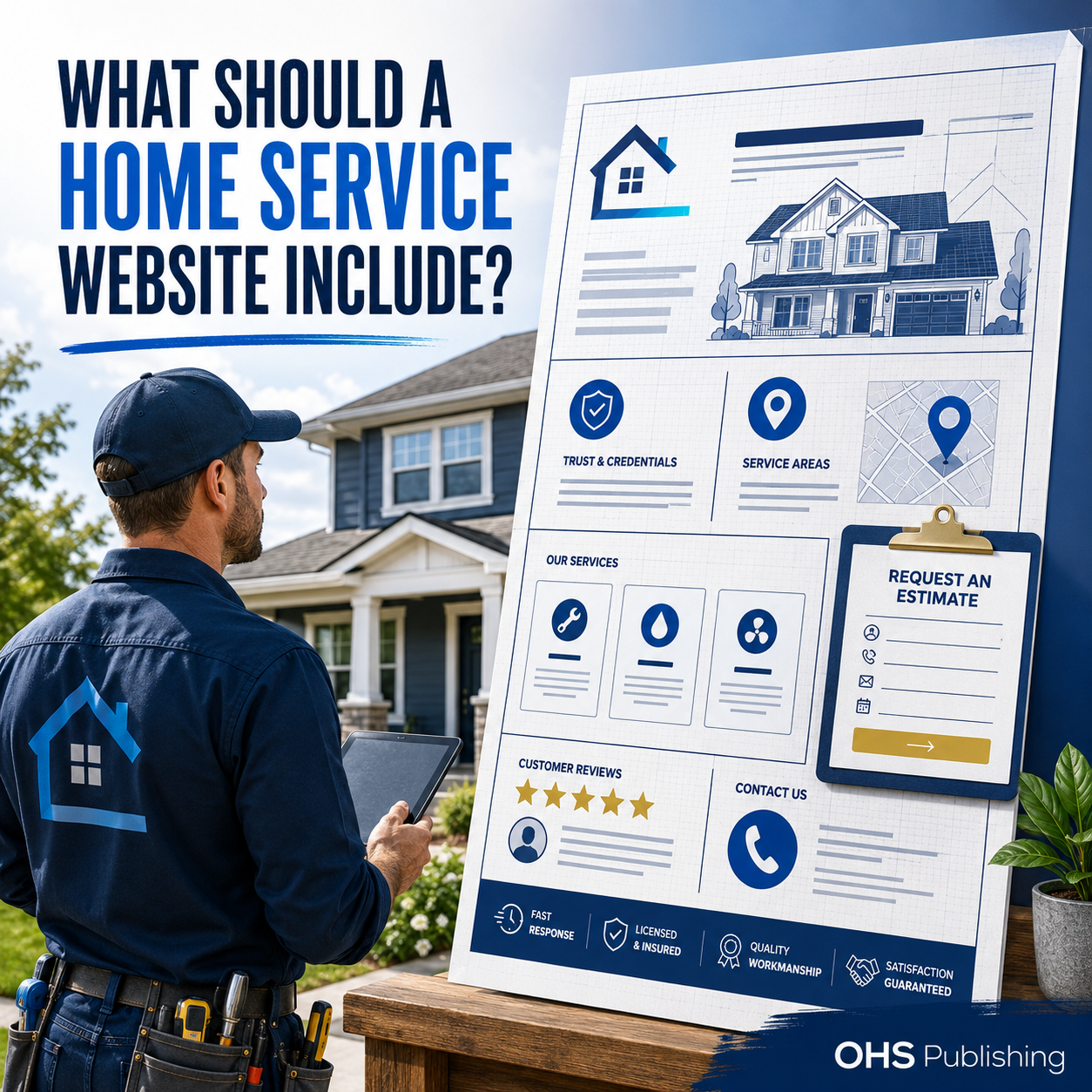
A practical starting site usually includes a clear homepage, information about the main services, an About page, trust-building content, and an easy contact path. Service-area information matters for a local company. A portfolio or gallery matters when the work is visual. Booking or payment features matter only when they fit the way the business operates.
Every page shared on Facebook should have a useful title, strong opening, mobile-friendly layout, and visible next step. The preview image and description should also make sense when the page is shared socially.
Before promoting the site, work through the new business website launch checklist to test forms, contact links, mobile use, domain settings, search basics, and ownership details.
What to Do When the Budget Is Limited
A new business does not need a large custom website, daily social posts, multiple advertising campaigns, and a full SEO program all at once. Start with the foundation that removes the biggest customer friction.
Secure a suitable domain. Create accurate business profiles on the platforms customers actually use. Build a focused website that explains the offer and makes contact easy. Use Facebook consistently enough to show useful activity and direct interested people to the right website pages.
OHS Publishing offers a Startup Website Plan for solo owners, startups, and small teams that includes an initial build of up to 10 standard informational pages for $199 setup plus $99 per month. Hosting and SSL are included while the subscription is active; the domain, optional services, extra pages, ongoing content changes, and custom functionality are separate. Scope and terms are confirmed before signup.
Businesses that need a custom WordPress site, broader functionality, or a larger content structure can instead review OHS web design services. The right starting point depends on what customers need to do on the site and how the business expects it to grow.
A Simple Ongoing Workflow
Keeping a website and Facebook page aligned does not require creating everything twice. Use one business priority to guide both channels.
If the focus this month is spring landscaping cleanup, update the website service page first. Confirm the service details, coverage area, images, and quote path. Then create Facebook posts that answer smaller questions, show relevant work, and link back to that page.
Review the website whenever the business changes a service, price, location, phone number, operating hour, or policy. Then update the social profile and any active promotions. This keeps customers from seeing one answer on Facebook and another on the website.
Track the actions that matter. Engagement may be encouraging, but calls, quote requests, bookings, purchases, and qualified conversations show whether the channels are supporting the business. Use that information to improve the offer, destination page, and content rather than posting more simply for the sake of activity.
Frequently Asked Questions
Can a Facebook page replace a business website?
A Facebook page can provide a temporary starting point for a very new business, but it is not a full replacement for a website. Facebook works well for updates, conversation, and social visibility. A website provides better control over service information, search-focused pages, branding, customer journeys, and conversion tracking.
Should a new business create a website or Facebook page first?
Create and secure the important business accounts early, including the domain and relevant social profiles. If only one channel can be fully developed first, prioritize the one that best supports how customers choose and contact the business. For most service companies, that means building a clear website foundation while establishing a basic, accurate Facebook presence.
Does having a website help a business appear in Google?
A website gives search engines dedicated pages that explain the business, services, products, locations, and customer questions. It does not guarantee rankings, but it creates a stronger foundation for organic and local SEO than relying on a Facebook page alone.
Should Facebook posts link to the homepage?
Link to the page that best continues the topic of the post. A post about one service should usually link to that service page. A portfolio post can link to the relevant gallery or project. Use the homepage when it is genuinely the most useful destination, not simply because it is the easiest URL to remember.
How often should the website and Facebook page be updated?
Update the website whenever core business information, services, offers, hours, locations, staff, or customer processes change. Facebook can be updated more frequently with useful, timely content. The right posting pace is one the business can maintain without sacrificing accuracy or quality.
Build One Connected Business Presence
A Facebook page and a website are not competing versions of the same thing. Facebook helps the business participate in an active social channel. The website gives customers a stable, organized destination for understanding the offer and taking action.
Use social media to start and continue conversations. Use the website to answer deeper questions, support search visibility, and turn interest into a measurable next step. When the message, branding, and business information agree across both, each channel makes the other more useful.
If your business needs its first website or a better connection between its website and social presence, OHS Publishing can help you choose a practical starting point. We will review what you offer, what customers need to know, and which website approach fits the business now.