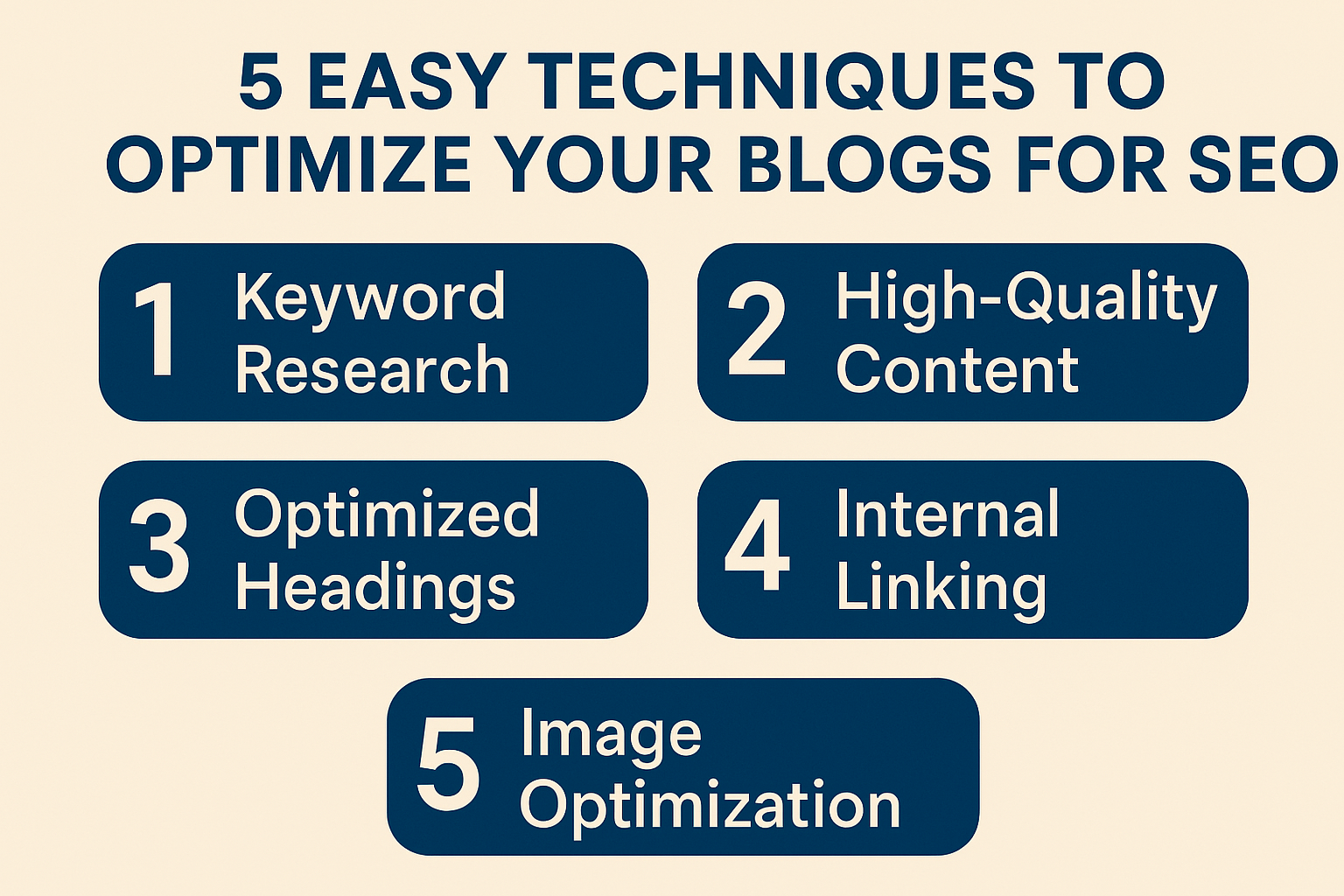
5 Easy Techniques to Optimize Your Blogs for SEO
A business blog can be one of the most valuable tools for improving online visibility, attracting more traffic, and building long-term authority. But publishing content alone is not enough. If your blog posts are not optimized properly, they may never reach the audience you want. Strong blog SEO helps your content perform better in search engines while creating a better experience for readers at the same time.
Why Blog SEO Matters
When blog posts are optimized correctly, they can attract organic traffic, support your service pages, strengthen internal linking, and help your website build more authority over time.
- Better visibility in search engines
- Stronger internal linking opportunities
- More value from every blog post you publish
- Improved traffic and engagement over time
Business Blogging Works Best When It Is Built for Search and Readers
A successful blog should do more than fill space on your website. It should help people find your business, answer useful questions, and support your overall SEO strategy.
Whether your business already has a blog or you are just thinking about starting one, there is no question that blogging remains one of the most valuable tools for improving online visibility. A well-written blog can help your website attract more traffic, answer customer questions, build trust, and improve your search rankings over time. But simply publishing content is not enough. If your blogs are not optimized properly, they may never reach the audience you want.
That is where blog SEO comes in. Successful business blogging is not just about writing interesting articles. It is about creating content that is useful for readers and easy for search engines to understand. When your blog posts are structured correctly and optimized with the right strategy, they can become powerful assets that continue bringing traffic to your website long after they are published.
Many businesses struggle with blogging because they either do not publish consistently or fail to optimize their posts for search engines. As a result, their blogs do not produce the return they were hoping for. The good news is that improving blog SEO does not have to be complicated. A few strategic changes can make a major difference in how your content performs over time.
Simple Blog SEO Improvements That Can Make a Big Difference
Good blog SEO is often built on a few foundational habits done consistently. These help your content rank better, read better, and support your overall website strategy.
Research the Right Keywords
Keyword research helps you understand what your audience is searching for so your blog topics and pages can align with real demand.
Use Keywords Strategically
Place your keywords naturally in titles, headings, introductions, meta descriptions, and other key areas without overstuffing them.
Optimize Beyond the Text
Strong blog SEO also includes image optimization, internal links, credible references, and promotion through social platforms.
1. Start with Keyword Research
Every strong SEO blog begins with keyword research. If you want your content to rank in search engines, you need to understand what your audience is actually searching for. Keywords help guide your topic, shape your headings, and tell search engines what your post is about. Without a keyword strategy, even a well-written blog may struggle to gain visibility.
In some cases, you may already be using relevant keywords naturally in your writing. Still, it is much more effective to use tools that help you identify search terms with real traffic potential. Keyword research tools can show you what people are searching for, how competitive certain phrases are, and which variations may be worth targeting.
This gives you the ability to create blog content with a clear purpose instead of guessing. It also helps you find opportunities your competitors may already be targeting, allowing you to build better, more strategic content around topics that matter to your audience. Keyword research is often the foundation of blog SEO, and it should be one of the first steps you take before writing.
How to Use Keywords Without Overdoing Them
Keywords should help search engines understand your topic, but the content still needs to read naturally for real people.
Use Keywords in Titles
Your primary keyword should appear in the page title and headings where it helps define the core topic of the post.
Reinforce Key Sections
Introductions, meta descriptions, image alt text, anchor text, and conclusions are all useful places for natural keyword placement.
Keep the Writing Natural
Avoid keyword stuffing. Strong SEO content should feel clear, helpful, and easy to read while still reinforcing the topic.
2. Use Keywords in the Right Places
Choosing a keyword is important, but using it correctly throughout your blog post is just as important. One of the most common mistakes bloggers make is either barely using the keyword at all or forcing it into the content too many times. Neither approach works well. Search engines want to see keywords used naturally in places that help define the topic of the page.
Your primary keyword should appear in important areas such as the page title, headings, subheadings, introduction, meta description, image alt text, anchor text where appropriate, and the conclusion. This helps reinforce the topic of the article and makes it easier for search engines to understand the content.
At the same time, the content still needs to sound natural and be written for real people. Overusing keywords can make a blog post feel repetitive and awkward, which can hurt readability and reduce trust with your audience. A better approach is to write clearly, use the main keyword strategically, and include related phrases that support the overall topic.
When keywords are placed thoughtfully, they strengthen your SEO without making the content feel forced. That balance is where good blog SEO starts to become effective instead of mechanical.
Images, Links, and Promotion All Help Your Blog Work Harder
Search visibility is not just about paragraphs on a page. Supporting elements also play a big role in how a blog performs.
Optimize Images
Descriptive file names, alt text, and properly sized images help search engines understand visuals while supporting better page speed.
Use Internal Links
Internal linking helps guide readers through your site and helps search engines understand the relationship between important pages.
Promote on Social Media
Social sharing can give your blog more visibility, help it reach a wider audience, and support traffic after publication.
3. Optimize Your Images
Images can make blog posts more engaging, easier to read, and more visually appealing, but they also offer another opportunity for SEO improvement. Whenever you use images in a blog post, you should optimize them properly. This includes giving the image file a descriptive name rather than leaving it as a generic string of numbers or default camera text. If possible, include a relevant keyword in the file name in a natural way.
You should also add alt text to each image. Alt text helps search engines understand what the image shows, and it can also improve accessibility for users who rely on screen readers. A short, accurate, keyword-aware description is often the best approach.
In addition to file names and alt text, it is also smart to make sure your images are compressed and sized properly so they do not slow down your page. Site speed plays a role in both SEO and user experience, so image optimization is about more than just keywords. It helps your blog load faster and perform better overall.
4. Use Internal Links and Credible References
Strong blog posts should not exist in isolation. They should connect to other valuable content. Internal linking is one of the simplest and most effective blog SEO techniques. When you link from one blog post to other relevant pages on your website, you help search engines understand the structure of your site and guide readers toward additional useful content.
This can increase time on site, improve page authority, and strengthen your overall SEO strategy. For example, if you are writing about SEO tips, you might naturally link to your SEO services page or another related article on your website. These internal links help connect your content and make your site more useful for visitors.
External links also matter. If you reference facts, statistics, or information from another source, it is a good idea to link to that source. Referencing credible websites can improve trust and show that your content is supported by relevant information. The key is to link thoughtfully and make sure the sources you reference are valuable and appropriate.
5. Promote Your Blog on Social Media
Publishing a blog post is only part of the process. Promotion matters too. Once your content is live, social media can help you get more eyes on it. Sharing your blog on platforms like Facebook, Instagram, X, and LinkedIn can drive traffic, increase visibility, and create more opportunities for engagement.
While social shares may not directly improve rankings in the same way on-page SEO does, they can expand your reach and help your content get discovered faster. Social media is especially useful for businesses trying to get more value out of the content they create. A single blog post can often be repurposed into multiple social posts, graphics, snippets, or promotional updates.
Scheduling tools can make this process easier by letting you plan content in advance and stay consistent without having to post manually every day. Promoting your content through social channels also helps support your broader digital marketing strategy. The more places your blog appears, the more chances you have to attract visitors, generate interest, and build familiarity with your brand.
Final Thoughts
Blog SEO does not have to be overwhelming. In fact, a few simple improvements can make a major difference in how your content performs over time. By starting with keyword research, placing keywords strategically, optimizing images, using smart linking practices, and promoting your posts on social media, you can make your blog far more effective.
These techniques help your content work harder for your business by improving visibility, increasing traffic potential, and creating a better experience for readers. A business blog can be one of the most powerful long-term tools in your marketing strategy, but only if it is built with both readers and search engines in mind.
If you are looking for help creating optimized blog content that supports your website and helps your business grow, explore our SEO services or contact OHS Publishing to get started.
Get Blog Content That Supports Rankings and Business Growth
If you want blog content that is written strategically, optimized for SEO, and built to support your website’s long-term visibility, we can help. OHS Publishing creates content and SEO strategies designed to improve rankings, strengthen authority, and turn more traffic into opportunities.