
Kansas City Web Design That Works: How OHS Publishing Builds Websites to Engage and Convert
A business website should feel like it belongs to the company behind it. The message, visuals, structure, and calls to action should reflect what that business actually offers—not look like a generic template with a new logo placed at the top.
For Kansas City businesses, the website often becomes a potential customer’s first serious interaction with the company. Someone may arrive after finding the business in Google, clicking a map result, seeing an advertisement, reading a social post, or receiving a referral. The site then has a practical job: make the business easy to understand, build confidence, and provide a clear next step.
That is the foundation of the OHS Publishing approach to Kansas City web design. Design matters, but it must work together with content, development, search visibility, and conversion strategy. A polished website that confuses visitors or produces no inquiries is not doing enough.
This guide explains how OHS Publishing plans and builds business websites, what makes a website effective, and how design can support long-term marketing rather than becoming another disconnected project.
Good Web Design Begins With the Business, Not the Layout
It is tempting to begin a web design project by choosing colors, browsing layouts, or deciding where images should go. Those decisions are important, but they should not come first.
A useful website begins with a clearer understanding of the business:
- What does the company sell or provide?
- Which services or products matter most?
- Who is the ideal customer?
- Which communities or service areas does the business cover?
- What questions prevent people from contacting the company?
- What proof helps customers feel confident?
- What should a qualified visitor do next?
- How will the website support future SEO, advertising, and content?
Those answers shape the site map, page priorities, content, and conversion path. They also help determine whether the project needs a straightforward informational site, a larger service and location structure, e-commerce capabilities, memberships, scheduling, custom forms, or another specialized feature.
OHS Publishing works across platforms and programming languages, choosing the approach that fits the project. When a client has no platform preference, WordPress is often the recommended foundation because it offers flexibility, ownership, and room for future expansion. Businesses considering that option can explore our approach to custom WordPress web design.
A Clear Message Comes Before Visual Effects
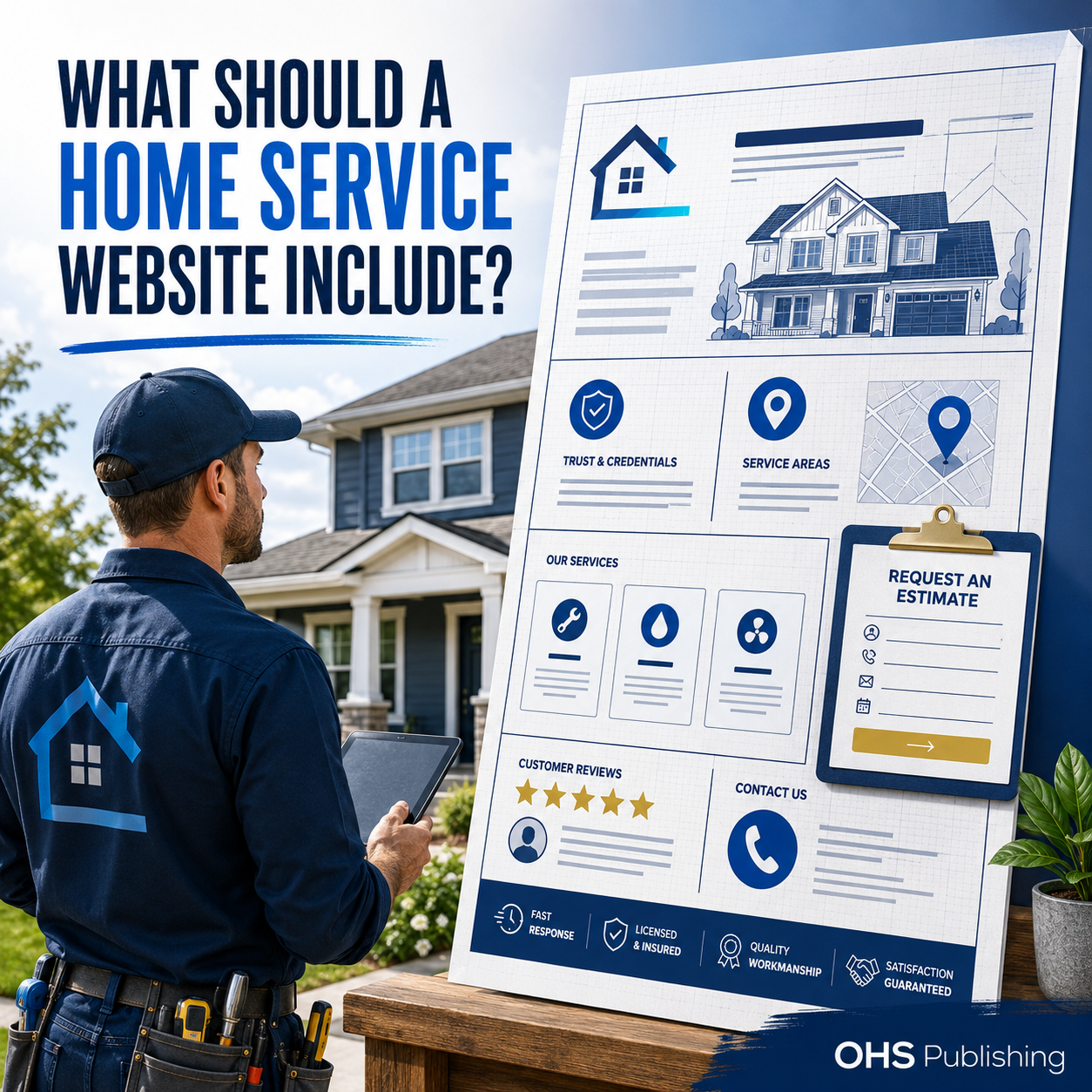
A visitor should not have to study a homepage to determine what the business does. The opening section should communicate the primary offer, the audience or service area when relevant, and the next action.
Strong website messaging usually includes:
- A specific headline that explains the main value
- A short supporting statement written for the customer
- A clear call to action
- Immediate context about services, location, or specialization
- Early trust signals without overwhelming the visitor
This does not mean every homepage needs the same structure. A healthcare practice, contractor, professional service, restaurant, and online store each require a different balance of information and action. The design should respond to the customer journey rather than forcing every business into the same pattern.
The writing should also sound like the company. Overused phrases such as “innovative solutions,” “cutting-edge service,” or “we exceed expectations” do little unless the site explains what makes the business meaningfully different. Specific language is more believable and useful.
Custom Design Should Make the Business Easier to Remember
Custom design is not about adding complexity for its own sake. It is about using the company’s identity, content, imagery, and priorities to create a distinct experience.
The visual system may include:
- A color palette that supports the brand and remains readable
- Typography with a clear hierarchy
- Photography or graphics chosen for the actual audience
- Consistent buttons, cards, labels, and page sections
- Spacing that makes longer content easier to scan
- Proof elements that fit naturally into the design
- Layouts that adapt to different types of pages
A strong design system creates consistency without making every page identical. Service pages may need detailed explanations. Portfolio pages should make the work easy to explore. Location pages need locally useful content. A quote page should reduce friction and establish clear expectations.
The OHS Publishing website design portfolio shows how different brands and industries can receive distinct designs while still following the same principles of clarity, usability, and conversion.
Website Structure Guides Visitors and Supports SEO
A website is more than a homepage and a menu. Its structure determines how visitors move through information and how search engines understand relationships among pages.
For a small business with a focused offer, a concise site may be enough. A growing company with multiple services, industries, or locations may need a deeper structure. The goal is not to create the largest possible website. It is to give each important topic the right amount of space.
A logical structure may connect:
- The homepage to primary service pages
- Service pages to relevant industries
- Industry pages to specific solutions
- Location hubs to city and county pages
- Blog articles to the services they support
- Portfolio projects to related capabilities
- High-intent pages to contact or quote options
Internal linking helps visitors continue their research without returning to the menu after every page. It also creates clear topical relationships. OHS Publishing uses this principle across its industry-focused website solutions and Kansas City service-area pages.
Mobile Design Is Part of the Main Experience
Mobile design should not be treated as a smaller copy of the desktop website. A visitor using a phone has less screen space, may be on a slower connection, and often wants to act quickly.
The mobile experience needs deliberate decisions about content order, navigation, buttons, image sizing, forms, and spacing. Phone numbers should be easy to tap. Important actions should not disappear beneath decorative content. Text should remain comfortable to read without zooming.
Common mobile checks include:
- Menus open and close correctly
- Headlines wrap without awkward breaks
- Buttons are large enough to tap
- Forms fit the screen and are easy to complete
- Images do not crop important details
- Tables and embedded content remain usable
- Calls to action appear at sensible points
- Pages load without unnecessary delays
Responsive behavior should be tested throughout development rather than saved for a quick review at the end.
Development Turns the Design Into a Reliable Tool
The design may be what visitors see, but development determines whether the website works reliably behind the scenes.
A business site may need forms, online payments, appointment scheduling, e-commerce, user accounts, directories, gated content, analytics, CRM connections, or other integrations. These features should support a real business process, not be added simply because they are available.
Good development also considers:
- Clean and maintainable implementation
- Performance across common browsers and devices
- Security and appropriate access controls
- Reliable form and email delivery
- Accessibility and readable interactions
- Analytics and conversion tracking
- Future content and feature updates
- Compatibility with the hosting environment
Projects that require capabilities beyond a standard marketing site can use OHS Publishing’s broader web development services for custom functionality and integrations.
SEO Should Be Considered Before the Website Launches
SEO is more difficult when it is added after every page, heading, image, and URL has already been finalized. Search strategy should influence the structure and content early enough to prevent avoidable rework.
An SEO-aware build considers:
- Which services deserve dedicated pages
- How customers search for those services
- Which locations the business genuinely serves
- How titles, headings, and page copy communicate relevance
- How internal links connect related topics
- Whether existing URLs need to be preserved or redirected
- Technical indexing, sitemap, and structured-data needs
- How the website will continue growing after launch
That does not mean stuffing city names or keywords into every paragraph. Content should answer real questions and explain the offer clearly. Search optimization works best when it improves the page for the intended visitor.
Businesses that need an ongoing visibility strategy can connect the new website with Kansas City SEO services, location content, industry pages, and a planned blog cluster.
Conversion Design Makes the Next Step Clear
Traffic has limited value if qualified visitors cannot determine what to do next. Conversion design guides people toward the action that fits the business.
For some companies, the primary action is a phone call. Others need quote requests, appointments, purchases, registrations, or consultation bookings. The site may also use smaller actions—such as viewing a portfolio or reading a service page—to help visitors build enough confidence to contact the company.
Useful conversion elements include:
- Specific and consistent calls to action
- Forms that request only necessary information
- Visible contact details
- Relevant reviews, credentials, or project examples
- Answers to common objections
- A clear confirmation or thank-you step
- Tracking that records meaningful actions
These details are especially important when paid traffic is involved. A campaign can generate the right click and still waste money if the landing page is slow, confusing, or disconnected from the advertisement. OHS Publishing’s pay-per-click services account for both the campaign and the page receiving its traffic.
The OHS Publishing Website Design Process
A clear process keeps the project focused and gives both sides a shared understanding of what happens next. Exact steps can vary with the project, but the work generally moves through the following stages.
1. Discovery and Project Goals
The first stage identifies the company’s services, audience, current challenges, required features, service area, content needs, and business goals. Existing websites and marketing efforts are reviewed when they affect the new project.
2. Scope and Site Planning
The project is translated into a practical page list and feature plan. This stage determines what belongs in the initial build and what can be reserved for later growth. Important URLs, integrations, and conversion paths are identified before design begins.
3. Content and Messaging
Page content is organized around what the visitor needs to understand. Headlines, service explanations, proof, FAQs, and calls to action are written or refined to support the site’s goals.
4. Visual Design
The brand is translated into a modern design system with appropriate typography, color, imagery, page sections, and responsive behavior. The design should feel distinct without sacrificing clarity or ease of use.
5. Development and Integration
Approved designs are built into functional pages. Forms, analytics, e-commerce, scheduling, or other required tools are connected and configured. Development decisions account for performance, maintainability, and future updates.
6. Testing and Refinement
The site is reviewed across common screen sizes and browsers. Navigation, forms, links, images, calls to action, and key integrations are tested. Content and spacing are refined where the real implementation reveals a better solution.
7. Launch and Ongoing Support
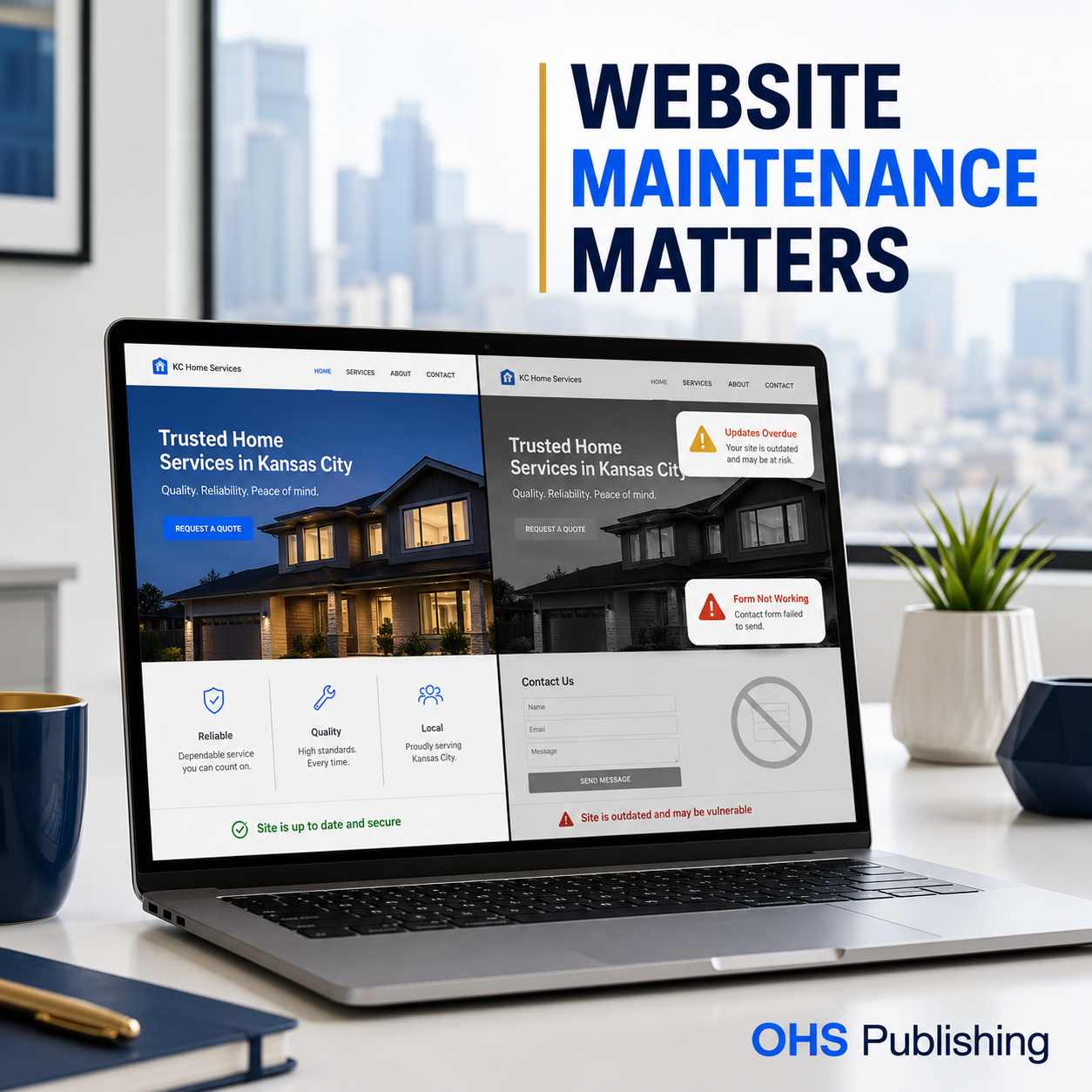
After final approval, the site is launched with attention to redirects, indexing settings, tracking, and other transition details. Ongoing updates, security, backups, and support can continue through a WordPress website maintenance plan.
A Website Should Be Built for Growth After Launch
Launching a website is an important milestone, but it is not the end of the site’s useful life. Services change. Teams grow. New locations open. Customers ask new questions. Search opportunities emerge. Marketing campaigns need new landing pages.
A maintainable website gives the business room to respond. The structure should support new content without creating a confusing menu or disconnected group of pages. The underlying platform, plugins, and integrations should be reviewed as technology changes.
Ongoing improvement may include:
- Adding new service or location pages
- Publishing helpful blog content
- Updating team, portfolio, or testimonial sections
- Improving pages based on conversion data
- Creating campaign-specific landing pages
- Testing forms and customer journeys
- Maintaining software, security, and backups
The best website is not the one with the most features on launch day. It is the one that supports the business now and remains practical to improve later.
Choosing a Kansas City Web Design Partner
A web design partner should be able to discuss more than appearance. Ask how the site will support mobile users, search visibility, content, conversion goals, maintenance, and future updates.
It is also important to understand what is included in the project, who is responsible for content, how revisions are handled, where the site will be hosted, and what happens after launch. Clear expectations protect both the client and the developer.
OHS Publishing brings more than 20 years of web experience to projects for Kansas City-area businesses. The goal is not to force clients into a predetermined template or platform. It is to create a website that fits the business, communicates clearly, and supports the marketing work surrounding it.
Build a Website That Helps Your Business Get Chosen
Your website should do more than look good. It should help your business get chosen.
That means connecting clear messaging, custom design, reliable development, useful content, SEO structure, and a focused conversion path. When those pieces work together, the website becomes a stronger foundation for search, advertising, referrals, and future growth.
If your current website no longer reflects your company—or you are starting a new business and need the right foundation—OHS Publishing can help plan the project and recommend a practical direction.
Frequently Asked Questions About Kansas City Web Design
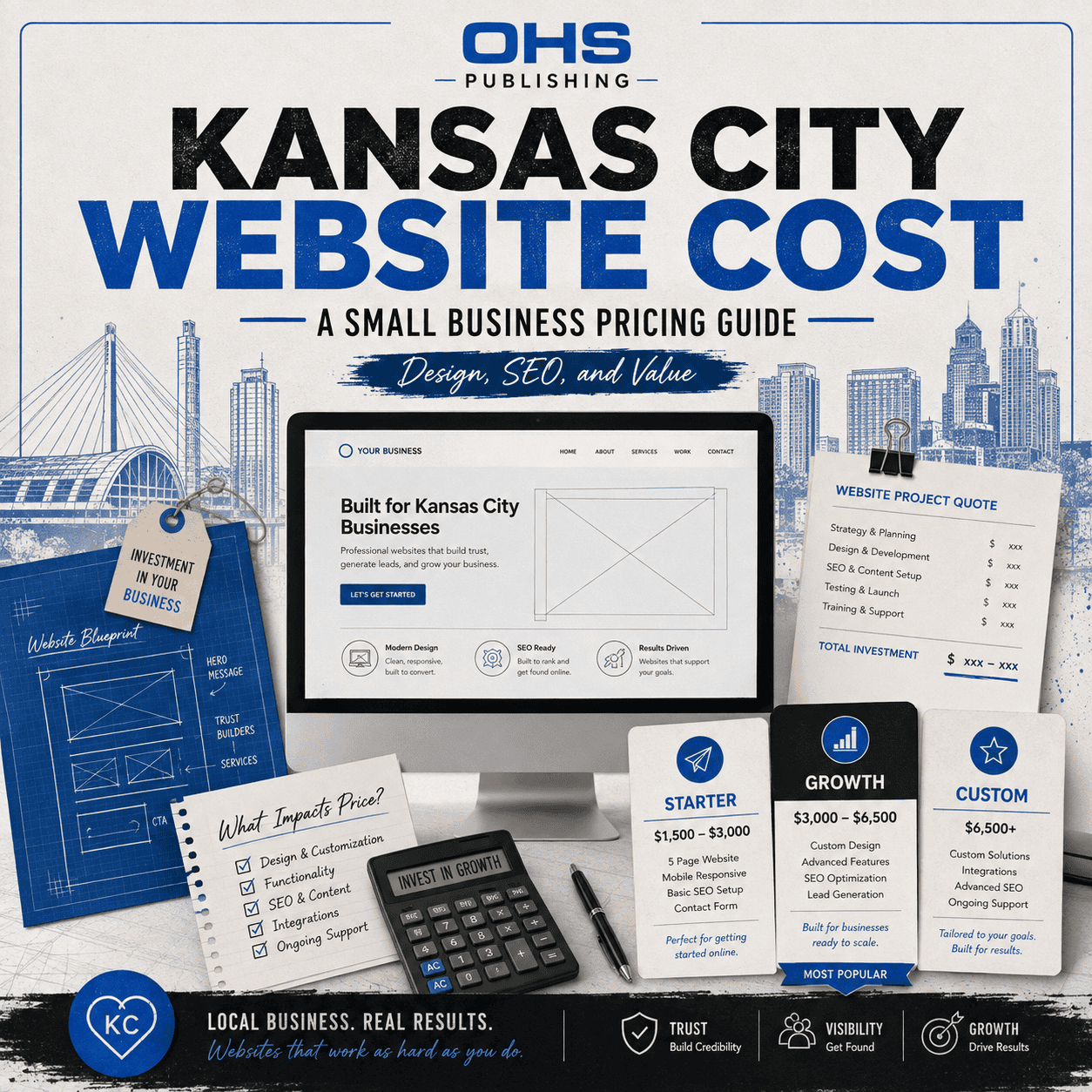
How much does a Kansas City business website cost?
The cost depends on the number and complexity of pages, content needs, custom functionality, e-commerce, integrations, and the condition of any existing website. A clear scope is needed before accurate pricing can be provided.
How long does it take to design and build a business website?
Timing depends on the project’s size, content readiness, required features, review process, and how quickly feedback is provided. A focused informational site can move faster than a large website with custom integrations, e-commerce, or extensive service and location content.
Does OHS Publishing only build WordPress websites?
No. OHS Publishing can work across platforms and programming languages. WordPress is often recommended when a client has no platform preference because it is flexible and can support many business website needs, but the platform should fit the project.
Is SEO included when a new website is built?
The website should be built with a search-friendly structure, clear headings, useful content, mobile usability, and technical fundamentals. Ongoing SEO—such as content growth, location strategy, optimization, and performance monitoring—is a separate continuing effort.
Can OHS Publishing redesign an existing website without losing its SEO value?
A redesign can protect established value by reviewing current URLs, high-performing content, internal links, metadata, and redirects before launch. No redesign is risk-free, but careful planning avoids many preventable losses.
What happens after the new website launches?
After launch, the website should continue receiving software updates, backups, security monitoring, form testing, and content changes. OHS Publishing offers ongoing WordPress maintenance and can also support SEO, advertising, and future website improvements.