
Why Kansas City Businesses Choose WordPress: SEO Control, AI Tools, and Room to Grow
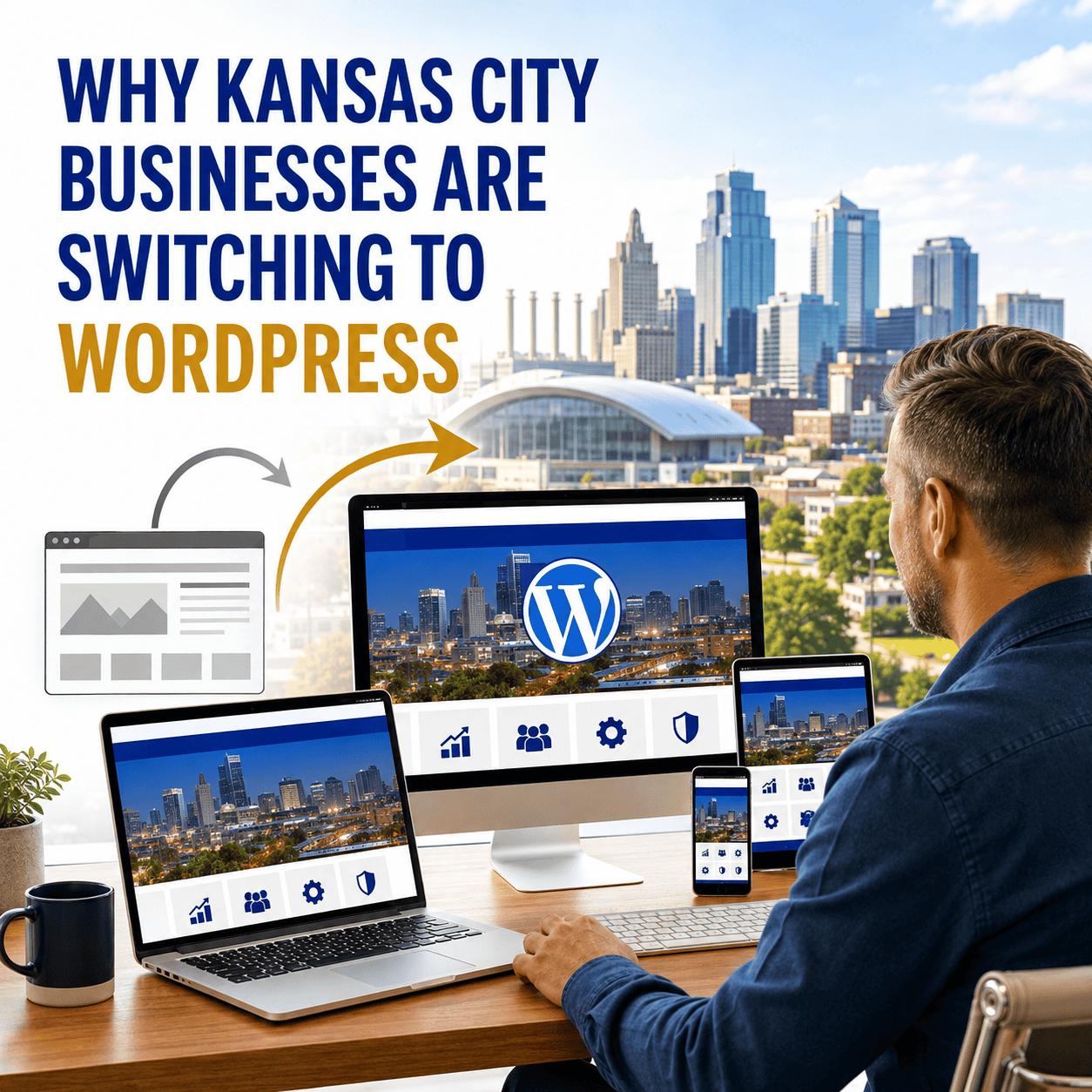
Choosing a website platform is not simply a technical decision. The platform affects how easily a business can update content, create service pages, support local SEO, add new features, connect marketing tools, and maintain the website after launch.
For many Kansas City businesses, WordPress provides a useful balance of flexibility, ownership, search control, and long-term expandability. It can support a focused small-business website today and grow into a much larger content, e-commerce, membership, or lead-generation system later.
That does not mean WordPress automatically produces faster rankings or that it is the correct platform for every project. Search performance depends on the site’s structure, content, technical condition, authority, competition, and ongoing strategy. WordPress is valuable because it gives an experienced developer the control needed to improve those areas.
OHS Publishing recommends WordPress when a client has no platform preference and the project is a good fit, while remaining able to build on other platforms and in other programming languages. This guide explains why custom WordPress web design remains a practical choice for Kansas City businesses focused on visibility, leads, and future growth.
Why Website Platform Choice Matters
A website builder may appear to solve the same problem as any other platform: choose a design, add content, and publish. The differences become more noticeable after the website needs to evolve.
A growing business may eventually need to:
- Add new services or products
- Create pages for additional cities or counties
- Publish a connected series of SEO articles
- Improve page speed and technical performance
- Add online payments, scheduling, or e-commerce
- Connect forms with email, CRM, or automation tools
- Implement detailed analytics and conversion tracking
- Change hosting providers or development partners
- Create custom layouts or functionality
A platform that works for a basic launch may become restrictive when those needs appear. WordPress is often selected because it allows the website to change without requiring the business to abandon its content and start over every time the marketing strategy expands.
1. WordPress Gives Businesses More Control Over SEO
WordPress is not a ranking shortcut. Installing it does not cause Google to favor the website. Its SEO advantage comes from control.
Developers and site owners can manage important elements such as:
- Page titles and meta descriptions
- Headings and content structure
- URL formats and redirects
- Internal links between related pages
- XML sitemaps and indexing settings
- Canonical URLs
- Image file sizes and alternative text
- Schema and other structured data
- Performance, caching, and technical configuration
This flexibility supports a stronger foundation, but the work still needs to be done correctly. A poorly configured WordPress website can be slow, confusing, or difficult to crawl. A well-planned site connects technical setup with useful content and a clear customer journey.
Businesses that need a continuing strategy beyond the initial build can combine the platform with Kansas City SEO services focused on relevant traffic rather than rankings alone.
2. WordPress Supports a Scalable Local SEO Structure
Local SEO requires more than placing “Kansas City” in a homepage title. A business may serve several communities, offer multiple services, or work with different industries. The website needs enough structure to explain those differences without producing repetitive, low-value pages.
WordPress makes it practical to create and organize:
- Primary service pages
- Industry-specific service pages
- City and county landing pages
- Project portfolios and case studies
- Frequently asked questions
- Helpful blog clusters
- Conversion-focused landing pages
Each page should have a distinct purpose. A Liberty page should offer more than a city name swapped into generic text. A roofing page should speak to roofing-company needs rather than repeat a broad contractor page. Internal links should connect visitors with the next most relevant topic.
OHS Publishing uses this approach across its Kansas City service-area directory and industry-focused web design and SEO pages. WordPress provides the structure; useful local content gives that structure a reason to exist.
3. Content Is Easier to Expand and Improve
A website should not become frozen after launch. Services change, teams grow, questions evolve, and new search opportunities appear. Businesses need a practical way to keep important information current.
WordPress separates content management from much of the underlying development. With an appropriate setup, authorized users can update text, add images, publish articles, revise service information, and manage other content without rebuilding the site.
That flexibility is especially useful for long-term SEO. A connected content plan may begin with a primary service page, then add supporting articles that answer narrower questions. Those articles can link back to the service page and to one another, creating a clearer topical relationship.
Content expansion still needs oversight. Publishing a high volume of repetitive or AI-generated pages can create clutter instead of value. Each addition should serve a real customer question, business objective, or search need.
4. WordPress Can Integrate With AI Without Making AI the Strategy
AI tools can assist with many website and marketing tasks, and WordPress can connect with a wide range of them. The useful question is not whether a website “has AI.” It is whether a specific tool improves the customer experience or reduces a meaningful business burden.
Potential uses include:
- Generating topic ideas from customer questions
- Creating first drafts for human review
- Summarizing or organizing internal information
- Routing form submissions
- Providing limited chatbot assistance
- Helping staff search knowledge resources
- Supporting image descriptions and content workflows
- Identifying patterns in analytics or customer inquiries
AI-generated content should not be published blindly. It can introduce incorrect facts, generic wording, duplicate ideas, inappropriate claims, and a voice that does not match the business. Human review remains essential, especially for healthcare, legal, financial, or other high-trust topics.
WordPress makes integrations possible, but the platform should remain maintainable. Every additional plugin or service creates another dependency that needs security, privacy, performance, and compatibility review.
5. Businesses Can Build Distinct Designs Without a Generic Builder Look
Some platforms are designed primarily around predefined sections and templates. That can make launching a simple site faster, but it may also make different companies look surprisingly similar.
WordPress can support fully custom page designs, reusable design systems, and layouts tailored to different page purposes. A homepage, service page, portfolio, location page, blog article, and quote form do not need to force the same content into one template.
Custom design should improve clarity rather than add decoration for its own sake. The website should:
- Explain the primary offer quickly
- Use consistent brand visuals
- Make services easy to find
- Present trust signals naturally
- Keep calls to action visible
- Remain easy to use on mobile devices
- Give different content types the space they need
OHS Publishing’s broader Kansas City website design process connects those visual decisions with content, SEO, development, and conversion strategy.
6. WordPress Can Grow Into More Advanced Functionality
A small business may begin with a homepage, several service pages, an about page, and a contact form. Later, it may need e-commerce, memberships, directories, customer portals, event registration, online payments, scheduling, or custom database features.
WordPress offers a large ecosystem of extensions and can also support custom programming. That makes it possible to add capabilities without automatically moving to an entirely new platform.
More functionality is not always better. Every feature should be evaluated against its actual value, operating cost, security needs, and effect on performance. Some projects are better served by a specialized hosted platform or custom application. The decision should follow the business requirements.
When a project requires integrations or capabilities beyond a standard marketing website, OHS Publishing can plan the work through its custom web development services.
7. Businesses Retain More Flexibility Over Hosting and Support
With an all-in-one proprietary website builder, the site usually remains tied to that provider’s hosting and editing system. Moving away may require rebuilding the website.
WordPress can be hosted by many providers, allowing a business to change hosting as its needs evolve. The company can also work with different qualified developers rather than being permanently tied to the person who created the original site.
That flexibility works best when the website is built cleanly and documented appropriately. A site overloaded with abandoned plugins, undocumented custom code, or an unsupported theme can still become difficult to transfer.
Ownership should be discussed before the project begins. The business should understand its domain registration, hosting account, WordPress administrator access, premium licenses, analytics, form systems, and other connected services.
8. WordPress Works With Conversion Tracking and Advertising
A business website often supports more than organic search. It may receive traffic from Google Ads, Microsoft Ads, Facebook, Instagram, email campaigns, QR codes, and offline promotions.
WordPress gives developers flexibility to create dedicated landing pages and connect appropriate analytics or advertising tags. The site can measure meaningful actions such as:
- Quote-form submissions
- Phone-number clicks
- Appointment requests
- Purchases or checkout completion
- Downloads and registrations
- Visits to confirmation pages
The landing page still needs to match the advertisement. A visitor who clicks an ad for one service should not be sent to a broad homepage and forced to search again. OHS Publishing’s pay-per-click advertising services account for both campaign targeting and the destination page.
What WordPress Does Not Do Automatically
WordPress is powerful, but it is not a complete marketing strategy by itself.
Installing WordPress does not automatically create:
- High search rankings
- Useful local content
- Fast page performance
- A secure website
- Effective calls to action
- Reliable form delivery
- Accurate schema
- Qualified leads
Those outcomes depend on planning, execution, competition, ongoing work, and the strength of the business offer. WordPress creates flexibility. The strategy determines how that flexibility is used.
Does WordPress Produce Faster SEO Results?
No platform can promise a specific SEO timeline. A new website may need time to be crawled, indexed, evaluated, and trusted. Competitive service and location searches can require substantial content development and authority-building.
WordPress may make SEO work more efficient because titles, content, internal links, schema, redirects, and technical settings can be managed directly. That can reduce platform-related limitations and make improvements easier to implement.
Actual results depend on factors such as:
- The age and history of the domain
- The quality and relevance of existing content
- Technical problems inherited from the old website
- The competitiveness of the market
- Local relevance and business prominence
- Website authority and legitimate mentions or links
- Consistency between the website and business information
- The quality of ongoing optimization
Businesses should be cautious of anyone guaranteeing first-page or map-pack rankings. A responsible strategy sets priorities, measures progress, and improves the parts of visibility that can be controlled.
How WordPress Supports Kansas City Local Visibility
Local search includes both traditional organic results and map-based results. The website supports this ecosystem by clearly explaining the company’s services, locations, expertise, and contact information.
A well-built WordPress site can support local visibility through:
- Accurate name, address, phone, and service-area information
- Useful pages for genuine locations and markets
- Service content written around customer needs
- LocalBusiness and service-related schema where appropriate
- Strong mobile usability
- Internal links that clarify geographic and topical relationships
- Portfolio examples and locally relevant proof
- Content that answers questions from Kansas City customers
The website should support the company’s Google Business Profile, not attempt to replace it. Information should remain consistent, and pages should describe real services and locations rather than manufacture local relevance.
When Switching to WordPress Makes Sense
A move to WordPress may be worth considering when the current platform restricts page structure, SEO controls, custom design, integrations, hosting choices, or future expansion.
Common reasons to evaluate a move include:
- The website no longer represents the business
- Mobile usability is poor
- Important SEO settings cannot be managed properly
- New services or locations are difficult to organize
- The company needs functionality the current builder cannot support
- The business wants greater control over hosting and development
- Landing pages and tracking are difficult to implement
- Routine content changes require rebuilding sections
The move should be planned carefully. Existing pages may already have search value, links, or customer recognition. URLs, content, metadata, images, analytics, forms, and redirects should be reviewed before the old site is replaced.
When Another Platform May Be the Better Choice
WordPress is not automatically the best answer. A business with very simple needs may prefer a tightly managed website builder. A company centered on a specialized hosted e-commerce ecosystem may benefit from remaining there. A software product may require a custom application rather than a content-management system.
The best platform is the one that fits the project’s present requirements, expected growth, budget, internal skills, and maintenance plan. OHS Publishing can build across platforms and languages, even though WordPress remains the standard recommendation for many custom business websites.
Maintenance Is Part of WordPress Ownership
The flexibility of WordPress comes with responsibility. WordPress core, themes, plugins, hosting software, forms, and integrations continue to change after launch.
Ongoing care should include:
- Core, theme, and plugin updates
- Reliable backups
- Security and malware monitoring
- Form and email-delivery testing
- Compatibility checks after important updates
- Performance review
- Content and contact-information updates
- Support when something stops working
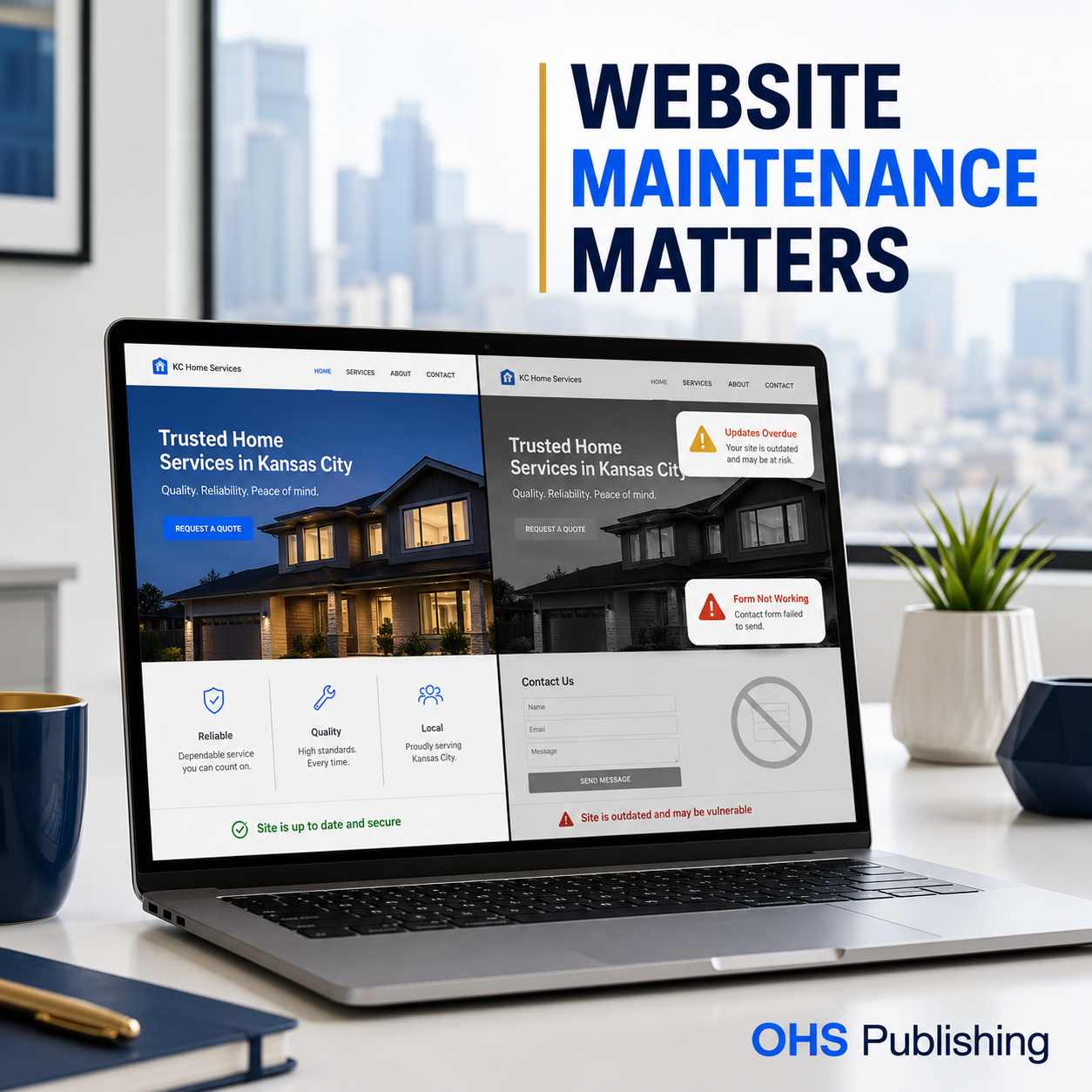
Automatic updates can help, but they do not confirm that the layout, forms, tracking, and integrations still work. OHS Publishing offers a WordPress maintenance plan to keep client websites updated, protected, and supported after launch. If a site is already compromised, it may require a separate WordPress malware cleanup before routine maintenance can begin.
Build the Right Foundation for Long-Term Growth
WordPress is not valuable because it is fashionable or because it guarantees rankings. It is valuable because it gives businesses room to control, improve, and expand their online presence.
For many Kansas City companies, that means a custom website with clear messaging, useful service and location content, flexible integrations, strong internal structure, and a conversion path built around real customer behavior.
Your website should do more than look good. It should help your business get chosen.
OHS Publishing can review your current website, discuss what the business needs, and determine whether WordPress or another platform offers the strongest foundation.
Frequently Asked Questions About WordPress for Kansas City Businesses
Is WordPress good for local SEO?
Yes, WordPress can be a strong platform for local SEO because it provides control over page content, titles, URLs, internal links, schema, redirects, and technical settings. The platform does not guarantee rankings; results depend on strategy, execution, competition, and ongoing optimization.
Will switching to WordPress improve Google rankings?
Not automatically. A carefully planned move can remove platform limitations and improve content, structure, speed, mobile usability, and technical SEO. Rankings can also decline if valuable URLs or content are changed without proper redirects and migration planning.
Can WordPress use AI tools?
Yes. WordPress can integrate with AI tools for content workflows, chat assistance, form routing, analysis, and other tasks. Each integration should be reviewed for accuracy, privacy, security, performance, and its actual value to customers or staff.
Is WordPress better than Wix, Squarespace, or GoDaddy Website Builder?
WordPress usually provides more flexibility over custom design, SEO settings, hosting, integrations, and future development. Hosted builders may be easier for very simple websites. The right platform depends on the project rather than one platform being best in every situation.
Can an existing website be moved to WordPress without losing content?
Most important content and assets can be reviewed and migrated, but the process requires planning. Existing URLs, metadata, internal links, forms, analytics, images, and high-performing pages should be documented so value is preserved and redirects are created where needed.
Does a WordPress website need ongoing maintenance?
Yes. WordPress core, themes, plugins, forms, hosting software, and integrations change over time. Regular updates, backups, security monitoring, compatibility checks, and form testing help keep the website reliable after launch.