How to Serve Multiple Cities Without Duplicate Location Content
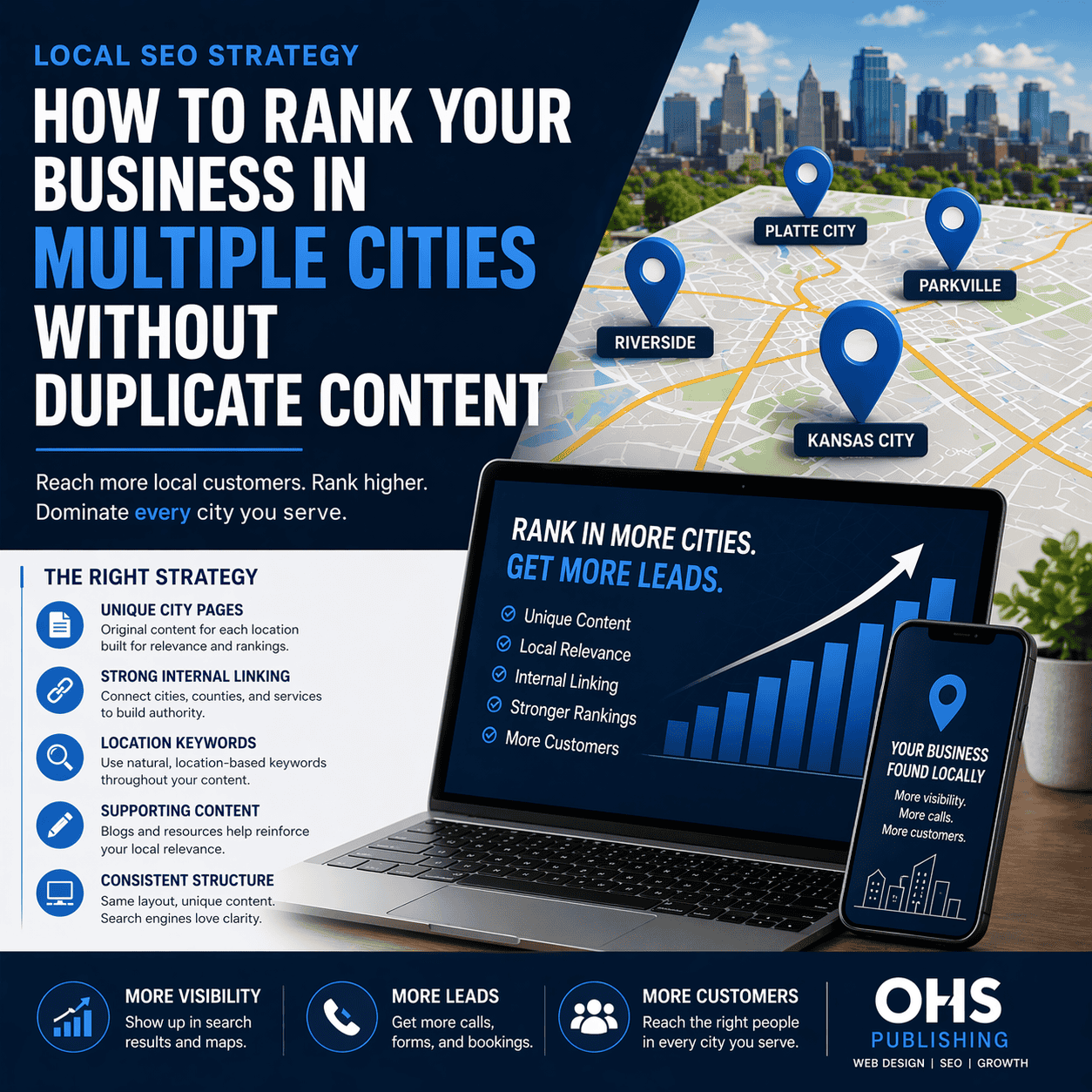
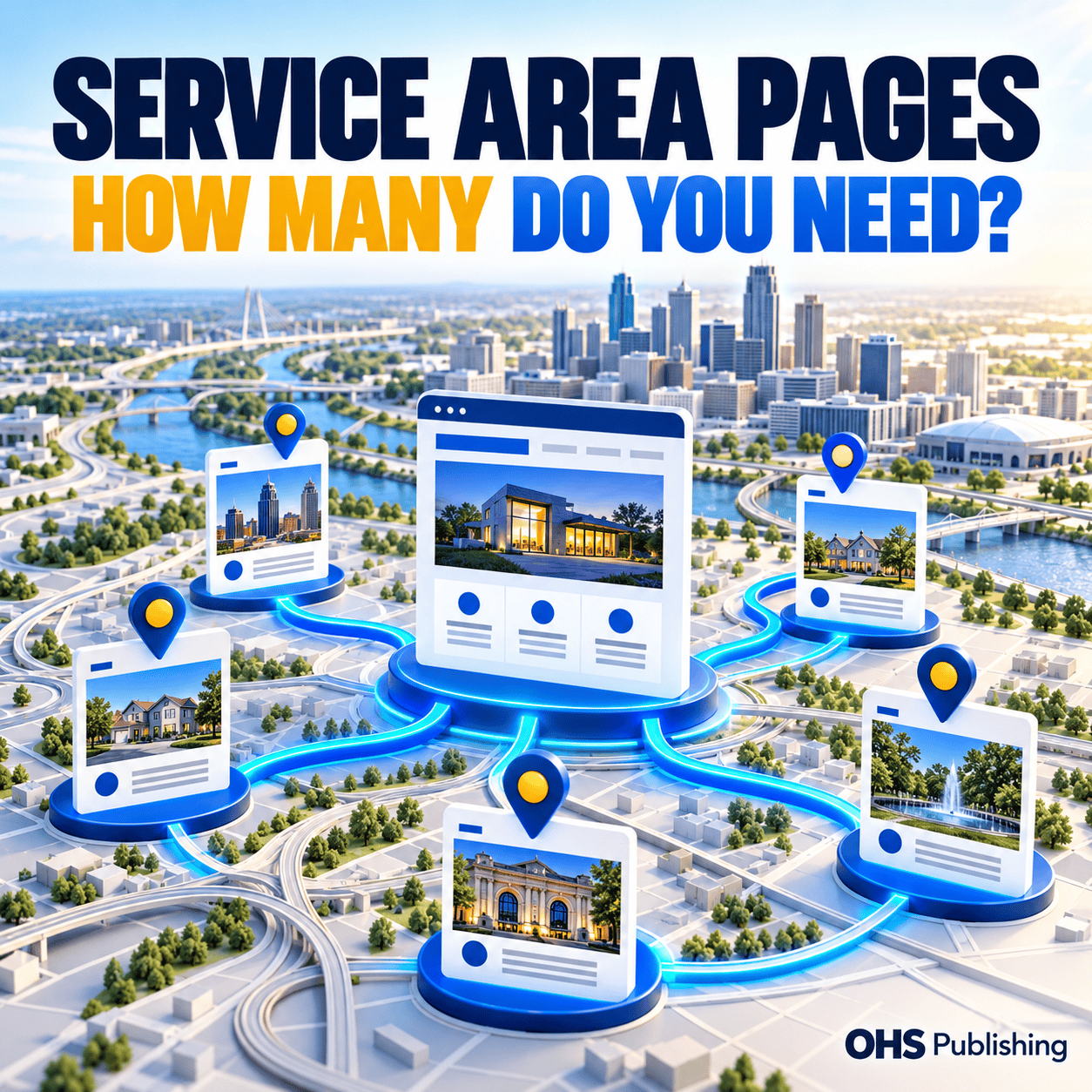
A business can serve more than one city without publishing the same page dozens of times. The challenge is deciding where a separate page would help a customer and what useful information that page should contain. A page for a city you genuinely serve can explain coverage, relevant services, project experience, and the next step. A page that only swaps a place name gives readers very little new information.
For a Kansas City business, this decision often involves neighboring communities across several counties and both sides of the state line. The right structure depends on how the business operates. A company with staffed branches has different information to share from a contractor that travels from one base. This guide provides a practical method for planning, writing, linking, and maintaining location content without turning the website into a repetitive directory.
Define where you actually work before choosing keywords
Start with an operational coverage list. Ask the people who schedule jobs, estimate projects, or answer sales calls which areas the company routinely serves. Record any limits that matter to a customer: particular services available only in part of the region, travel arrangements that require confirmation, or locations where you currently cannot accept work. Marketing content should reflect those realities.
Separate current coverage from places you hope to enter later. A growth goal is useful for planning, but it should not be presented as an established local operation. Likewise, distinguish a customer-facing branch from a mailing address. A city page can honestly describe service in an area without claiming an office there. Accurate expectations make the page more useful and reduce inquiries the team cannot fulfill.
Give each page a distinct job
Think about three common page roles. A service page explains the offering in depth. A service-area overview explains where the business works. A location page explains how a relevant offering is delivered in a particular area. These roles overlap naturally, but they should not all repeat the same introduction, benefits, and closing pitch. Write a one-sentence purpose for each proposed page before producing its content.
For example, a main roof-replacement page could explain the assessment and estimating process, while a city page describes actual coverage and a relevant completed project. The city page can link to the detailed service explanation instead of reproducing it. A useful architecture makes it obvious where a reader should go for more detail. Our location-page and website-structure guide explores how these page roles fit together.
Decide when a city needs its own page
Ask what a prospective customer would learn on the proposed page that they would not learn from the existing service-area overview. Good answers may include a real office, meaningful scheduling information, local project examples, or a service mix that differs from other areas. A weak answer is that the city has a search phrase you want to target. Search interest can inform priorities, but it does not supply the missing content.
Use a simple editorial test: remove the city name and read the draft again. If everything could describe any community without alteration, gather more relevant information or keep the area on the overview page. Not every city needs an individual page. A smaller set of informative pages can be easier for customers to navigate and for staff to maintain than an archive built around a numerical publishing target.
Collect evidence before writing the local story
Build a small source folder for each approved page. Useful material can include approved project photographs, a description of work completed, customer questions that recur in that area, and confirmed service arrangements. Ask who owns the material and whether it can be published. Do not include private customer information, precise residential addresses, or identifiable project details without appropriate permission.
Interview the person who performed or managed the work. Ask what the customer needed, what constraints influenced the project, and what the business delivered. These details produce a stronger explanation than generic praise about a city's character. If there is no project example available, be transparent and focus on verified service information. Do not fabricate a local testimonial or a case study to make a page look established.
Write an introduction that answers practical questions
The opening should explain the service, the area covered, and the kind of customer the page is intended to help. Avoid spending several paragraphs describing the city before explaining the business. A visitor looking for help should not have to read a tourism introduction to discover whether the company offers the service they need. Keep the main heading natural and specific.
Follow the introduction with information that supports a decision. Explain what happens after an inquiry, what details help prepare an estimate, and where the reader can explore the service further. If availability must be confirmed, say so. Use the place name where it makes the sentence clearer, but do not insert it into every heading or paragraph. Repetition is not a substitute for a well-developed explanation.
Keep a consistent design while varying the substance
Shared page design is useful. Readers should encounter familiar navigation, readable typography, clear contact options, and predictable section spacing throughout the site. A consistent layout also makes updates easier. The content within that layout should reflect the purpose and evidence of the individual page, rather than treating every section as a box to fill with a paraphrase.
One city page might feature a substantial project example, while another needs a detailed explanation of appointment arrangements. Both can use the same design system. Do not force a testimonial, a gallery, or a long FAQ section onto a page when the business has no suitable material. Our WordPress web design services can support a maintainable layout while allowing different pages to answer different customer needs.
Understand the problem with pages made only for search
Google's search spam policies address doorway abuse and scaled content created primarily to manipulate rankings. This is a reason to evaluate the purpose and usefulness of location pages, not a reason to assume that every repeated phrase creates a penalty. Ordinary navigation, shared business details, and a consistent design naturally appear on multiple pages.
Review the whole experience. Can a visitor find the page through sensible navigation? Does it contain useful information on its own? Does its contact path match the service it describes? Would you still want the page available if it brought no additional search traffic? These questions help separate a customer resource from a page that exists only to capture a keyword variation.
Connect the service-area overview to relevant destinations
A service-area overview can organize the region in a way customers understand. Depending on the business, grouping by city, county, branch, or service territory may be useful. Keep the structure simple enough that a reader can find the relevant area without opening several intermediate pages. Explain coverage in plain language alongside the links.
From an individual city page, link to the relevant service page and back to the coverage overview when those destinations answer the next question. Add a project or article link only if it provides useful detail. Avoid placing every city in every paragraph or building large link blocks that overwhelm the main content. Link text should clearly describe the destination, such as roof-replacement planning or service availability, rather than repeating the same exact phrase throughout the site.
Use supporting articles for different questions
A blog can explain a planning issue that applies across several cities. That article should have its own purpose rather than serving as another version of a city landing page. A contractor might explain how to prepare for an estimate, while a professional firm might explain what information to gather before a consultation. The relevant location page can link to that resource when it helps the reader.
This separation reduces unnecessary repetition. Keep detailed service guidance in the service resource, area-specific information on the location page, and broader educational material in the article. If you are unsure which kind of page should address a topic, consider what the reader wants to do next. Our Kansas City SEO services include planning content around clear page roles and useful connections.
Review existing pages before adding more
Make a simple inventory of the location pages already published. Record each URL, its topic, its coverage claim, and the useful information it contains. Identify pages that repeat one another, mention services no longer offered, or point readers to broken destinations. Check whether the business still intends to serve each area. This review often reveals work that is more valuable than immediately adding another city.
For pages with meaningful differences, improve the content and clarify the links. For pages that substantially overlap, consider whether one stronger resource could serve the reader better. Do not remove URLs casually: record the existing pages, evaluate their role, and plan an appropriate redirect when a page is genuinely replaced. A redesign is easier to verify when each URL has a documented decision.
Use titles, descriptions, and FAQs to set expectations
Write a page title that accurately identifies the service and place. The description should summarize what the reader will find, not promise a ranking or guaranteed business result. Keep the visible heading consistent with that promise. A person who clicks a result about a specific service should arrive at a page that explains that service, rather than a general company introduction.
FAQs are helpful when they answer questions customers actually ask. Examples include whether the area is covered, how to request an estimate, and which page explains the service in detail. Avoid copying a long FAQ list across every location just to make pages longer. If structured FAQ data is added, keep it aligned with the questions and answers people can read on the page. The markup should describe the content, not invent additional claims.
Measure usefulness as well as search visibility
Decide how you will evaluate each location page before expanding the collection. Record search visibility where available, but also review suitable inquiries, contact-path completion, and questions reported by staff. A page that receives attention from people outside the actual service area may need clearer coverage information. A page that attracts relevant visits but no inquiries may need a stronger explanation of the process.
Compare periods thoughtfully. Seasonal demand, capacity, pricing, and other campaigns can influence results. Do not attribute every new inquiry to a recent heading change. Keep notes about the work completed and look for patterns over a meaningful period. If a page contributes little useful information or business value, improve its purpose before producing more pages with the same weaknesses.
A practical example of a focused rollout
Imagine a service company that regularly works in three nearby cities from one operating base. This is a planning example, not a claim about a particular client. The company begins with a clear service-area overview and strong pages for its two main services. It then creates one city page where it has a detailed, approved project example and specific scheduling information.
For the other cities, the company initially provides accurate coverage details on the overview. As it gathers useful project material and recurring local questions, it can decide whether separate pages would help. This approach lets evidence guide expansion. It also keeps the website manageable while the team learns which information customers need. There is no requirement to publish every possible service-and-city combination at once.
Assign responsibility for keeping location content accurate
A location page is a continuing promise about where and how the business works. Assign someone to review changes in coverage, availability, office details, contact methods, and service offerings. When the business changes, update the affected service and location pages together. A page that was accurate at launch can become misleading if its details are forgotten.
If your current site has many similar city pages, start with an inventory and a prioritized improvement plan. Bring your URL list, actual coverage, important services, and available project examples. OHS Publishing can help organize those materials into a clearer structure. Request a quote for a location-page review to discuss which pages should be improved, combined, or developed into more useful resources.
Frequently asked questions
Do I need a separate page for every city I serve?
No. Start with accurate coverage information and create separate pages when you have useful area-specific details. A service-area overview may adequately cover cities that do not yet need individual pages.
Is it wrong to use the same design on several city pages?
No. Consistent typography, navigation, and layout help readers. The important distinction is whether each page has a useful purpose and accurate content, rather than simply swapping city names.
Can I claim a local office because I serve that city?
No. Describe service coverage honestly and distinguish it from a staffed customer-facing office. Do not invent branch locations, project examples, or testimonials.
What should I do with repetitive pages already published?
Inventory the pages, identify overlap, and decide which resources should be improved or combined. Preserve useful URLs where appropriate and plan redirects carefully when a page is replaced.
How should city pages link to service pages?
Link to the service explanation that answers the reader’s next question and to a clear coverage overview where useful. Use descriptive link text and avoid overwhelming the page with unrelated city links.
Will more location pages guarantee more leads?
No. Results depend on demand, competition, page usefulness, business fit, and the contact process. Measure qualified inquiries and customer questions alongside search observations.